
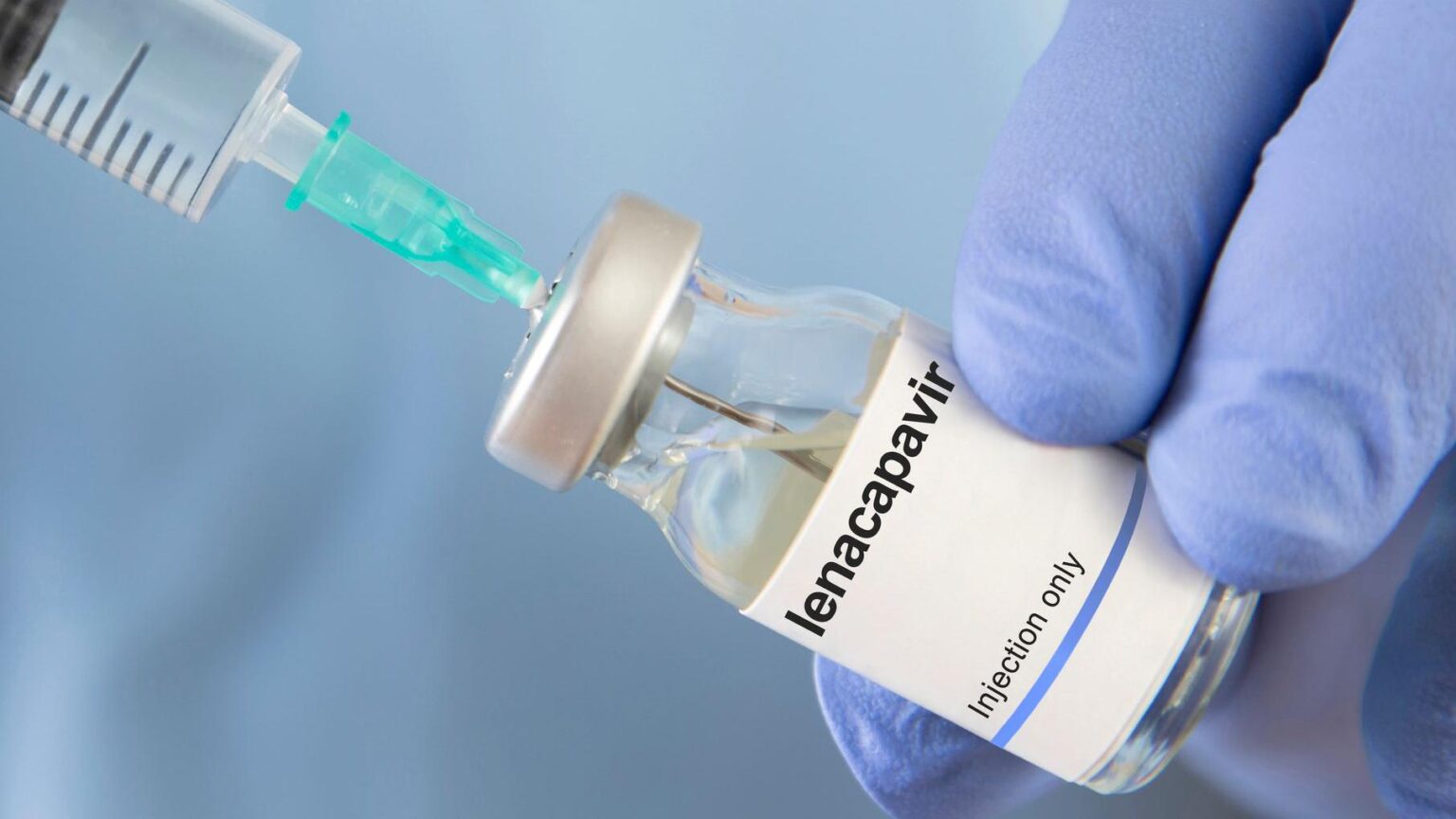
The Nigerian government has begun rolling out a new long-acting HIV prevention injection, Lenacapavir, marking a major step in expanding access to innovative prevention tools.
However, health authorities have restricted its use among pregnant women due to insufficient safety data.
The phased rollout will start in eight states—Anambra, Ebonyi, Gombe, Kwara, Akwa Ibom, Cross River, Benue—and the Federal Capital Territory (FCT), targeting populations at high risk of HIV infection.
Director-General of the National Agency for the Control of AIDS (NACA), Temitope Ilori, announced the development during a media briefing in Abuja.
She explained that although global studies indicate the drug is generally safe, there is not enough evidence to support its use during pregnancy.
Lenacapavir, developed as a long-acting pre-exposure prophylaxis (PrEP), is administered once every six months, offering an alternative to daily oral HIV prevention pills—especially for individuals who struggle with consistent adherence.
Not a stand-alone solution
Despite its promise, officials stressed that the injection is not a cure or a standalone solution.
It does not protect against other sexually transmitted infections, unintended pregnancies, or diseases like hepatitis.
Health experts continue to urge the use of comprehensive preventive measures, including condoms and regular testing.
Nigeria carries one of the world’s heaviest HIV burdens, with about 1.9 million people living with the virus. While treatment access has improved, prevention gaps remain—particularly among young people and vulnerable groups facing stigma and limited access to services.
Minister of State for Health, Iziaq Salako, revealed that Nigeria is among nine early adopter countries selected to introduce the drug, with about 52,000 doses already secured.
The initiative forms part of a broader strategy to eliminate HIV/AIDS as a public health threat by 2030.
The government says the rollout will be closely monitored before expanding nationwide, guided by the National PrEP Implementation Plan (2025–2028).
Efforts are also underway to explore local production and reduce dependence on foreign suppliers.
Health officials emphasise that Lenacapavir will complement—not replace—existing HIV prevention methods, giving individuals more options while reinforcing the importance of responsible health behaviour.