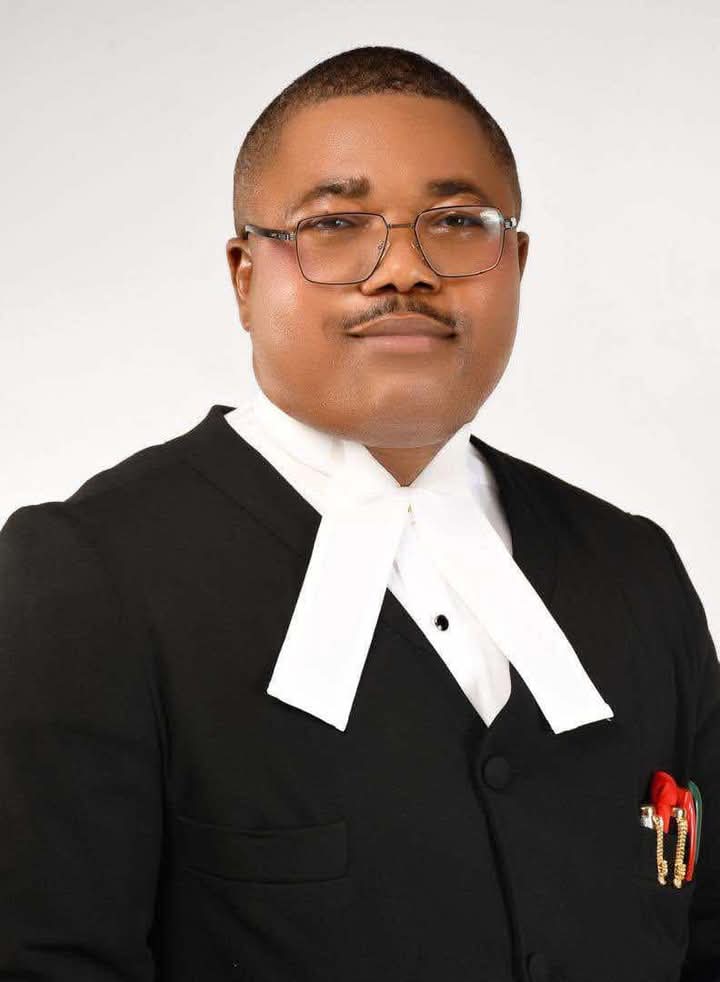
Human rights lawyer, Ifeanyi Ejiofor, has expressed concern over what he described as the growing trend of lawyers abandoning professional ethics for political convenience and personal gain.
In his weekend reflection titled “The Republic of Double-Speakers: When Lawyers Become Merchants of Convenience and Integrity Is Auctioned for Political Crumbs,” Ejiofor lamented that some legal practitioners now behave like “motor-park agitators,” engaging in insults and manufactured outrage to remain politically relevant.
According to him, the legal profession was once regarded as a moral institution built on honour, discipline, integrity, and truth.
He noted that a lawyer’s word used to command respect, but recent political developments have seen some practitioners compromise their principles in pursuit of patronage and financial rewards.
Ejiofor said the decline became more evident during the 2023 general elections, when some lawyers and political spokespersons abandoned professionalism and turned public discourse into propaganda battles.
He argued that truth and principles became negotiable as politicians once criticised harshly suddenly became allies when political interests changed.
While acknowledging that political realignment is a legitimate democratic right, he stressed that lawyers must maintain intellectual honesty, consistency, and dignity.
According to him, the public should be able to distinguish between genuine ideological growth and shameless opportunism.
The senior lawyer criticised what he described as reckless extremism among political commentators who aggressively defended one candidate while demonising others, only to later align with the same figures they once condemned.
Citing examples
He referenced former presidential campaign spokespersons such as Daniel Bwala and Reno Omokri, noting that both had strongly criticised the current administration before later becoming associated with it.
He also pointed to Kenneth Okonkwo, who strongly campaigned for Peter Obi during the 2023 elections while criticising Atiku Abubakar, but is now reportedly linked politically with the same Atiku he once opposed.
Ejiofor questioned whether there was any ideological difference among such political actors or whether they were simply participating in what he called a “travelling theatre of political convenience.”
According to him, the real issue is not the political migration itself, but the intensity and certainty with which some individuals previously attacked opponents before reversing their positions once political opportunities emerged.
He warned that when lawyers become propagandists and praise-singers, society’s moral foundation is weakened.
Ejiofor stressed that the legal profession should not become “a theatrical circus for ideological acrobats,” adding that lawyers are expected to uphold honour and responsibility regardless of political affiliations.
The human rights lawyer argued that repeated public contradictions eventually damage personal credibility and public trust.
He therefore called on the Nigerian Bar Association to urgently initiate comprehensive ethical reforms aimed at restoring dignity, discipline, and professional responsibility within the legal profession.
According to him, lawyers occupying political communication roles must avoid reckless propaganda and maintain intellectual sincerity.
Concluding, Ejiofor warned against allowing “professional double-speakers” and “ideological chameleons” to dominate public discourse.
He maintained that while public memory may appear weak, history ultimately records every contradiction, and no amount of political reward or media performance can restore integrity once it has been traded for political crumbs.