Ukpa Ewa
The Anambra State Government has reiterated its commitment to transitioning from an import dependent economy to a productive export driven one.
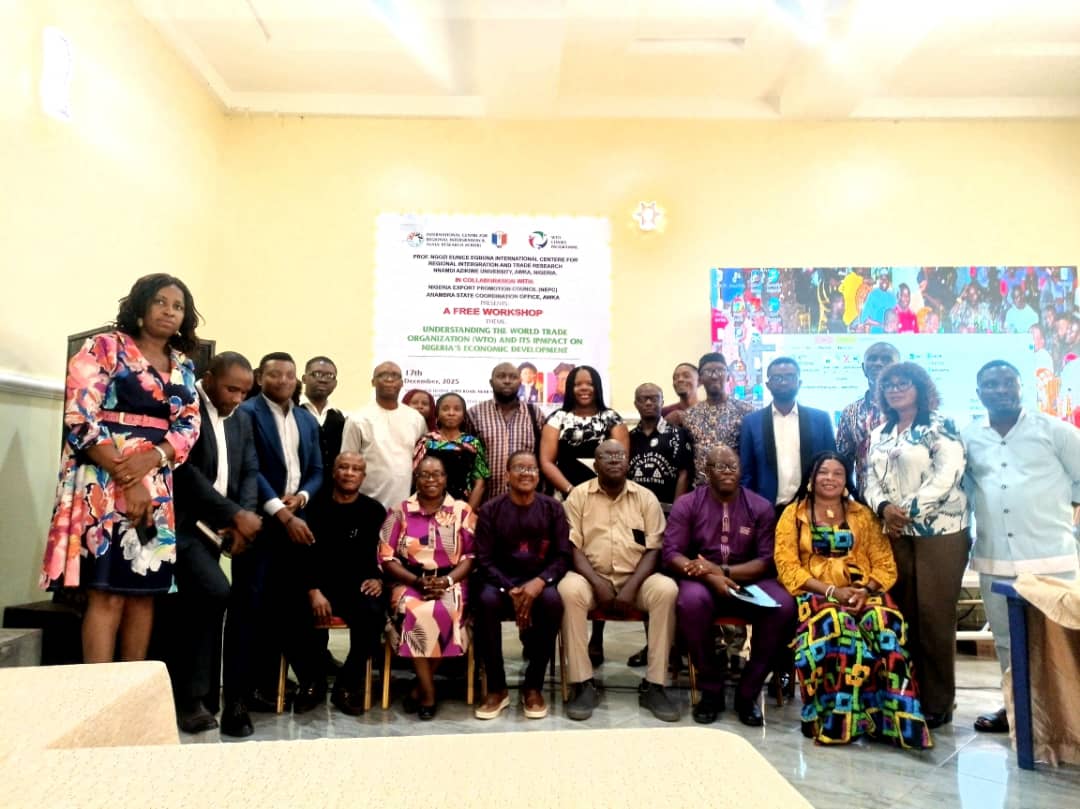
The government disclosed this at one day free capacity building workshop on the World Trade Organization (WTO) in Awka organized by the Professor Ngozi Eunice Egbuna International Centre for Regional Integrated and Trade Research (ICRITR), Nnamdi Azikiwe University, in collaboration with the Nigerian Export Promotion Council (NEPC), Anambra State Coordinating Office.
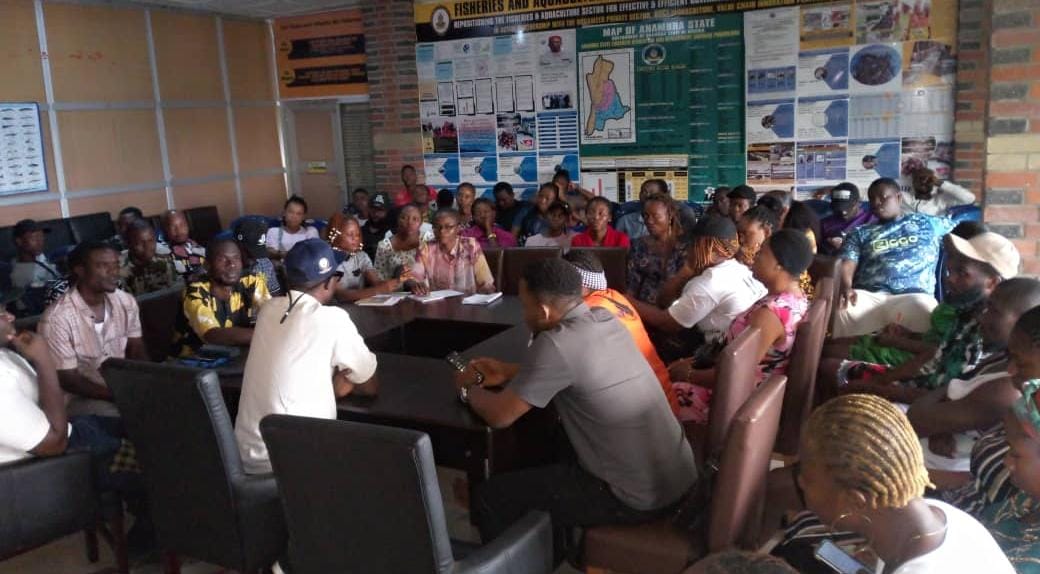
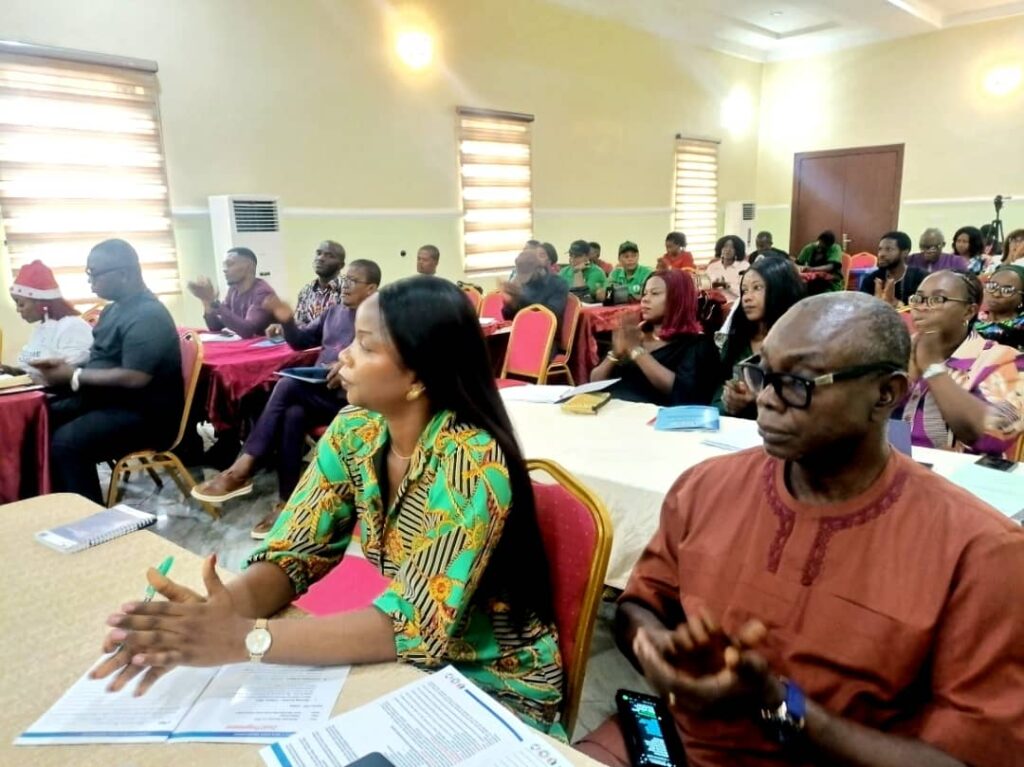
The workshop brought together government officials, industry players, academics and entrepreneurs to deepen stakeholders understanding of the WTO and its impact on Nigeria’s economic development, particularly as the country marks 30 years of membership in the global trade body.
Speaking at the event, the Commissioner for Commerce and Industry, Mr. Christian Udechukwu, described the workshop as timely and strategic to Anambra economic aspirations.
Represented by the Permanent Secretary of the Ministry, Mr Michael Obiekwe, the Commissioner said the programme has the full support of the ministry.
Anambra’s deliberate shift
He noted that the state is deliberately shifting from an import-based economy to one driven by productivity and exports.
Udechukwu disclosed that the state government was pursuing this goal through targeted infrastructure development, particularly around the Anambra International Cargo and Passenger Airport to create a stable business environment for exporters.
He added that efforts are also underway to establish a functional Free Trade Zone to boost industrial activities and international trade.
According to him, the state places strong emphasis on youth training and capacity building in globally competitive and export-oriented skills.
The Commissioner called for increased stakeholder support emphasizing that Anambra is intentional about developing human capital capable of competing effectively on the global stage.
Other endowments
He further noted that beyond agro-resources and leather, the state is endowed with minerals, ceramics, natural gas and crude oil.
Describing Anambra as the “Japan of Africa” in manufacturing citing its strong product base and market focus, the commissioner assured that the government was working to remove bottlenecks.
“Government is working to ensure quality production and promote ease of doing business through continuous engagement with manufacturers, industrialists and research institutions.
In her opening remarks, the Director of ICRITR, Prof. Ngozi Eunice Egbuna, stated that the workshop was to deepen public understanding of the WTO and its relevance to Nigeria economic development.
Prof. Egbuna explained that the global economy is increasingly interconnected with international trade rules exerting significant influence on national development outcomes.
She noted that the WTO plays a central role in shaping trade policies, setting standards and providing a framework for cooperation among nations.
Opportunities and challenges
Egbuna said Nigeria’s WTO membership presents both opportunities and challenges, including access to global markets, predictable trade rules and the need to strengthen institutions and build competitive capacity.
She added that the workshop provided a platform for participants to examine how WTO agreements affect key sectors such as agriculture, manufacturing, services and trade facilitation.

“The outcome of this workshop would form part of a policy framework to be submitted to the Honourable Minister of Industry, Trade and Investment.
“This will help to enhance Nigeria’s participation in the global trading system and promoting inclusive economic development.
The NEPC Anambra State Coordinator, Mrs. Angela Uche-Echieh maintained that the council aligns with President Bola Ahmed Tinubu’s Renewed Hope Agenda.
Economic diversification
She noted the urgent need to diversify Nigeria’s economy away from over dependence on oil.
“NEPC is committed to transforming the non-oil export sector into a major contributor to the nation Gross Domestic Product (GDP) and a key source of employment through strategic diversification of exportable products.
In his presentation, a trade law expert, Mr. Legborsi Nwiabu acknowledged that Nigeria has been a member of the WTO since January 1995 and played an active role in the multilateral trading system.
He urged the country to fully leverage WTO agreements, particularly the Trade Facilitation Agreement, to simplify customs procedures, reduce trade barriers and support businesses, traders and investors.
Mr. Nwiabu emphasized the importance of research and development, quality education and private sector capacity building in positioning Nigeria to compete effectively in the global market.
Also speaking, the Chief Executive Officer of the Fisheries and Aquaculture Business Development Agency, Mr. Emeka Iloghalu, said Anambra State is positioning its fisheries and aquaculture sector for international trade through collaboration with African standardization organizations to certify fish SMEs and cooperatives.
Contributing, the President of the Aguata Leather Work Cluster, Nancy Chidebe, described the workshop as impactful as it enhanced her understanding of how WTO frameworks support trade and help businesses overcome international market challenges.
Similarly, the Head of Business Development at Cutix Cables, Nnewi, Engr. Edidiong Akpan, said the seminar improved his understanding of the WTO framework and its positive impact on businesses competing in the global market.