
By Emma Elekwa
For Mrs. Chinwe Nwacha, a practising journalist in Anambra State, last Saturday’s devastating flood disaster in parts of Oba and Ogidi is a memory she wishes she could erase forever.
“It’s an experience I don’t like remembering,” she says quietly. “If it were possible, I would wipe it completely from my memory.”
But the story of her survival is one of courage, chance and what she describes as divine intervention.
What began as a routine trip from Oba after visiting her daughter at school quickly turned into a desperate struggle against raging floodwaters that swept through parts of Idemili North and South Local Government Areas, leaving destruction, injuries and reported deaths in their wake.
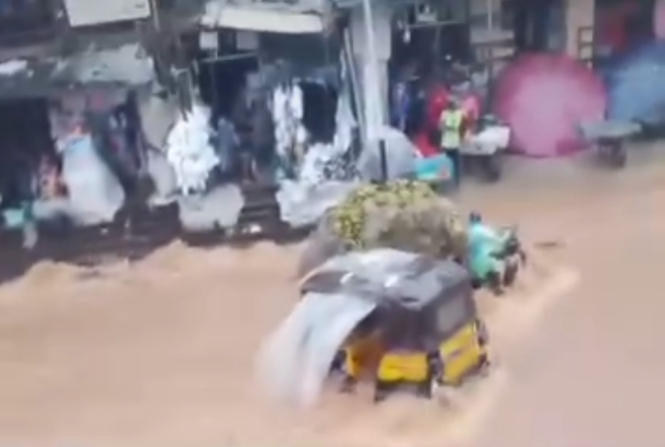
Nwacha boarded a commercial tricycle, popularly known as a keke, heading towards Onitsha as rain clouds gathered overhead. As the vehicle approached Mgbuka Obosi, floodwaters overflowing from drainage channels began inundating the road. Many motorists slowed down or stopped altogether to assess the situation.
“But it was as if I was talking to a man with hearing impairment. As I insisted he replied, he said “Madam keep quiet and stop disturbing me.”
The other passenger who had been quiet was forced to lend his voice, “Oga what are you trying to do? Are you not seeing that where you’re trying to navigate through is risky?”
After some hesitation, the driver attempted to reverse, but it was too late. The tricycle stalled directly at the point where the flood current was strongest.
Within minutes, the situation became critical. The force of the water trapped the occupants inside the vehicle. Attempts to step out proved futile as the current pulled back anything that touched the water. The other passenger managed to leap onto a concrete road divider, but Nwacha and the driver remained stranded.
Devastating reports
To make matters worse, reports emerged that other tricycles and their operators had already been swept into a nearby drainage channel.
As water continued rising inside the keke, Nwacha clung to the vehicle’s metal frame while watching helplessly as her belongings disappeared into the flood.
“I was only supporting myself with the iron rod holding the roof of the keke while I battled with the flood.Then help arrived unexpectedly. A tipper truck positioned itself behind the trapped tricycle, reducing the force of the water and preventing it from being dragged into a massive drainage channel.
“Shortly, some boys arrived with rope which they threw to us and we tied it to the keke to enable them pull it out. Yet, no success.
“One of them who could swim that dared the flood, jumped in and rescued me. Before then, we had spent close to an hour battling the flood. I learnt later that the keke driver did not survive as the boys left after taking me to where I could rest.”
For Nwacha, the experience underscores the urgent need for authorities to address flooding in the area, which residents describe as a recurring death trap during the rainy season.
According to her, regular maintenance and expansion of drainage infrastructure could prevent future tragedies.
The flood’s destructive impact extended beyond the road where Nwacha narrowly escaped death.
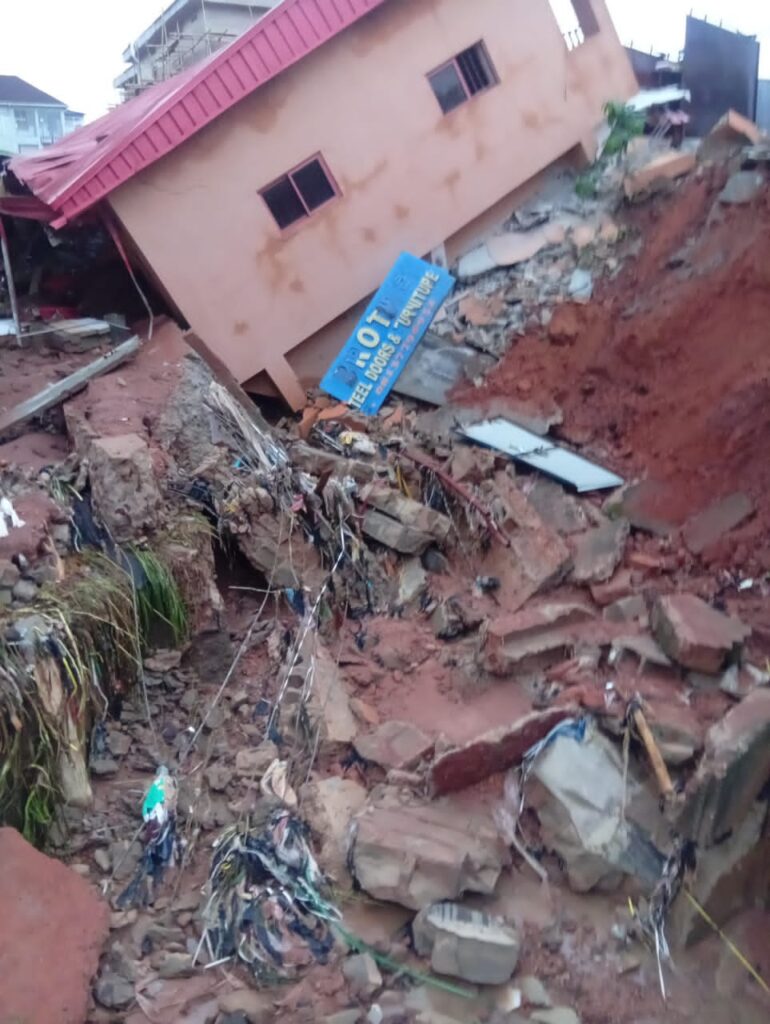
At Ikenga Ogidi, near the Building Materials International Market along the Onitsha-Enugu Expressway, a two-storey commercial building collapsed following the downpour.
Although no lives were lost, traders and occupants counted heavy losses running into hundreds of millions of naira.
The structure, which housed eight shops, came crashing down after days of persistent rainfall and erosion.
One trader, Uchenna, described the collapse as tragic but not entirely unexpected.
Building has been vulnerable
According to him, residents had repeatedly warned that the building was vulnerable because it was allegedly constructed on a drainage path.
“We were not surprised when it happened,” he said. “The building had been tilting for some time, and many people feared it could collapse.”
He explained that underground water channels converge around the location, making it difficult for stormwater to flow freely.
The situation, he argued, worsened after structures were erected within what should have remained drainage corridors.
The trader estimated that goods worth more than N150 million were destroyed but expressed gratitude that shop owners had closed for business before the building gave way.
The collapse also damaged fences and other structures in the surrounding neighbourhood.
Another resident said government officials had already visited the site to assess the extent of the damage and determine whether nearby structures posed similar risks.
The resident called for a comprehensive investigation into the collapse, particularly regarding compliance with building regulations and environmental standards.
That process appears to be underway.
A government official at the scene, who declined to be named because he was not authorised to speak publicly, confirmed that investigations had commenced.
According to the official, authorities are examining whether the building received proper approval and whether regulatory procedures were followed before construction.
He noted that the structure’s condition before the collapse and the persistent rainfall experienced across the state in recent days would form part of the inquiry.
Searching for answers
While investigators search for answers, road safety authorities are urging residents and motorists to learn from the disaster.
The Anambra State Sector Commander of the Federal Road Safety Corps (FRSC), Corps Commander Bridget Asekhauno, expressed concern over the incident and warned drivers to exercise extreme caution during the rainy season.
She advised motorists to reduce speed significantly whenever visibility is poor or roads become waterlogged, regardless of the official speed limit.
Asekhauno also stressed the importance of ensuring that vehicles are roadworthy, especially critical safety components such as windscreen wipers and water reservoirs needed to maintain visibility during heavy rainfall.
Beyond driving habits, she linked the increasing incidence of flooding to blocked drainage systems caused by indiscriminate waste disposal.
The FRSC commander urged residents to stop dumping refuse into drains and water channels and to regularly clear drainage systems around homes and business premises.
As communities across Anambra continue to assess the damage left behind by the flood, Nwacha’s survival story remains a stark reminder of the growing dangers posed by poor drainage, unchecked development and extreme weather events.
For many residents, the disaster is not merely a natural occurrence but a warning that unless urgent preventive measures are taken, more lives and property could be lost when the next heavy rains arrive.