
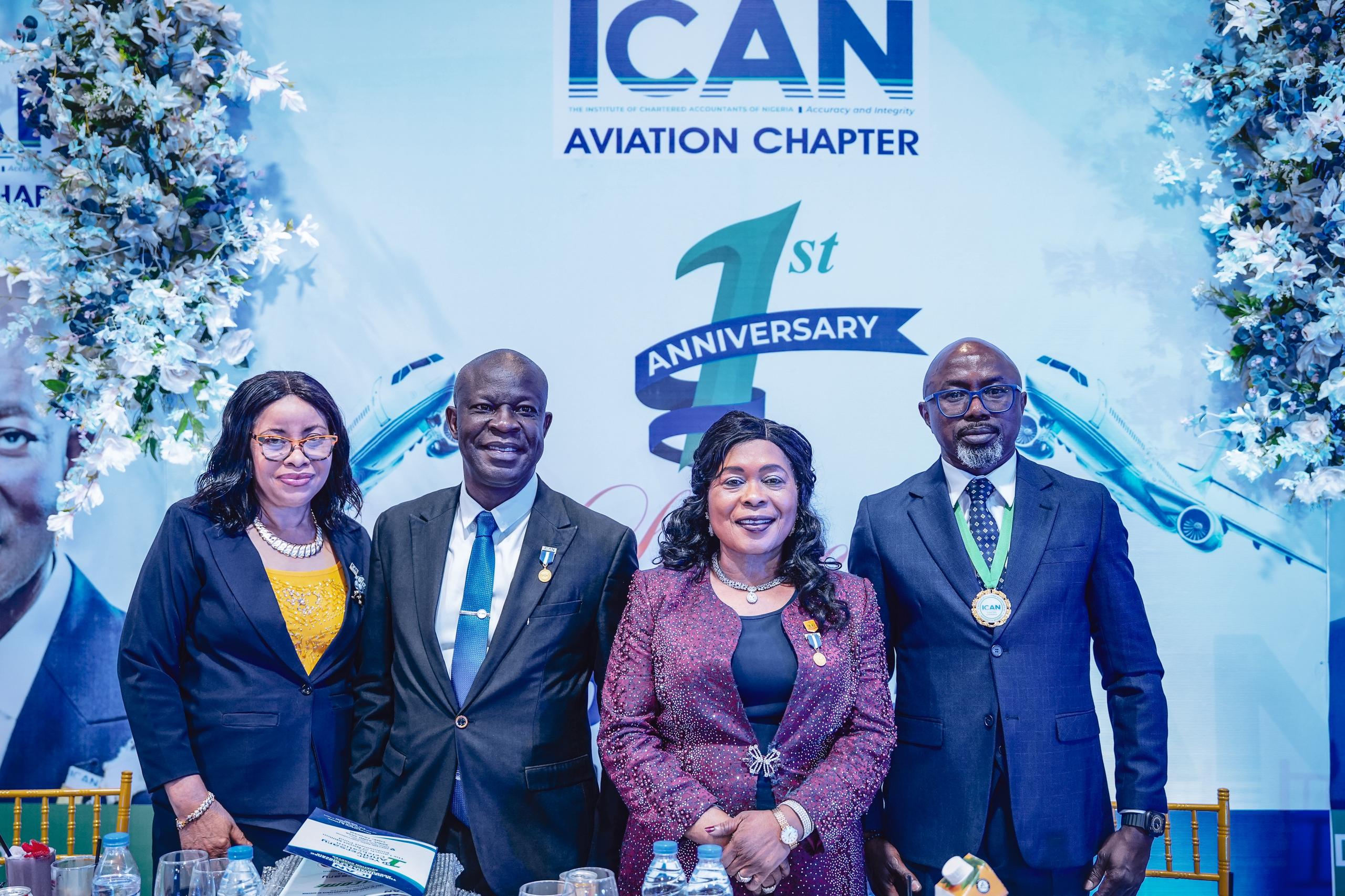
Nigeria’s aviation industry has been called upon to accelerate digital transformation in order to remain competitive globally.
Experts who made the call during the first anniversary of the ICAN Aviation Chapter in Lagos, warned that slow adoption of technology could undermine revenue generation and operational efficiency.
The theme of the anniversary was “Digital Transformation, Professional Excellence and Financial Governance within Nigeria’s Aviation Industry.”
Stakeholders from both the finance and aviation sectors stressed the urgent need to transition from manual, cash-based systems to fully automated processes.
They noted that outdated practices continue to create loopholes for revenue leakages and weaken accountability.
Director of Membership and Affairs at the Institute of Chartered Accountants of Nigeria, Shakiru Balogun, said the industry currently operates at roughly half of global efficiency levels due to its slow pace of digital adoption.
While acknowledging progress in electronic payments and automation, he emphasized the need for deeper integration across ticketing, check-in, and other passenger services to improve transparency and boost earnings.
Balogun also highlighted the importance of public acceptance of digital tools, describing it as critical to speeding up the transition.
Chairman of the ICAN Aviation Chapter, Mr. Ayodele Olatiregun, echoed the call, stating that automation of financial and operational systems is now standard practice worldwide.
He noted that aviation is heavily finance-driven, making accurate and transparent, technology-backed systems essential for sustainability.
Vice Pioneer Chairman, Dr. Bilyaminu Tijani, described aviation as a key driver of the economy and warned that failure to embrace technology could result in significant economic losses.
He pointed to emerging technologies such as artificial intelligence as game changers capable of improving efficiency, decision-making, and financial inclusion, while advocating continuous training for industry professionals.
Reliance on technology
Aviation finance expert, Mr. John Italume, added that modern airport operations rely heavily on technology to enhance passenger experience, reduce manual processes, and ensure accurate revenue tracking.
He noted that ongoing capacity building within ICAN is helping professionals acquire the digital and data skills needed in a rapidly evolving industry.
Chairman of the occasion, Ambassador Comfort Eyitayo, described the chapter’s one-year milestone as a sign of its growing relevance.
She emphasized that both aviation and accounting depend on precision, discipline, and accountability.
Eyitayo added that the focus on digital transformation and governance is timely as technology increasingly shapes safety and financial management in the sector.
Participants agreed that sustained investment in technology, improved governance, and continuous capacity building are essential to unlocking the full economic potential of Nigeria’s aviation industry and ensuring safer, more efficient growth.