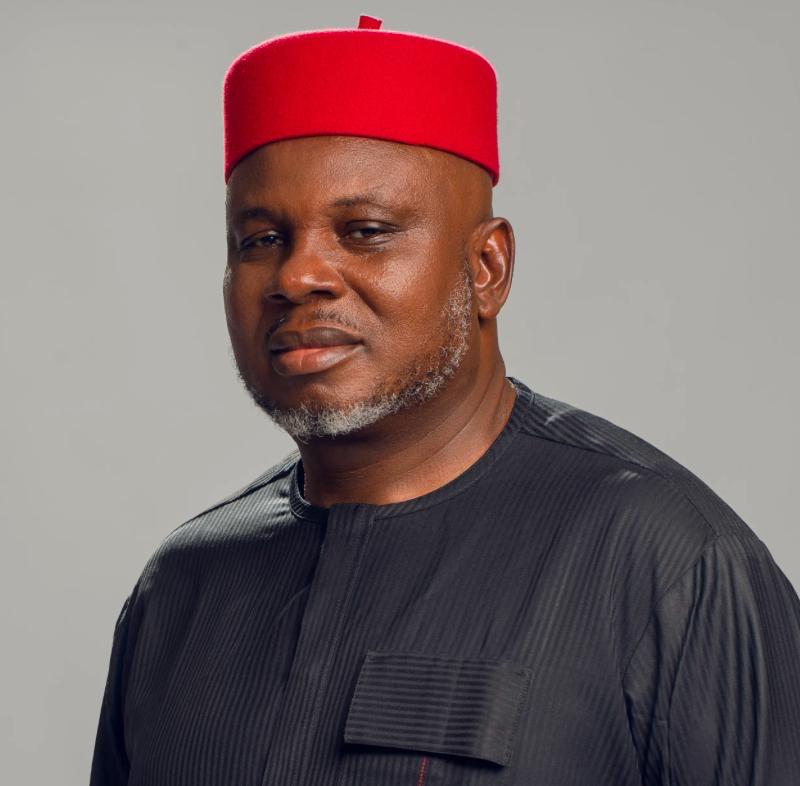
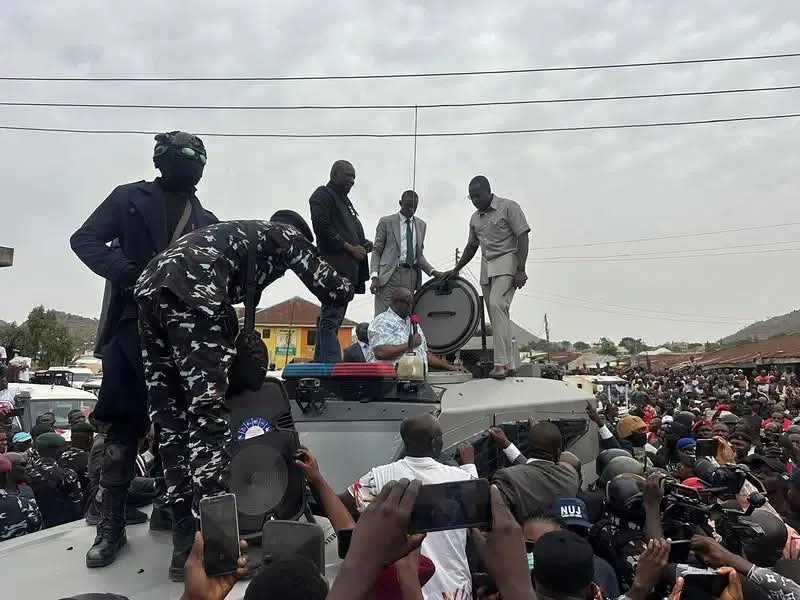
Human rights lawyer Ifeanyi Ejiofor has sharply criticized Plateau State Governor, Caleb Mutfwang for addressing grieving residents from inside an armoured vehicle after a deadly attack in Plateau State.
Ejiofor called the move a troubling symbol of disconnected leadership in a time of crisis.
He gave the criticism in a strongly worded statement titled “Wednesday Musings: Blood on the Plateau — Governance from Within Armoured Shells, While Citizens Bleed in the Open,”
The human rights lawyer questioned whether the governor’s decision was based on credible intelligence or an excessive display of caution. “Either way, the optics were deeply damaging.”
Ejiofor described the governor’s posture as a stark reflection of a widening gap between leadership and the people.
According to him, when a state leader appears physically shielded from those he governs—especially in moments of shared grief—it sends a message of fear, detachment, and eroded trust.
The criticism comes in the aftermath of a brutal attack on communities in Bokkos Local Government Area, where terrorists killed dozens of residents.
Villages such as Hurti and nearby settlements recorded early casualty figures exceeding 40.
Many others were injured, displaced, or remain missing, deepening the humanitarian toll.
“The violence is not an isolated incident but part of a recurring pattern that has plagued Plateau State for years.
He said that it is driven by a complex mix of ethno-religious tensions, land disputes, and the activities of armed groups.
“The persistence of such attacks underscores systemic failures in security and governance.
Tragic approach by Mutwang
However, beyond the tragic loss of lives, Ejiofor focused on what he described as a powerful and disturbing image.
“A governor addressing traumatized citizens from within the confines of an Armoured Personnel Carrier. That was more than a security precaution.
“If the Chief Security Officer cannot stand openly among his constituents without protection, what hope is there for ordinary citizens?
“Farmers, traders, and children navigate daily life without armoured shields.
“Yet government expect them to endure the consequences of insecurity with little assurance of protection.”
Ejiofor also highlighted the timing of the attack.
“It followed closely on the heels of major political activities, including the national convention of the All Progressives Congress held in Abuja.
“As political actors focus increasingly on electoral strategies and power consolidation, the urgency of protecting lives appears to diminish.
According to him, Nigeria is entering a familiar cycle where governance takes a backseat to politics.
“Security concerns risk being overshadowed by campaign planning, while intelligence coordination gives way to political maneuvering.”
“In such an environment, violent groups exploit the distraction, striking when attention is divided.
“This is not just a failure of security but a failure of priorities.”
He argued that true leadership is not defined by speeches delivered from behind layers of protection.
“It is rather defined by the ability to create conditions where such protection becomes unnecessary.
“A nation where leaders feel safer behind armoured steel than among their own people is one in urgent need of introspection.”
He warned that if political ambition continues to outweigh the value of human life, Nigeria risks losing not just territory, but its moral foundation.
As the country moves closer to another election cycle, Ejiofor called for a renewed commitment to the protection of lives, urging leaders to reconnect with the realities faced by ordinary citizens.