Civil society organisations and health advocates have issued a stark warning that the world may be heading toward another era of “vaccine apartheid” unless global powers—particularly the European Union—change course in ongoing pandemic treaty negotiations.
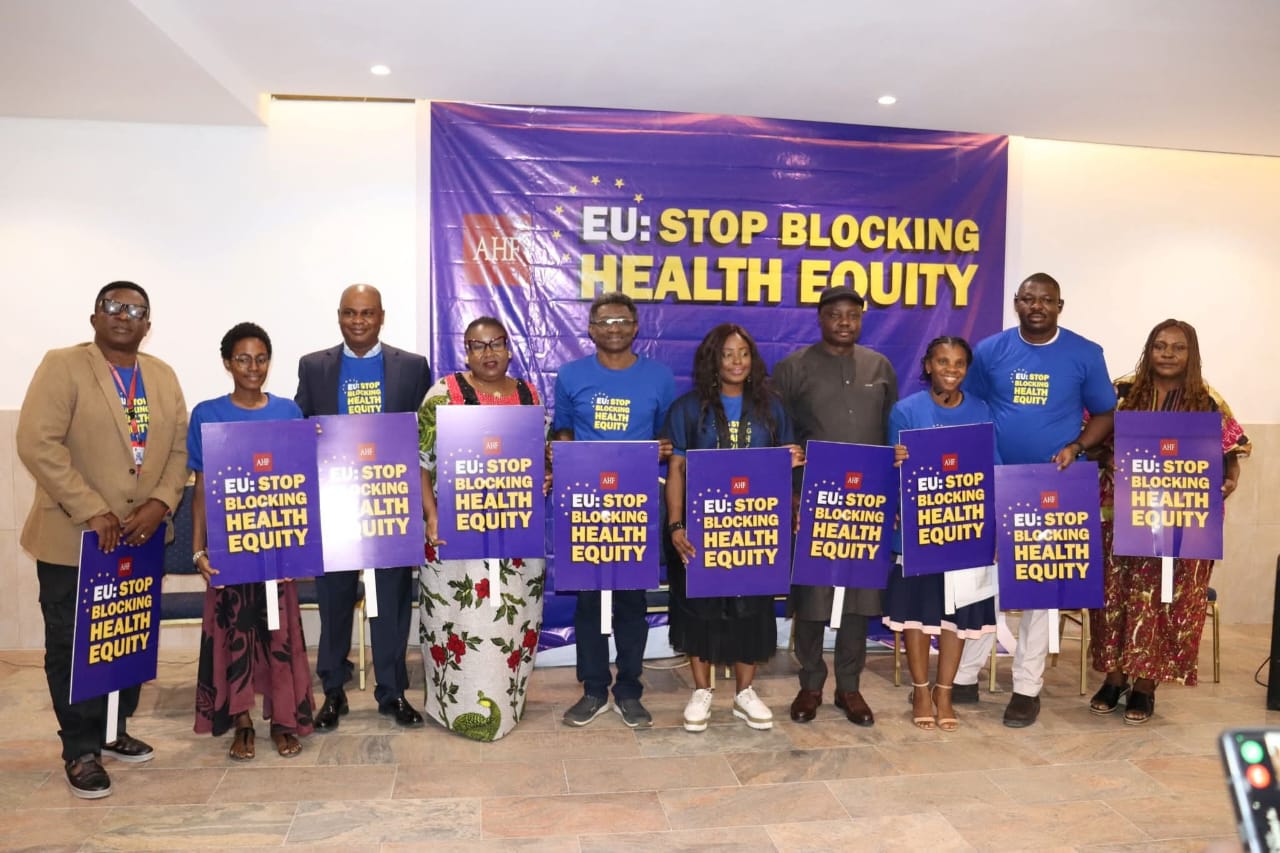
At a high-stakes briefing in Abuja, convened by AIDS Healthcare Foundation (AHF) Nigeria and partner groups, stakeholders said current positions being pushed by the EU in talks around the World Health Organization Pandemic Agreement could entrench inequality rather than fix it.
The negotiations, which include the contentious Pathogen Access and Benefit-Sharing (PABS) Annex, are meant to define how countries share biological data and, crucially, how resulting vaccines, diagnostics and treatments are distributed during global health emergencies.
But according to Dr. Echey Ijezie, Country Programme Director of AHF Nigeria, the direction of the talks raises red flags.
“The EU must stop blocking equity and get the agreement done. A weak Annex risks repeating the vaccine apartheid of COVID-19 while putting all countries at risk,” he said.
Ijezie’s warning reflects a growing frustration among Global South actors who say lessons from the COVID-19 pandemic are in danger of being ignored.
Developing countries are pushing for enforceable commitments that guarantee timely access to medical countermeasures.
They alleged that during that crisis, wealthier nations secured the bulk of vaccines early, leaving poorer countries waiting—sometimes for years—for access.
Ijezie emphasized that anything short of legal obligations would undermine trust and perpetuate inequality.
“A strong PABS Annex is not symbolic—it is essential to saving lives,” he said.
“Weak provisions could derail efforts by countries to build local pharmaceutical capacity and achieve health sovereignty.
Fight over control and access
At the heart of the dispute is who controls life-saving innovations derived from pathogens collected globally.
Stakeholders argue that while samples are sourced from across continents, the benefits—vaccines, treatments, and profits—remain concentrated in the Global North.
Mr. Romy Mum of Lawyers Alert described the imbalance as both unjust and dangerous.
“When we collect pathogens, they come from everywhere. But when the drugs and diagnostics are ready, access is restricted. That cannot continue,” he said.
He warned against what he called the “commercialisation of survival. “And when it’s a pandemic, it doesn’t ask about licensing—it hits everyone,” he added.
Stakeholders also pointed out that the EU’s stance remains decisive—capable of either unlocking consensus or weakening the entire agreement.
Africa’s Call for Self-Reliance
Beyond global negotiations, Nigerian health sector leaders used the forum to stress the urgency of domestic preparedness.
Martin Egbanubi of the Joint Health Sector Union urged the government to prioritise local vaccine production and invest in research.
“The next pandemic may not be as forgiving. We must develop strategies and stop depending entirely on others,” he said.
His remarks align with broader calls across Africa for increased investment in science, manufacturing, and health infrastructure—lessons drawn painfully from the COVID-19 experience.
Civil society groups also raised concerns about exclusion from the negotiation process.
Gloria Asuqwo of the International Community of Women Living with HIV/AIDS in West Africa said affected communities must have a seat at the table.
“Equity, justice and fairness require that everyone is carried along before any agreement is signed,” she said.
Media and advocacy groups, including the Nigeria Association of Women Journalists, reaffirmed their commitment to amplifying these concerns and pushing for a more inclusive framework.
As negotiations continue, stakeholders insist the outcome will shape the future of global health governance.
For them, the stakes go beyond diplomacy—they are about who lives and who gets left behind when the next crisis strikes.
They insisted that without enforceable equity, the world risks repeating one of the most criticised failures of the COVID-19 era—this time with even higher consequences.