The Association of Medical Laboratory Scientists of Nigeria (AMLSN) has called for the immediate suspension of proposed amendments to key health laws, warning that the changes could endanger patient safety and weaken the country’s healthcare system.
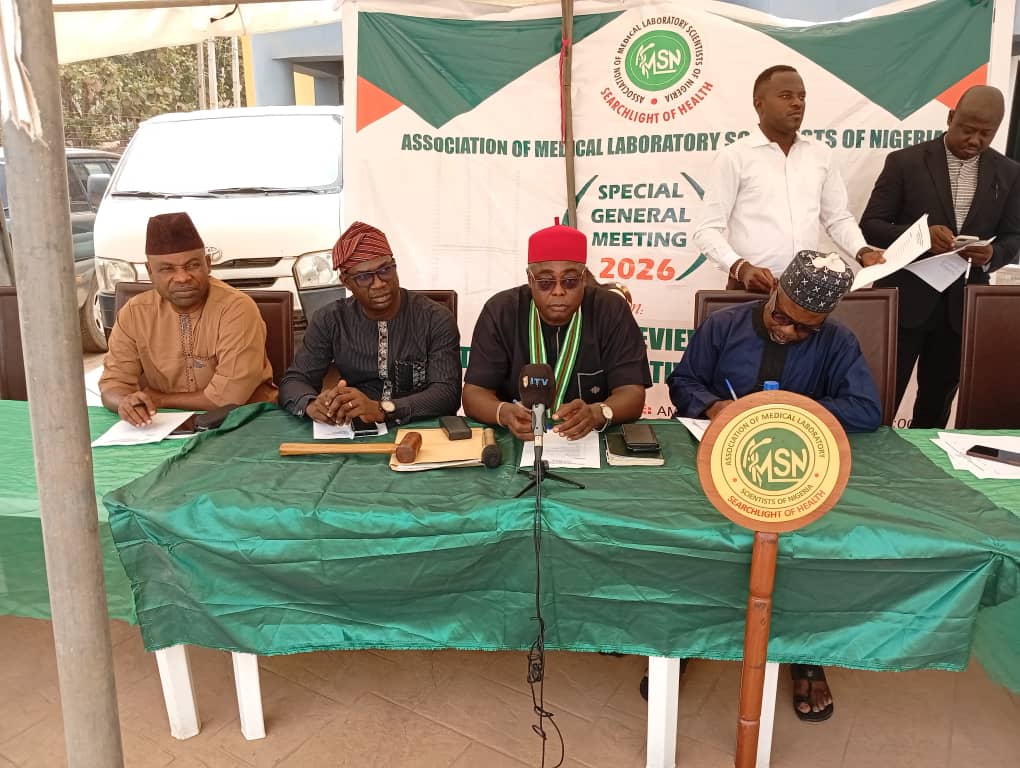
National President of the association, Dr. Casmir Ifeanyi, made this known during a media briefing in Abuja.
He strongly criticized the Executive Bill HB:2701 and its Senate counterpart, particularly the proposed alterations to Sections 3 and 29 of the Medical Laboratory Science Council of Nigeria Act.
Dr. Ifeanyi described the amendments not as reforms but as a “dangerous regression” with serious implications for healthcare delivery in Nigeria.
He warned that if enacted, the provisions could destabilize the existing framework that governs medical laboratory practice.
According to him, the proposed changes are unnecessary and ill-conceived, with the potential to compromise patient safety, weaken regulatory independence, and trigger avoidable conflicts among healthcare professionals.
He also noted that the amendments could introduce significant medico-legal uncertainties into the system.
Focusing on Section 3 of the Bill, the AMLSN President explained that the proposed changes would alter the structure of the Council’s governing board by reducing the number of professionals and increasing political influence in appointments.
He stressed that effective healthcare regulation must be driven by expertise rather than political considerations, warning that leadership lacking scientific competence could undermine the system.
Concern over inclusion plan
Ifeanyi also expressed concern over the planned inclusion of the Medical and Dental Council of Nigeria on the board of the Medical Laboratory Science Council.
He described it as a breach of professional autonomy and a deviation from globally accepted standards.
On Section 29, Dr. Ifeanyi pointed out what he described as a contradiction in the Bill.
While it broadly defines medical laboratory science, it simultaneously removes its role in diagnostic contributions.
He emphasized that more than 70 percent of clinical decisions depend on laboratory-generated data, warning that excluding laboratory scientists from diagnostic processes could lead to delays, confusion, and increased risks for patients.
The AMLSN President further criticized provisions in a separate Bill, HB:2695, which seeks to amend the Medical and Dental Practitioners Act.
He alleged that the Bill attempts to absorb critical aspects of medical laboratory science into a framework where they do not belong.
Ifeanyi described such moves as legislative overreach, cautioning that they could undermine specialized areas such as molecular diagnostics, genetic testing, and assisted reproductive technologies.
Drawing from global best practices, he explained that medical laboratory scientists are responsible for generating and validating diagnostic results, while pathologists interpret those results for clinical management.
He warned that blurring these distinct roles could expose patients to avoidable risks.
Legal precedents
The AMLSN President also cited existing legal precedents that uphold the current Medical Laboratory Science Council Act, noting that the proposed amendments could lead to legal conflicts and regulatory instability if passed into law.
Dr. Ifeanyi added that the Bills could weaken accreditation systems, disrupt compliance with international standards, and damage Nigeria’s reputation in the global health community.
He therefore urged the President, the leadership of the National Assembly, and relevant committees to halt further legislative action on the Bills and allow for broader stakeholder engagement and technical review.
“This issue goes beyond professional interests; it is about patient safety and the survival of a critical component of Nigeria’s healthcare system,” he said, emphasizing that healthcare policies must be guided by scientific evidence and global standards.
He reaffirmed the association’s commitment to protecting the integrity of medical laboratory practice and ensuring the delivery of safe, reliable healthcare services across Nigeria.