Traditional rulers in Anambra State have thrown their weight behind the growing call for the creation of special legislative seats for women, while stressing the need for competent candidates to fill such positions.
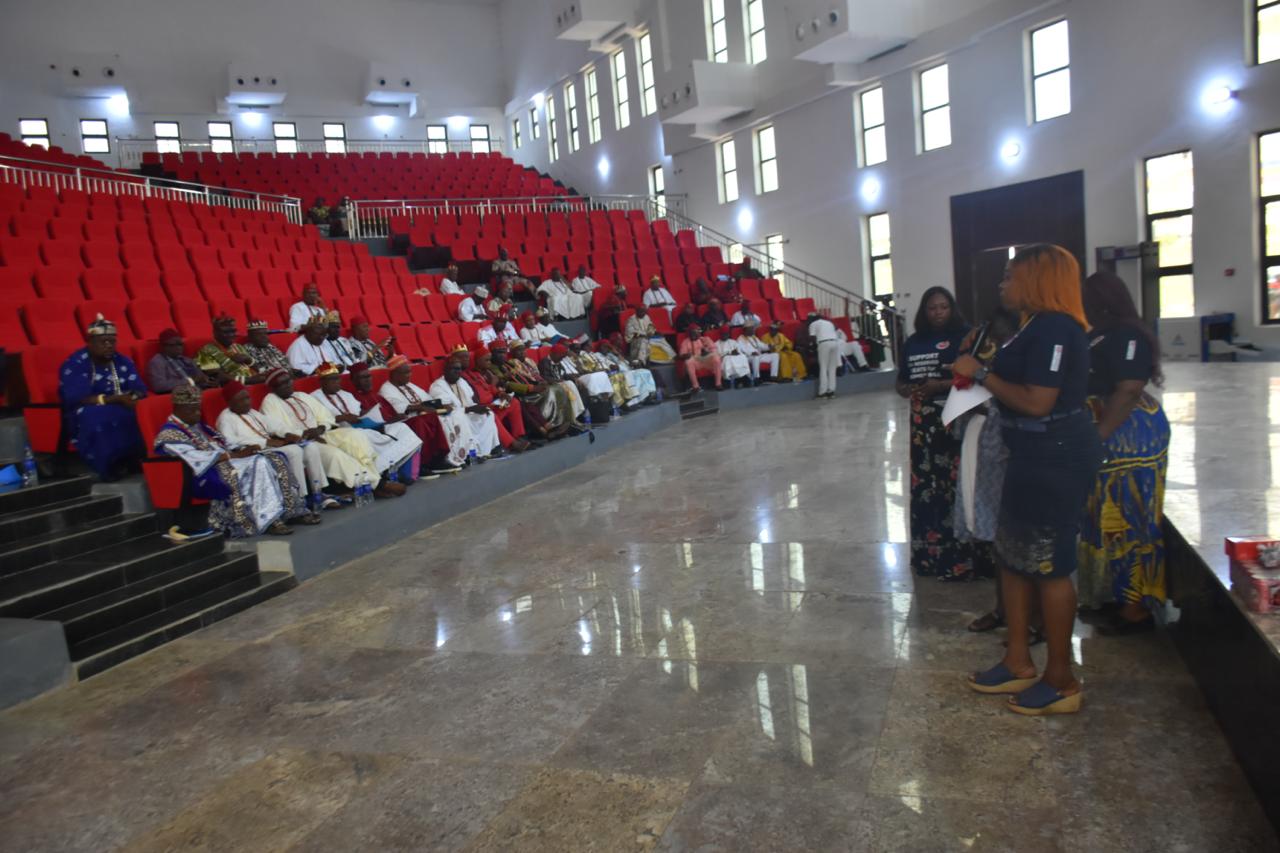
The royal fathers made their position known in Awka during their quarterly meeting after receiving a delegation from the Social and Integral Development Centre (SIDEC), which is advocating for increased female representation in governance.
Speaking on behalf of the council, the Traditional Ruler of Uke and Secretary of the Anambra State Traditional Rulers Council, Igwe Charles Agbala, said the monarchs support the proposed bill but warned against compromising standards.
“We support the request for special legislative seats for women, but we have reservations about the quality of those who will occupy such positions,” he said.
“It is one thing to create the seats and another for women to ensure that competent and qualified candidates emerge. Qualified women can be found everywhere.”
Earlier, SIDEC Executive Director, Ugochi Ehiahuruike, explained that the organisation is championing the proposed legislation under its Project IMPACT—Inclusive Mobilization for Participation, Advocacy, and Civic Transformation—being implemented in Anambra and Imo states in collaboration with the Civil Society Situation Room, with support from the UK Foreign, Commonwealth and Development Office (FCDO).
Ehiahuruike said the initiative involves engaging critical stakeholders to build support for the bill currently before the National Assembly, which seeks to amend the Constitution to address the under-representation of women in Nigeria’s legislature.
Current imbalance
She highlighted the current imbalance, noting that only four out of 109 senators and 16 out of 360 members of the House of Representatives are women, while just 55 women occupy seats across all State Houses of Assembly nationwide with 360 members.
According to her, the proposed bill recommends the creation of 108 additional reserved seats for women—37 in the Senate, 37 in the House of Representatives, and three in each State House of Assembly.
She said the move would not replace existing seats but complement them, adding that women elected into the reserved positions would still be chosen through the electoral process.
“Increasing women’s representation would promote inclusivity, improve decision-making through diverse perspectives, and ensure that issues affecting women receive adequate attention.
Ehiahuruike pointed out that similar models have recorded success in countries such as Kenya, Uganda, Rwanda, and Tanzania.
The SIDEC ED called for broad-based support for the bill, stressing that its passage would require a two-thirds majority in both chambers of the National Assembly, as well as approval from at least 24 State Houses of Assembly.