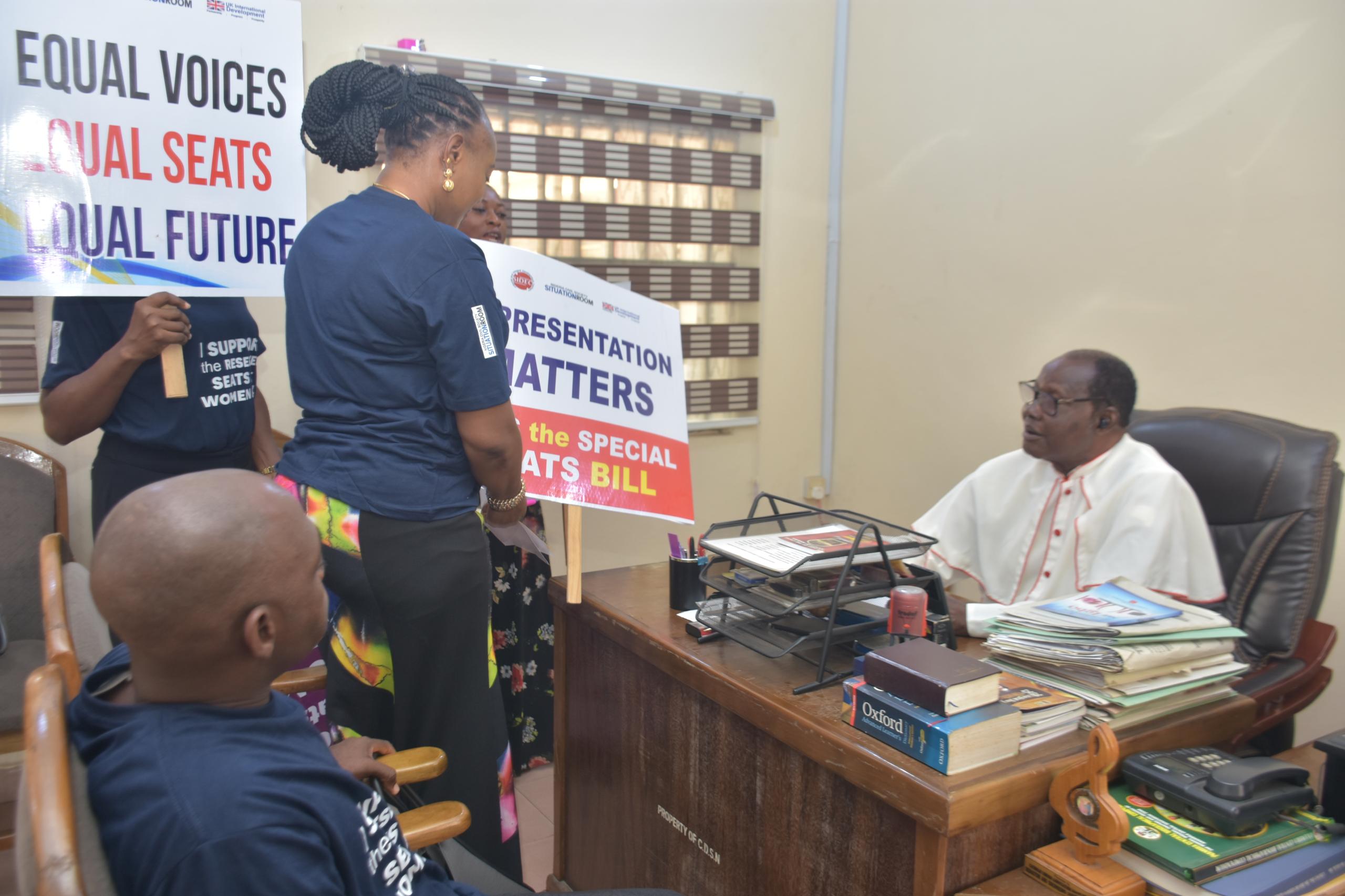
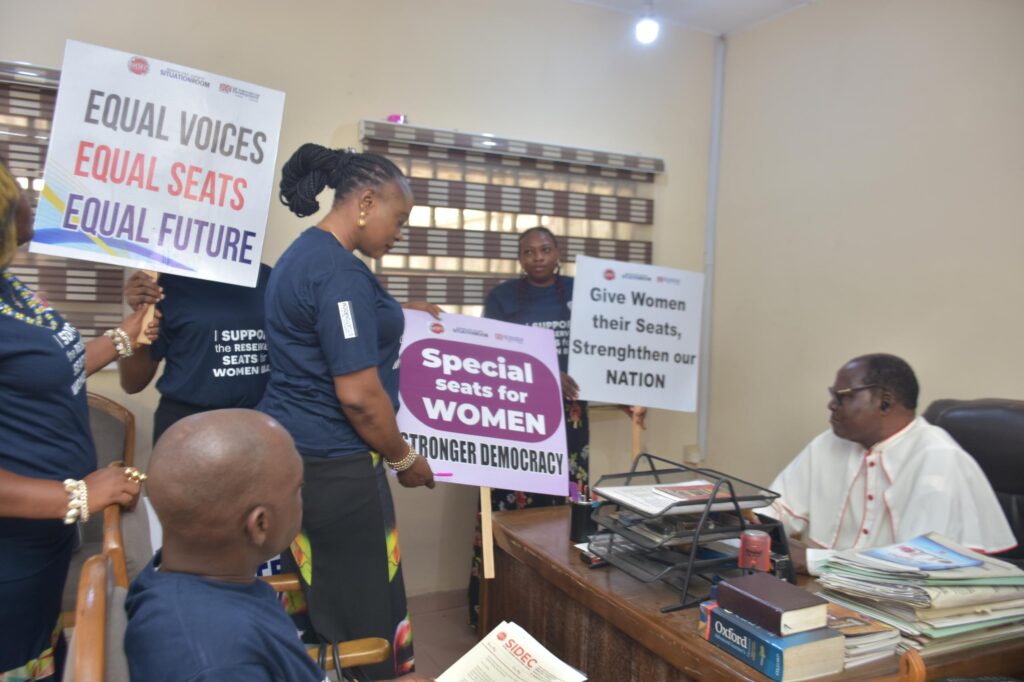
The push for constitutionally reserved seats for women in Nigeria’s legislatures gained fresh momentum in Anambra as the Social and Integral Development Centre (SIDEC) took its advocacy to the Catholic Diocese of Nnewi, seeking moral and institutional support for the proposed Special Seats Bill before the National Assembly.
SIDEC, a member of the Civil Society Situation Room, is implementing Project IMPACT — Inclusive Mobilization for Participation, Advocacy, and Civic Transformation — in Anambra and Imo states with support from the UK Foreign, Commonwealth and Development Office (FCDO).
The project aims to build inclusive electoral and governance systems that create equal opportunities for women, youths and persons with disabilities to occupy elective public offices.
Project IMPACT is therefore taking up advocacy in favour of the bill in Anambra and Imo states to secure stakeholders buy-in for the bill which seeks to reserve additional seats for women in the National and State Houses of Assembly.
Presenting the advocacy brief, SIDEC Executive Director, Ugochi Ehiahuruike, noted, “Currently, women occupy only four seats in the Senate, 16 in the House of Representatives, and 55 across the 36 State Houses of Assembly.
Proposals of the bill
“The proposed bill seeks to introduce 108 additional seats: 37 in the Senate (one per state and the FCT), 37 in the House of Representatives (one per state and the FCT), and three in each State House of Assembly — one per senatorial district.
According to Ehiahuruike, the reserved seats would complement, not replace existing constituencies.
“Women elected into the new seats would contest and be voted for by the electorate, and no superior or inferior status would be attached to the positions.
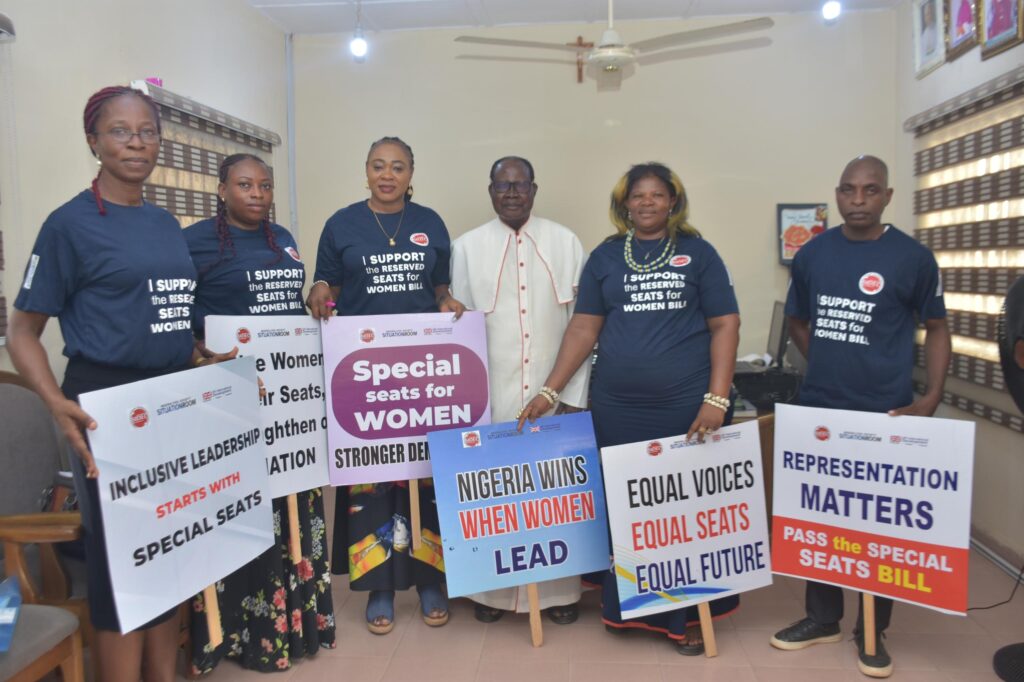
“This is about strengthening Nigeria’s democracy through inclusion,” she said.
“Countries such as Rwanda, Kenya, Uganda and Tanzania have adopted similar models with measurable success.
“Nigeria cannot afford to continue sidelining half of its population in governance.”
The bill requires a two-thirds majority in both chambers of the National Assembly and approval by at least 24 State Houses of Assembly to become law — a threshold that advocates say underscores the importance of mobilizing influential stakeholders, including faith leaders.
Responding to the delegation, the Vicar General of the Catholic Diocese of Nnewi, Monsignor Patrick Ezeobata, welcomed the team and commended the vision of Project IMPACT.
Proven capacity of women
He acknowledged the proven capacity of Nigerian women to lead and excel when given the opportunity.
“Women have demonstrated over time that they can perform and even outshine their male counterparts if given the chance,” he said.
“Nigeria will benefit more if we have more women in leadership positions in the political space.”
The cleric noted that Nigerian women have already made significant strides in industry and commerce, arguing that there is no reason they cannot replicate such success in politics.
He however advised that the advocacy be directed to the Bishop of the Diocese, who was unavoidably absent, as the Bishop’s voice would carry greater institutional weight.
While expressing support for the intent of the bill, Monsignor Ezeobata added a note of caution, emphasizing the importance of merit and resilience in political leadership.
“I think that everyone should be able to prove the stuff they are made of by standing up to all opposition,” he said.
For SIDEC and its partners, the engagement marks another step in what is expected to be a sustained campaign to build consensus around the Special Seats Bill.
With legislative approval dependent on broad political and societal backing, advocates say endorsements from respected religious institutions could help shift the conversation from controversy to constitutional reform.
As Nigeria grapples with questions of representation and equity, the debate over reserved seats for women is fast becoming a defining test of the country’s commitment to inclusive governance.