
Emma Elekwa
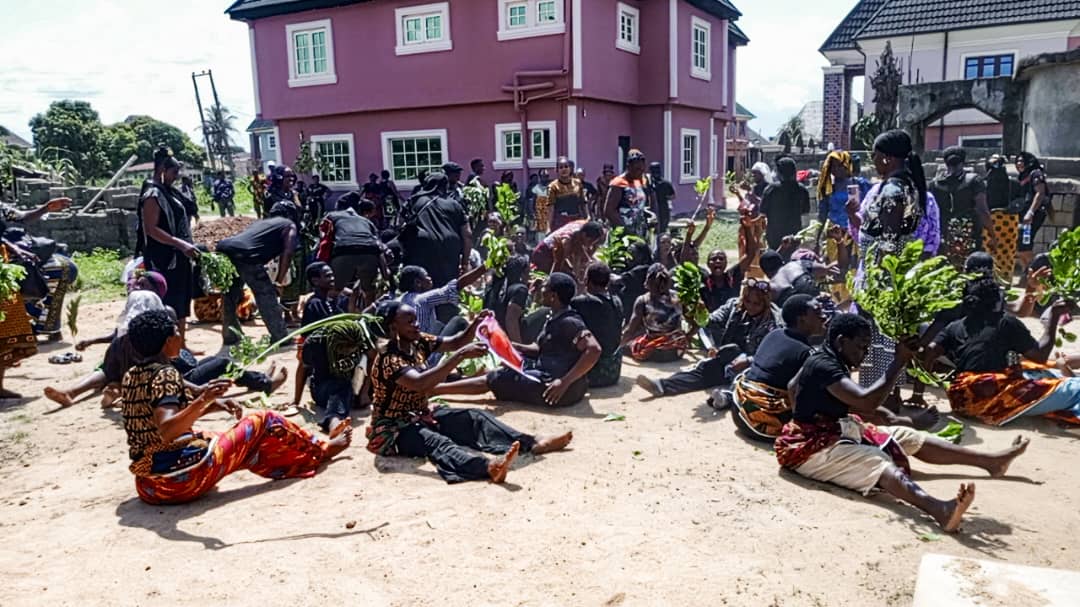
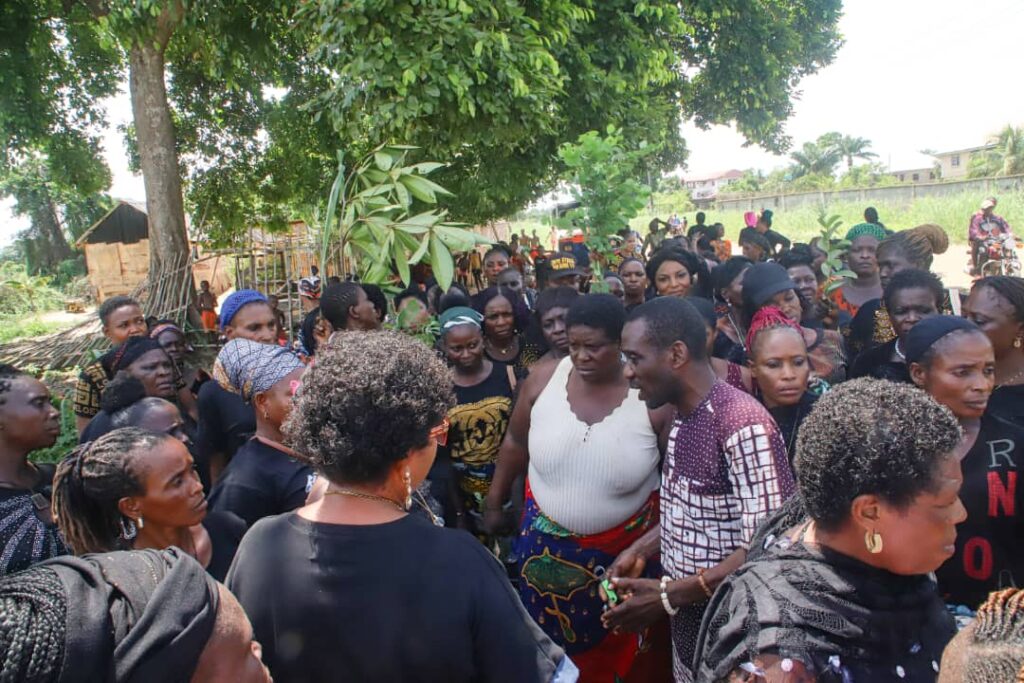
Hundreds of women from Umuenwelum Anam in Anambra West Local Government Area of Anambra State have staged a peaceful protest over controversial death of their kinswoman, Mrs. Anthonia Chisom Okafor, in Lagos.
The protesters, operating under the umbrella of Umuada Umuenwelum (daughters of the community), converged from various parts of Anambra and beyond.
They marched to the residence of the deceased’s husband’s family at Umungwuoba kindred, Umualor village, Umudora Anam, describing their mission as both a fact-finding visit and a formal presentation of demands.
The deceased, aged 26, reportedly died on April 9, 2026, shortly after childbirth.
Her death, however has since sparked widespread concern following reports of visible mutilations on her body and what the community described as “inconsistent explanations” from her husband, Mr. Izuchukwu Okafor.
Dressed in black mourning attire and carrying green leaves—symbols of protest and justice in Igbo tradition—the women demanded accountability and clarity regarding the circumstances of her death.
Tensions escalated when the group arrived at the family compound only to find it locked, with no relatives present to receive them.
Greeted by silence
“This is unacceptable,” one protester said. “We came in peace to seek answers, but instead we were met with silence.”
Angered by the situation, the women reportedly invoked traditional curses on those they believe might be responsible, before proceeding in a procession across the community.
The protest concluded at the village square, where further traditional rites were performed.
Leader of the group, Mrs. Theresa Igwenma, said the protest was part of a broader effort to address a disturbing pattern.
“We have lost about 26 of our daughters in their matrimonial homes under questionable circumstances.
“In many of those cases, nothing was done. This time, we refuse to be silent.
“The protest is aimed not only at seeking justice for Chisom but also at preventing further tragedies involving daughters of the community,” she added.
According to Igwenma, traditional oath-taking rituals had reportedly been conducted—requiring the husband to swear before deities that he had no role in his wife’s death.
“But, we the women rejected the processbecause it excluded key stakeholders.
“Custom demands that we, as daughters of the land, must be fully involved. That was not the case here,” she said.
In a statement released to the press, the group outlined its concerns:
Painful questions
“The circumstances surrounding her passing, the delay in notifying her family, restricted access to her body, and the condition in which her remains were eventually seen raise serious and painful questions that cannot be ignored.”
“We demand a full and transparent investigation into everything that transpired—from the time of her death to the handling of her body.”
“Women from Umuenwelum and across Anam must not be treated carelessly in marriage, in healthcare, or even in death.”
Civil society groups have also weighed in. All Nation Arise and Manifest, ANAM Initiative, in partnership with the Ada Akataka Foundation, declared solidarity with the protesting women and the bereaved family.
In a joint statement signed by their leadership, the organizations called for institutional accountability:
“This case goes beyond one family’s grief. It raises critical issues about maternal healthcare, post-mortem handling, and the dignity owed to women.”
“If the reported injuries were not inflicted by family members, then all medical and mortuary personnel involved must be thoroughly investigated.”
Probe demanded
They urged the Federal Ministry of Women Affairs, alongside relevant state authorities, to probe the matter and strengthen safeguards against negligence and abuse in both medical and mortuary systems.
“We demand truth for Chisom, accountability where necessary, and stronger protection mechanisms for all women,” the statement added.
Meanwhile, a source within the deceased’s family revealed that emissaries had earlier been sent to appeal to the Umuada group to accept the situation “in good faith” and allow traditional processes to take their course.
The appeal, however was rejected.
“We are not against tradition. But tradition must not be used to bury truth,” another protester said.