Emma Elekwa
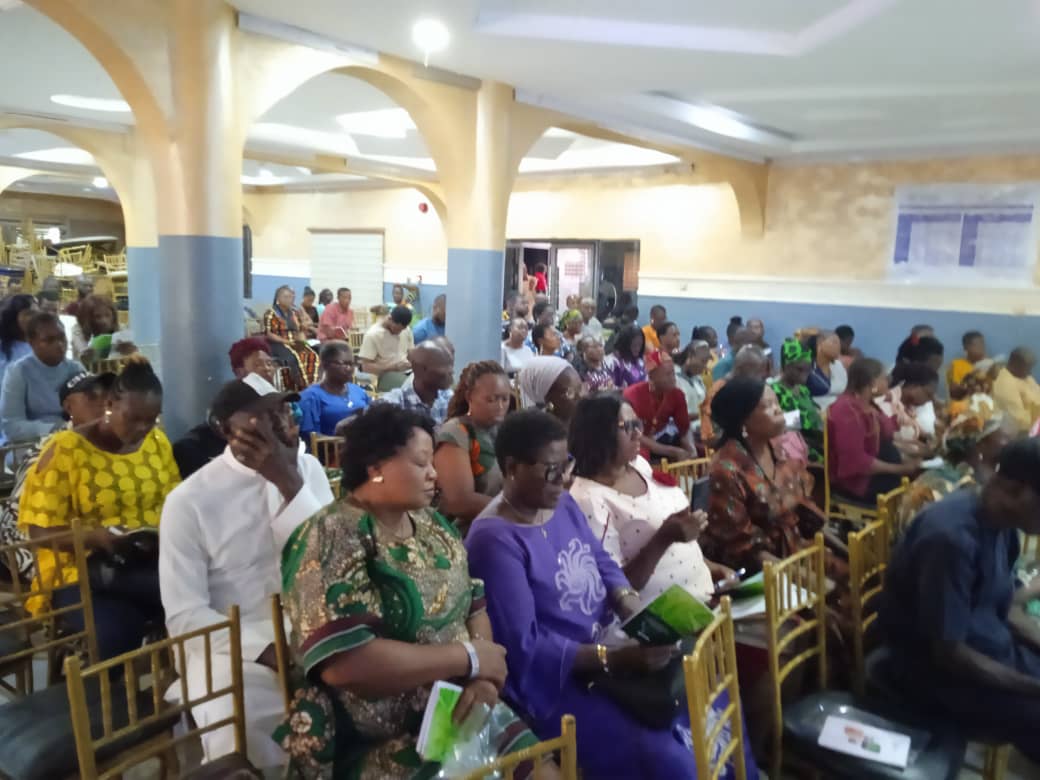
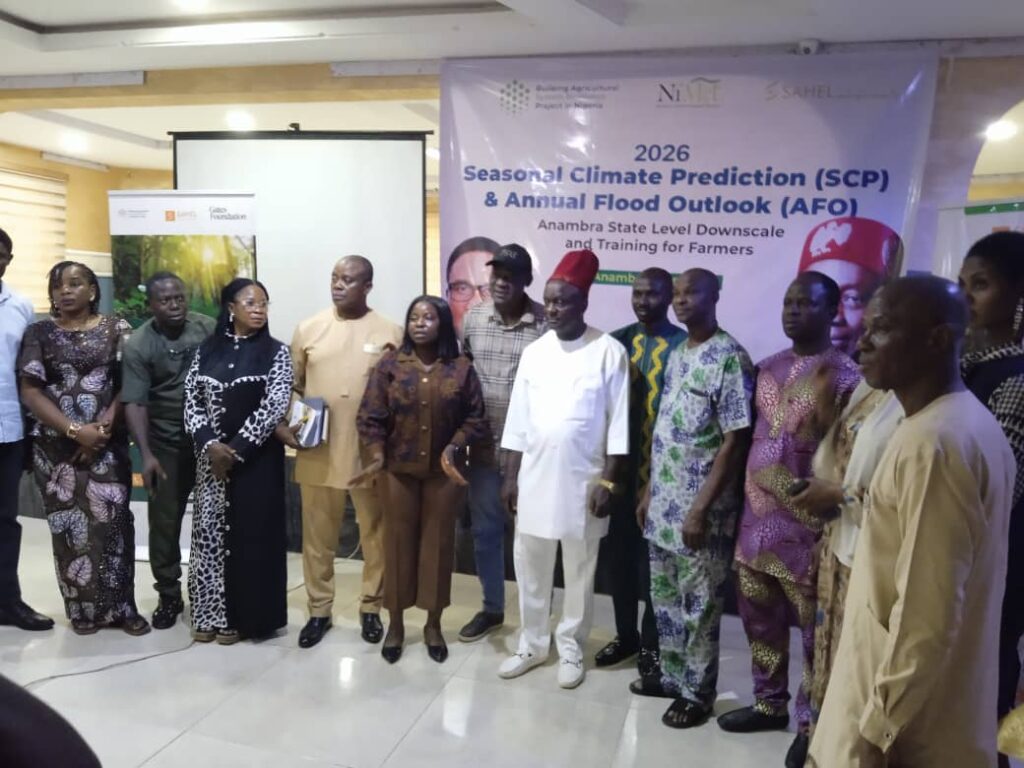
Nigerian Meteorological Agency with support of Nigeria Hydrological Services Agency has organised a one-day seminar for farmers in Anambra State to sensitize them on year 2026 seasonal climate prediction and annual flood outlook
Other partners include: the Gates Foundation, Building Agricultural System Resilience Project In Nigeria and Sahel Consulting Agriculture and Nutrition Ltd.
According to NiMET, the prediction is a vital tool, helping to improve agricultural productivity, enhance disaster risk reduction and support informed decision making process.
The event had as its theme “Anambra State Level Downscale and Training For Farmers”.
On the occasion, Minister of Agriculture and Food Security, Sen Abubakar Kyari, said the training was to enlighten Anambra citizens on the climate prediction.
The Minister, represented by State Director, Federal Ministry of Agriculture and Food Security, Chief Arthur Mbuba, praised the organisers for choosing the state among the six states selected for the programme in the nation.
He described as timely, the initiative designed to equip farmers with basic information on climate variability, especially in an era of smart agriculture, and called on them to utilize knowledge gained to improve their productivity.
Prediction as early warning
Director General, Nigerian Meteorological Agency (NIMET), Prof Charles Anosike, highlighted that the prediction should serve as early warning and planning.
Anosike, represented by Assistant General Manager in the Agency, Desmond Onyilo disclosed that onset of the rainy season in the state was expected to start on 23rd March 2026, a period he identified as the safest time for farm cultivation.
According to him, the cessation or end of the growing season for the state is expected to be from 27th November to the 4th of December.
He further drew the attention of farmers and other stakeholders to year 2026 high rainfall, flooding and temperature projections in 11 local government areas in the state.
“High flood risk local government areas include: Anambra East, Anambra West, Ayamelum, Onitsha North, Onitsha South, Ogbaru, and Ekwusigo.
“Moderate flood risk local government areas: Ihiala, Nnewi North, Nnewi South, Idemili North, Idemili South, and Awka North,” he revealed.
Anosike called for increased community awareness campaigns and proactive measures by all stakeholders to control expected impact.
Earlier, State Programme Manager, Agricultural Development Programme (ADP), Mr Godwin Akujieze, affirmed the readiness of its Agric Extension Workers to further downscale climate information to local communities in the state.
Climate advisories
While admonishing farmers to take climate advisories before engaging in farm cultivation, Akujieze adviced them to plant early to enable them to harvest early.
Mr Onyeka Ugochukwu of the Nigeria Hydrological Services Agency (NIHSA), spoke on annual flood outlook, highlighting imminent high flood risk in parts of the state.
He added that flood variability posed a great threat to lives, and infrastructure, urging for quick evacuation from high-risk areas and prompt clean up of drainage channels.
A representative of National Emergency Management Agency (NEMA) Mrs Chinwe Okpara, spoke on “Preparedness and Risk Reduction Strategies On The Outcomes Of The 2026 Seasonal Climate Prediction”.
She underscored the need to abide by early warning signs urging farmers to insure their farmlands and adopt measures to prevent losses.
Okpara reiterated the commitment of the agency to sustaining its renewed strategy of shifting disaster management from reactive response to proactive preparedness.
A resource person, Mrs Blessing Agambi, spoke on crop weather calendar based on 2026 seasonal climate prediction.
She called on farmers to adopt good agronomic practices and plant verified seeds, urging poultry farmers to adjust to changing temperature to protect their birds.