
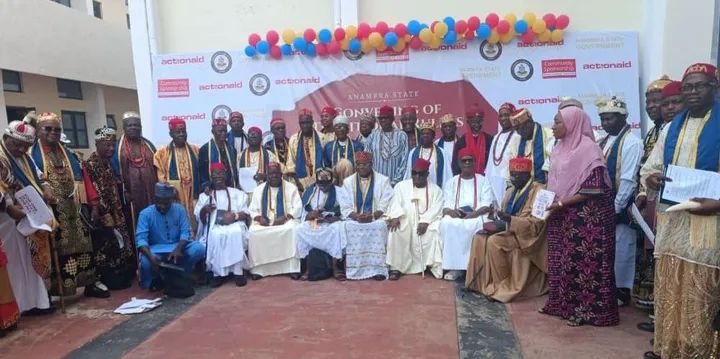
Ms Blessing Ifemenam, a representative of ActionAid Nigeria, has underscored the critical role of traditional rulers in shaping social values and influencing behaviour to curb gender-based violence in communities.
Ifemenam made this known in Awka during a stakeholders’ conference convened by ActionAid Nigeria in partnership with the Anambra State Government.
The conference had traditional rulers across Anambra declared a united stance against gender-based violence and pledged to strengthen community protection mechanisms.
The event had the themed “From Custodians to Champions: Redefining Culture for Gender-Based Violence Prevention and Community Protection”, and it featured the signing of a Royal Mandate for Gender-Based Violence Prevention.
She said that monarchs, as custodians of culture, possess the influence to transform harmful patriarchal norms into values that promote gender equality and protect vulnerable persons.
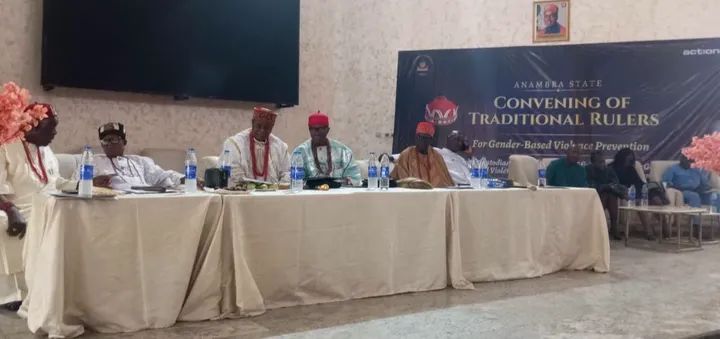
Royal Mandate on GBV
Reading the royal declaration on behalf of the Chairman of the Anambra Traditional Rulers Council, Igwe Chidubem Iweka, the Council Secretary, Igwe Charles Agbala, said the pledge signified a shift in the role of monarchs.
Agbala said the transition marked a move from being custodians of tradition to becoming champions of justice and safety.
He said the traditional rulers had resolved to redefine cultural practices to protect the vulnerable, promote respect for human dignity and ensure awareness of the Violence Against Persons Prohibition (VAPP) Law across their communities.
He added that no perpetrator would find refuge under the guise of tradition, stressing that culture should reflect safety and respect for all individuals.
Also speaking, the Chairman of the Multi-Stakeholder Action Committee on Gender-Based Violence Prevention, Igwe Pius Omachonu, said the initiative was aimed at empowering monarchs to take responsibility for prevention efforts in their domains.
Omachonu noted that the adoption of community-based monitoring systems by traditional rulers would significantly reduce gender-based violence and create safer environments for women, children and families.

In his remarks, Mr Alphonsus Nwoye, a Social Development Consultant, called for a review of cultural practices that may indirectly encourage gender-based violence.
Nwoye said that sustainable community development depended on prioritising gender justice, access to education, improved healthcare delivery and stronger family economies.
The conference also drew participation from religious leaders who aligned with the royal mandate and pledged to strengthen advocacy against gender-based violence.