Alfred Ajayi
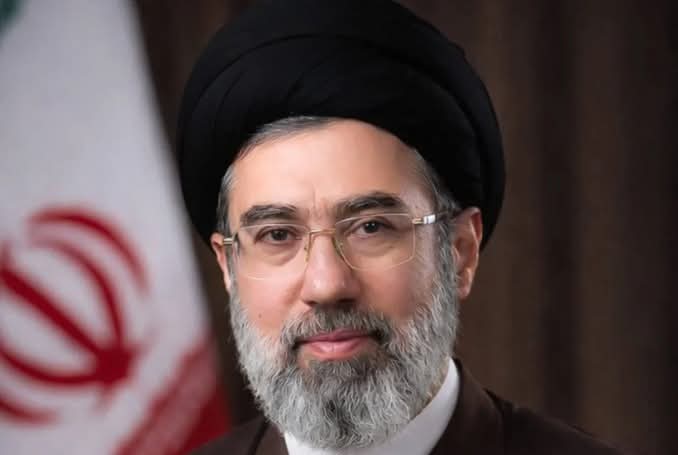
The emergence of Mojtaba Khamenei as Iran’s Supreme Leader has added a new and complex dimension to the already volatile conflict involving Iran, Israel and the United States. His selection marks one of the most significant political shifts in the Islamic Republic in decades and could shape the trajectory of the ongoing crisis across the Middle East.
Being the most powerful office in Iran, the Supreme Leader exercises ultimate authority over the military, intelligence services, judiciary and key elements of foreign policy. With the mantle now falling on Mojtaba Khamenei following the death of his father, Ali Khamenei, analysts say the development could have far-reaching implications for the war and regional stability in the Middle East.
Sustenance of Iran’s hardline doctrine
One of the most immediate consequences of Mojtaba Khamenei’s leadership is the likelihood that he will sustain his father’s policy direction and leadership style. Recall that for decades, Iran’s strategic posture under Ali Khamenei was resistant to Western influence and in support of allied movements across the Middle East.
Mojtaba is widely regarded as a staunch conservative with deep ties to Iran’s security establishment, particularly the Islamic Revolutionary Guard Corps (IRGC). This powerful military institution plays a central role in Iran’s regional military strategy. It oversees missile programs, proxy networks and strategic operations.
For this close connections, many observers believe the new Supreme Leader is unlikely to dramatically alter Iran’s approach to the conflict. Instead, he may seek to demonstrate resolve and continuity in order to reassure the military establishment and political elites that the Islamic Republic remains strong despite leadership changes. In wartime politics, such continuity can signal defiance and resilience.
Demonstrating strength in crisis time
Leadership transitions during periods of conflict often place enormous pressure on new rulers to prove their authority. Mojtaba Khamenei now faces the challenge of consolidating power within Iran’s complex political structure while simultaneously confronting external military threats.
Political analysts predict that he may feel compelled to project strength early in his leadership to avoid perceptions of weakness both domestically and internationally. In practical terms, this could translate into a more assertive military posture toward Iran’s adversaries.
Such actions might include intensified missile deterrence, stronger support for regional allies, and expanded defensive operations against perceived foreign aggression.
The symbolism of the succession is also significant. For Iran’s ruling establishment, the swift appointment of Mojtaba Khamenei signals that the state remains stable and capable of maintaining continuity even in the midst of geopolitical turbulence.
Rising tensions with Israel and US
The leadership change is hugely feared to further deepen tensions between Iran and its longstanding adversaries. Both Israel and the United States have historically viewed Iran’s leadership structure as central to the country’s regional ambitions, particularly its missile capabilities and nuclear program.
With Mojtaba Khamenei assuming command of the armed forces, rivals’ strategic calculations are likely to shift. For instance, Israel, which has frequently warned about Iran’s expanding military capabilities, could perceive the transition as a moment of uncertainty that might either escalate the conflict or open the door to further confrontations.
Similarly, the United States may reassess its diplomatic and military strategies toward Tehran as it evaluates the new leader’s policy direction. The result could be an escalation cycle where each side adopts tougher positions in response to the other.
Control of military and nuclear strategy
In Iran’s political system, the Supreme Leader has the final say on all major national security decisions including commanding the armed forces and oversighting strategic weapons programs. With his selection, Mojtaba Khamenei has become the ultimate decision-maker regarding Iran’s military strategy and its controversial nuclear ambitions.
These powers mean that his leadership could influence critical questions such as whether Iran escalates its confrontation with rivals or pursues diplomatic negotiations to reduce tensions. Any shift in policy whether toward confrontation or compromise would carry enormous consequences for the stability of the Middle East.
Internal legitimacy and political debate
Despite the swift consolidation of authority around Mojtaba Khamenei, the circumstances of his rise are not without controversy. Iran’s political system emerged from the 1979 revolution that overthrew a monarchy and rejected hereditary rule.
Replacing a Supreme Leader with his son has therefore sparked debate among observers who fear that the Islamic Republic may appear to be drifting toward dynastic politics. This perception critics argue could weaken the regime’s legitimacy among certain segments of Iranian society.
At the same time, supporters within the political establishment emphasize Mojtaba’s long-standing involvement in state affairs and his close relationship with powerful institutions such as the IRGC. If internal political tensions grow, some analysts suggest that the government could rely on external confrontation to strengthen national unity.
Regional power dynamics
Beyond Iran’s borders, the leadership change could alter the balance of power across the Middle East. Iran maintains a network of allies and affiliated movements across several countries, including Lebanon, Iraq, Syria and Yemen. These groups play a significant role in the broader geopolitical contest between Iran and its rivals.
Mojtaba Khamenei’s leadership may reinforce these alliances as Tehran seeks to maintain its regional influence during a time of conflict. At the same time, countries wary of Iran’s growing power such as Saudi Arabia and several Gulf states may respond by strengthening their security partnerships with Western allies. This dynamic risks deepening the geopolitical divide between rival blocs in the region.
The conflict involving Iran has already affected global energy markets, particularly because of the country’s strategic location near the Persian Gulf and the Strait of Hormuz, a vital shipping route for global oil supplies. Any escalation of tensions could disrupt shipping lanes or energy infrastructure, potentially driving up oil prices and affecting economies far beyond the Middle East.
Decisions made by Iran’s new Supreme Leader will therefore not only influence military outcomes but could also shape global economic stability.
Uncertain path ahead
The appointment of Mojtaba Khamenei represents a turning point in Iran’s modern history. His leadership comes at a time when the region is already grappling with one of its most dangerous geopolitical crises in years.
Whether he pursues a path of confrontation or cautiously explores diplomacy will likely determine the future course of the conflict. For now, one reality is clear: the rise of a new Supreme Leader in Tehran has introduced fresh uncertainty into an already fragile regional landscape.
As global powers watch closely, the decisions made in the coming months by Iran’s new leadership may shape the trajectory of Middle Eastern politics and the prospects for peace or prolonged conflict for years to come.