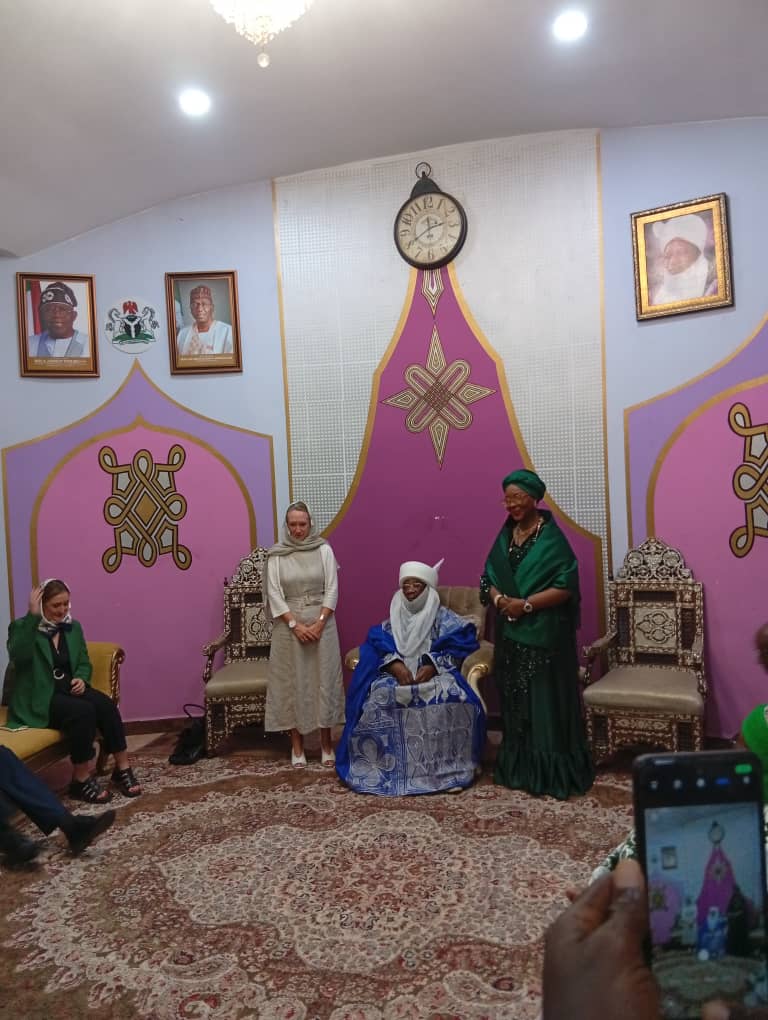
The British Deputy High Commissioner to Nigeria, Mrs. Gill Lever, has underscored the growing importance of traditional institutions in promoting peace, social stability and inclusive governance, as the United Kingdom deepens engagement with community leaders across Nigeria.
Mrs. Lever made this known during a courtesy visit to the Emir of Ilorin, Alhaji Ibrahim Sulu-Gambari.
She described traditional rulers as critical custodians of culture, unity and grassroots stability whose influence remains vital in addressing contemporary societal challenges.
The British envoy engaged the emirate on key national issues, including interfaith harmony, religious freedom, constitutional reforms and the evolving role of traditional institutions within Nigeria’s governance framework.
She also sought the Emir’s perspectives on women’s participation in politics and leadership, particularly efforts to address misconceptions surrounding Islamic views on women’s involvement in governance, public service and national development.
Mrs. Lever conveyed greetings from His Majesty’s Government and King Charles III.
He noted the monarch’s longstanding affection for Nigeria and his historic engagements with traditional rulers across the country.
The discussions further highlighted the increasing recognition of traditional institutions as strategic partners in peacebuilding, community development and conflict resolution.
Speaking during the engagement, the Imam Imole of Ilorin, Alhaji Abdullahi Abdulhamid, stressed that the emirate institution predates colonial administration and continues to serve as a stabilising force that complements modern democratic governance through its emphasis on justice, order and communal harmony.
Fair-minded Emir
He described the Emir of Ilorin as a compassionate and fair-minded leader whose stewardship has continued to sustain peace, unity and security within the emirate.
Also speaking, the wife of the Kwara State Governor and Chairperson of the Nigeria Governors’ Spouses Forum, Prof. Olufolake Abdulrazaq, reaffirmed the relevance of the traditional institution in supporting governance and social intervention programmes.
Prof. Abdulrazaq commended the Emir’s support for initiatives targeting drug rehabilitation, vulnerable populations and human capital development.
She added that the British envoy’s visit reflects shared commitments to social inclusion and sustainable community development.
Responding, the Emir of Ilorin expressed appreciation to the British delegation and reaffirmed the emirate’s readiness to continue collaborating with government and international partners in advancing peace, unity and sustainable development in Kwara State and Nigeria as a whole.