A new study has identified cultural norms, widespread poverty, unemployment, and low trust in institutions as key obstacles to financial inclusion in Northern Nigeria, with women and young people disproportionately affected.
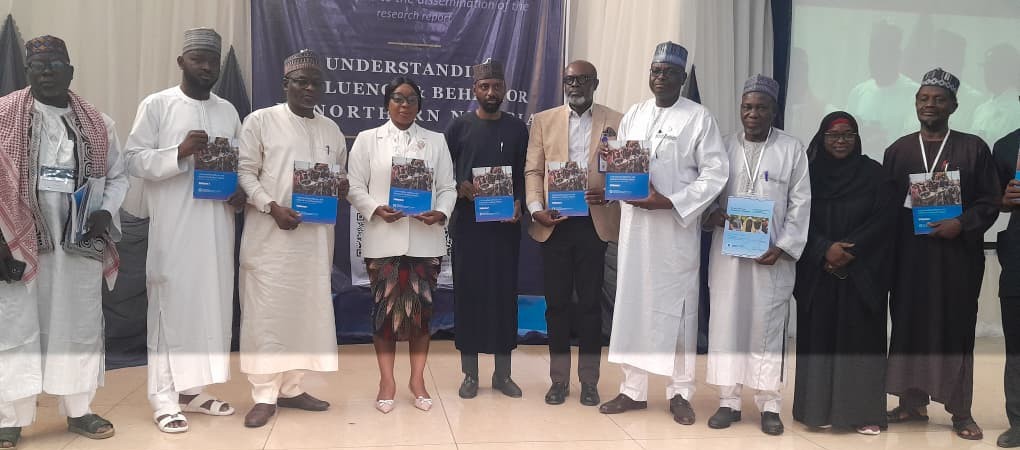
The findings were unveiled at an event hosted by Mambayya House, Aminu Kano Centre for Democratic Studies at Bayero University Kano.
Researchers and stakeholders at the gathering called for urgent policy reforms, stronger institutions, and community-driven strategies to bridge the growing financial inclusion gap.
Presenting the report, Understanding Influence and Behaviour in Northern Nigeria, Director of Mambayya House, Professor Habu Mohammed, said the study examined how socio-economic behaviours shape access to financial services across the region.
He noted that the emphasis on gender disparities was critical, given Northern Nigeria’s long-standing lag in financial inclusion—an essential measure of economic development.
According to him, closing the gap between men and women in access to bank accounts, especially fintech services, could significantly improve grassroots development outcomes.
The research was structured around three core areas: social norms and behaviours, financial inclusion trends, and gender dynamics.
The first explored how traditions, beliefs, and cultural practices influence financial decision-making.
The second analysed access to banking services, levels of trust, and fintech usage, while the third mapped gender roles and social influences within communities.
The study found that although financial inclusion is gradually improving, Northern Nigeria still trails other regions.
It also revealed notable disparities within the region. For instance, women in Benue and Nasarawa states are more economically active, while restrictive cultural norms in states like Jigawa and Kebbi continue to limit women’s participation in financial and public life.
Personal, community relationship
Another key insight was that trust in financial systems is driven more by personal and community relationships than by formal institutions.
Traditional rulers, community leaders, and household heads were identified as influential actors who could help promote entrepreneurship, income generation, and participation in formal banking.
Lead researcher, Professor Ismaila Zango of Bayero University Kano, said the report provides crucial baseline data for policymakers and development partners, noting that many interventions fail due to lack of evidence-based planning.
He revealed that unemployment in the region stands at about 37 percent, with poverty levels reaching nearly 80 percent in some states.
Addressing these challenges, he argued, requires sustained economic empowerment initiatives rather than short-term relief measures.
Zango highlighted successful examples such as women-led groundnut processing cooperatives in Kebbi State and agricultural programmes in Kano.
He urged that such models be scaled up to generate jobs and reduce poverty.
Also speaking, the Chief Executive Officer of Enhancing Financial Inclusion and Advancement (EFInA), Foyinsolami Akinjayeju, described the report as timely and insightful.
She said it reinforces existing evidence that structural barriers, low incomes, and trust deficits continue to exclude millions from formal financial systems.
Akinjayeju called on stakeholders to move from dialogue to action through what she termed “PICC” — Policy Action, Institutional Commitment, and Collaboration.
She stressed that expanding financial access is not just a social obligation but a strategic pathway to economic growth and national development.