
Emma Elekwa
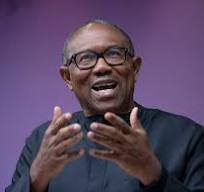
Former presidential candidate, Peter Obi has raised alarm over what he described as a growing pattern of restrictions on intellectual engagements within Nigerian universities, following the sudden cancellation of a scheduled lecture at Obafemi Awolowo University.
In a statement shared on his official platform, Obi lamented that universities—traditionally regarded as “ivory towers” dedicated to independent and rigorous intellectual inquiry—are increasingly being pressured to operate outside their core mandate.
Obi disclosed that he had been invited months earlier to deliver a keynote lecture at Obafemi Awolowo University at 9 a.m., before proceeding to Ibadan for a political summit.
However, he was informed at the last minute that the event would no longer hold on the university campus.
Describing the development as part of a disturbing trend, the former Anambra governor noted that similar incidents had occurred more than ten times in recent months.
He cited a comparable situation at his alma mater, the University of Nigeria, Nsukka, where an inaugural lecture in honour of former Vice Chancellor Frank Ndili was cancelled by university authorities on the scheduled date.
“These are not merely personal inconveniences,” Obi stated, warning that such actions signal a deeper erosion of academic freedom and open discourse.
At variance with global practices
He emphasized that universities should remain spaces for learning, debate, and the free exchange of ideas.
Drawing comparisons with his recent international engagements, Obi highlighted lectures he has delivered at leading global institutions, including University of Oxford, University of Cambridge, Harvard University, Yale University, Princeton University, University of Chicago, University of Pennsylvania, and Imperial College London, noting that such institutions continue to foster openness and critical engagement.
He questioned the implications of shrinking academic spaces in Nigeria, asking what kind of nation is being built if platforms for intellectual discourse are constrained.
Obi concluded by urging a recommitment to the principles of free inquiry and knowledge-sharing, stressing that national development depends on encouraging debate rather than restricting it.