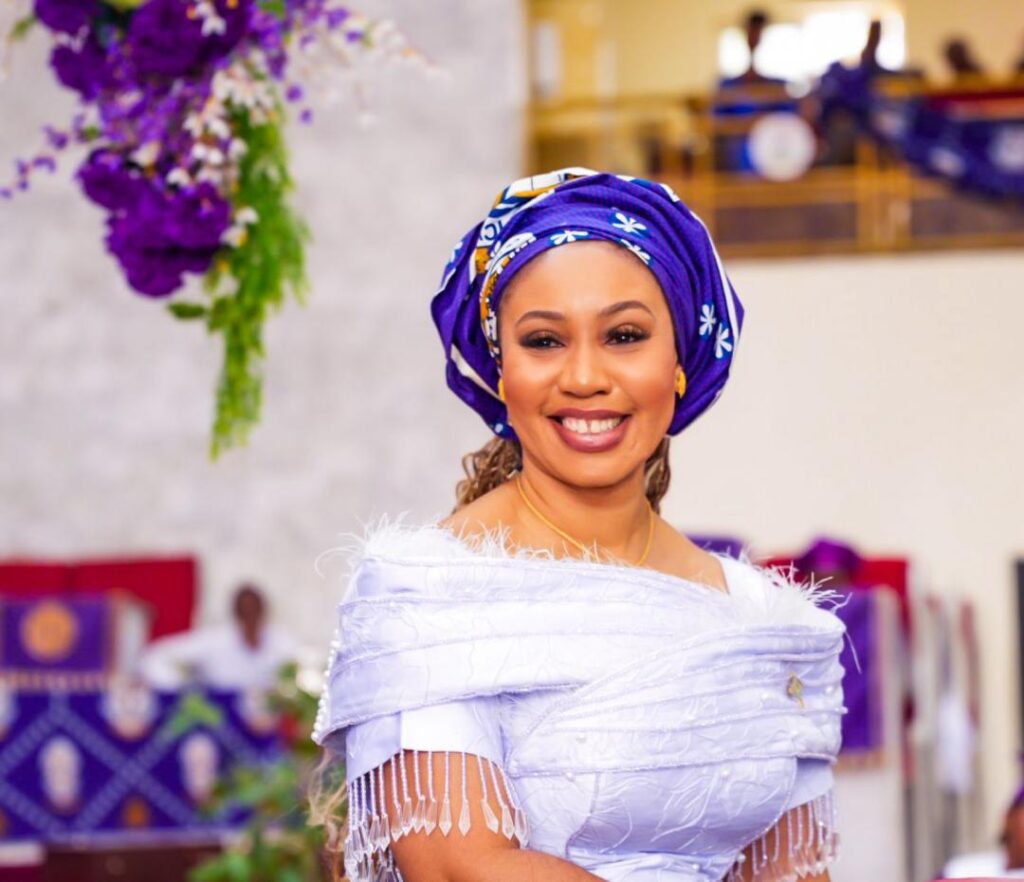
The Executive Director of HEIR Women Hub, Añuli Aniebo, has thrown her weight behind the proposed Reserved Seats Bill for Women, describing it as a decisive step toward correcting Nigeria’s deep gender imbalance in politics and building a more inclusive democracy.
Speaking on the ongoing advocacy for the constitutional amendment, Aniebo said Nigeria’s democracy cannot reach its full potential when women—who make up nearly half of the population—remain largely excluded from legislative decision-making.
Aniebo noted that Nigeria currently ranks among the lowest countries globally in women’s political representation, with women occupying only a tiny fraction of seats in the National Assembly and state legislatures.
According to available data, women hold fewer than 6 percent of seats in Nigeria’s parliament, far below the global average of about 26.5 percent.
She argued, “The Reserved Seats Bill is not about charity for women; it is about justice, representation and the strengthening of democracy.
“When women are absent from legislative spaces, policies affecting families, health, education and vulnerable communities are shaped without the voices of those most affected,” she said.
According to Aniebo, the legislation will help dismantle structural barriers such as the high cost of politics, entrenched political patronage systems, and cultural biases that have historically prevented women from contesting and winning elections.
Proposals of reserved Seats Bill
The proposed constitutional amendment seeks to introduce additional legislative seats specifically for women, without displacing existing lawmakers.
Under the proposal, each of Nigeria’s 36 states and the Federal Capital Territory would have one additional Senate seat reserved for women.
Each state and the FCT would also have two additional seats in the House of Representatives reserved for women.
Supporters say the measure is designed as a temporary corrective mechanism to accelerate women’s participation in governance.
For Aniebo, the bill would create institutional pathways for competent women leaders who have historically been shut out of the political system.
“Women in Nigeria are already leading communities, running businesses, mediating conflicts and sustaining families.
“What this bill does is open the door for those same women to bring their experience into national policymaking.”
Learning from other countries
Aniebo pointed out that when the bill is passed, Nigeria would be joining dozens of nations that have adopted similar measures to accelerate women’s political participation.
“Across Africa, several countries already use reserved seats or gender quotas to ensure women’s presence in parliament, including:
“Rwanda – where women hold more than 60% of parliamentary seats, the highest in the world. Uganda – which guarantees a woman representative for each district in parliament.
“Tanzania where special seats allocated to parties keep women’s representation above one-third of parliament. Kenya – which created women’s representative seats for each county.
“South Africa and Senegal – which have achieved over 40 percent female representation through quota systems.
Benefits of the bill
According to the HEIR Women Hub ED, increasing women’s representation in parliament could transform policymaking in several areas.
“It will lead to stronger social policies. Countries with higher female representation have passed stronger legislation on maternal health, education, family welfare and child protection.
“Inclusive governance: Women bring different perspectives to policymaking, particularly on issues affecting vulnerable populations.
“Also, evidence from countries with higher female participation shows that inclusive leadership often correlates with stronger economic growth and innovation.
“Women’s participation in governance has been linked to improved conflict resolution and peacebuilding efforts.
Aniebo emphasised that the bill would also help Nigeria meet its national and international commitments to gender equality, including the goal of achieving 35 percent affirmative action for women in governance.
A historic opportunity for Nigeria
For Aniebo, the debate around the Reserved Seats Bill represents a defining moment for Nigeria’s democracy.
She urged lawmakers and state assemblies to support the constitutional amendment process, describing it as an opportunity for the country to align with progressive democracies around the world.
“Nigeria cannot claim to be the giant of Africa while women remain largely excluded from leadership.
“Passing the Reserved Seats Bill will send a powerful message that our democracy is ready to represent everyone,” Aniebo concluded.