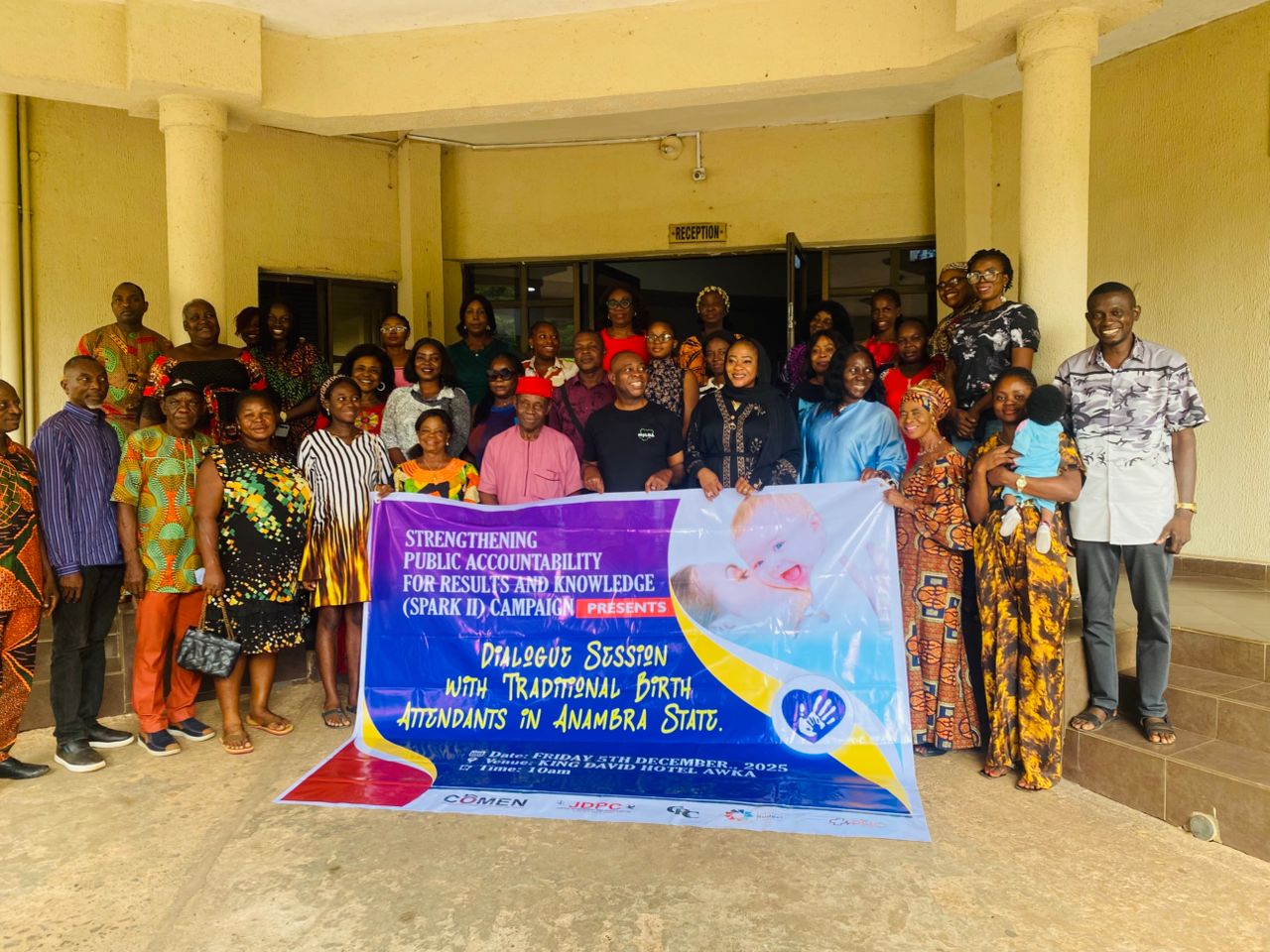
Stakeholders in Anambra’s health sector have called for increased sensitization and collaboration with Traditional Birth Attendants (TBAs) to strengthen primary healthcare service delivery and help reduce maternal and infant deaths across the state.
They made the call was made during a town hall meeting in Awka, organized by implementing partners of the Strengthening Public Accountability for Result and Knowledge (SPARK 2) project.
It attracted pregnant women, nursing mothers, Officers-in-Charge Primary Healthcare Centres, Directors of PHC, members of Ward Development Committees, Community Empowerment Network (COMEN), Civil Society and the media.
Executive Director of the Social and Integral Development Centre (SIDEC), and IBP COMEN Consultant, Ugochi Ehiahuruike, said the engagement aims to deepen TBAs’ understanding of when to refer patients to trained medical personnel and higher-level facilities such as teaching hospitals.
According to her, building a structured link between TBAs and PHCs will promote coordinated meetings, training, and stronger maternal healthcare outcomes.
“We are not chasing you but we want to see coordination that will help TBAs to become more efficient in their job.
Coordination meetings
“As SPARK partners, we want to know in the next three months, how many cases TBAs have referred and how many coordination meetings you have held.
“If you help us in this regard, we hope to plan better for you next year. This will not be a one-off thing,” she assured.
“This intervention is designed to support the government to eradicate maternal and child deaths. We want to create a bridge of collaboration where TBAs and PHC officials rely on each other’s strengths for safer childbirth.”
COMEN Chairman, Ide Godwin Eze, emphasized the value TBAs bring to maternal healthcare at the community level, describing them as skilled and often naturally gifted.
He however noted that lack of trust and fear of perceived harassment has pushed many of them into operating informally.
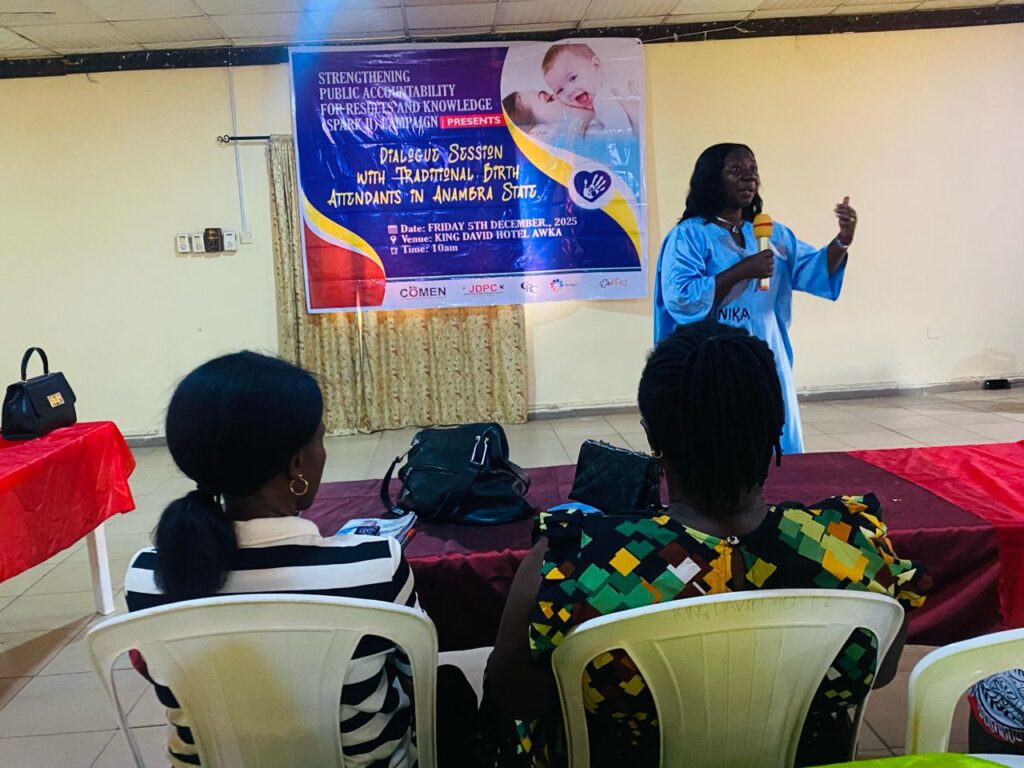
“We want to assure them of safety. Government wants partnership, not hostility.
“If they refer complications early and work closely with PHCs, we will have fewer deaths and better service for mothers and babies,” he said.
Eze agreed that integrating TBAs will require re-orientation, confidence-building, and ongoing engagement.
TBAs still essential
The Director, Justice Development and Peace Caritas, JDPC Nnewi, Rev. Fr. Ben Okolo, described TBAs as essential partners in the fight against maternal mortality.
He urged government to formally recognize their services and include them in health planning.
“We are here to listen, to understand your challenges, so we can find solutions together,” he said.
A key session of the meeting was facilitated by Dr. Ngozi Okeke, Director of Community Health Services at the Anambra State Primary Health Care Development Agency (ASPHCDA).
She stressed that collaboration between health workers and TBAs is not a choice but a necessity for improving maternal and newborn outcomes.
During discussions, participants recommended that TBAs be organised into a government-recognized association to allow unified training, monitoring, and accountability.
TBA’s experience
A practising TBA, Ugonna Amarachi from Ojoto, shared her experience, admitting that many TBAs initially feared government engagement but are gradually opening up.
With 11 years of experience as a certified birth attendant, she said she refers high-risk cases and advised others to undergo proper training.
“We are dealing with human life, and life has no duplicate,” she cautioned.
“Those who lack knowledge should learn the skill properly, no matter how long it takes.”
The engagement ended with a shared commitment to build trust, strengthen collaboration, and scale community-based care so no woman loses her life while giving birth in Anambra State.