Alfred Ajayi
People with disabilities in Anambra State continue to face significant barriers when seeking medical care, despite policies promising inclusive and accessible healthcare. From clinics without ramps or sign language interpreters to health workers unequipped to communicate with vulnerable patients, many PWDs say the system is failing them at the point of need.
Their struggles persist even under a state administration that has repeatedly pledged to prioritise universal health coverage. For many, the reality remains long waits, uncomfortable encounters, avoidable misdiagnosis, and outright neglect—conditions that erode trust in public health facilities and deepen health inequalities.
As the state expands its healthcare initiatives, including telemedicine and upgraded facilities, advocates insist that true progress requires more than infrastructure. They argue that without deliberate policies, disability-friendly services, and trained personnel, thousands of citizens will continue to be excluded from the care they are entitled to. Alfred Ajayi reports.
Five years into her marriage, Elizabeth Ibeabuchi, a woman with hearing impairment learned she was pregnant, a moment she had long hoped for. Though she is a enrollee of the Basic Healthcare Provision Fund (BHCPF) with entitlement to free antenatal and delivery care, the system offered her something far less tangible. Silence.
At every clinic visit, she waved her hands in the air, trying to form the signs she had used all her life. The nurses stared back, confused. There was no interpreter. No one who understood her.
“They never understood what I was trying to say,” she signed slowly as a volunteer interpreted her words.
The price of that silence was devastating. Miscommunication at health facilities pushed her towards self-medication, patent drug stores and she eventually lost her pregnancy.
“I lost my pregnancy which took five years to come,” she signed. “Since then, I have been unable to conceive again.”
Her story highlights a critical gap: health services may be free, but they are out of reach for many people, particularly people with disabilities.
And she is not alone. The story of Ifeoma Onyekaba, another woman with hearing impairment, reveals the same painful pattern.
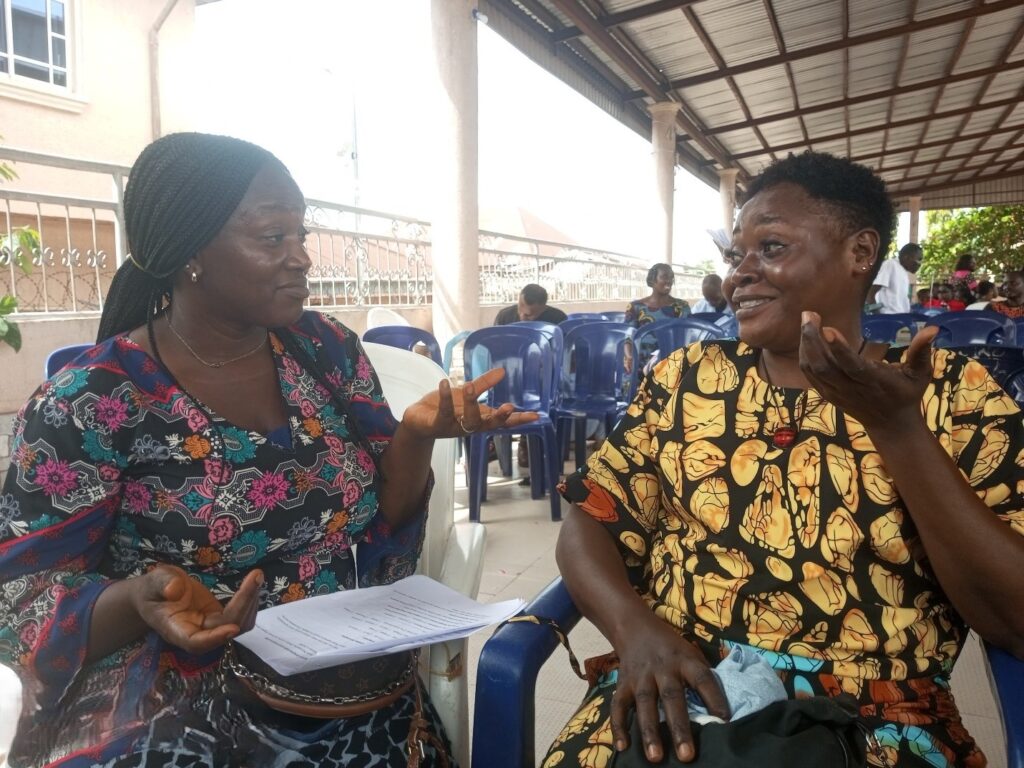
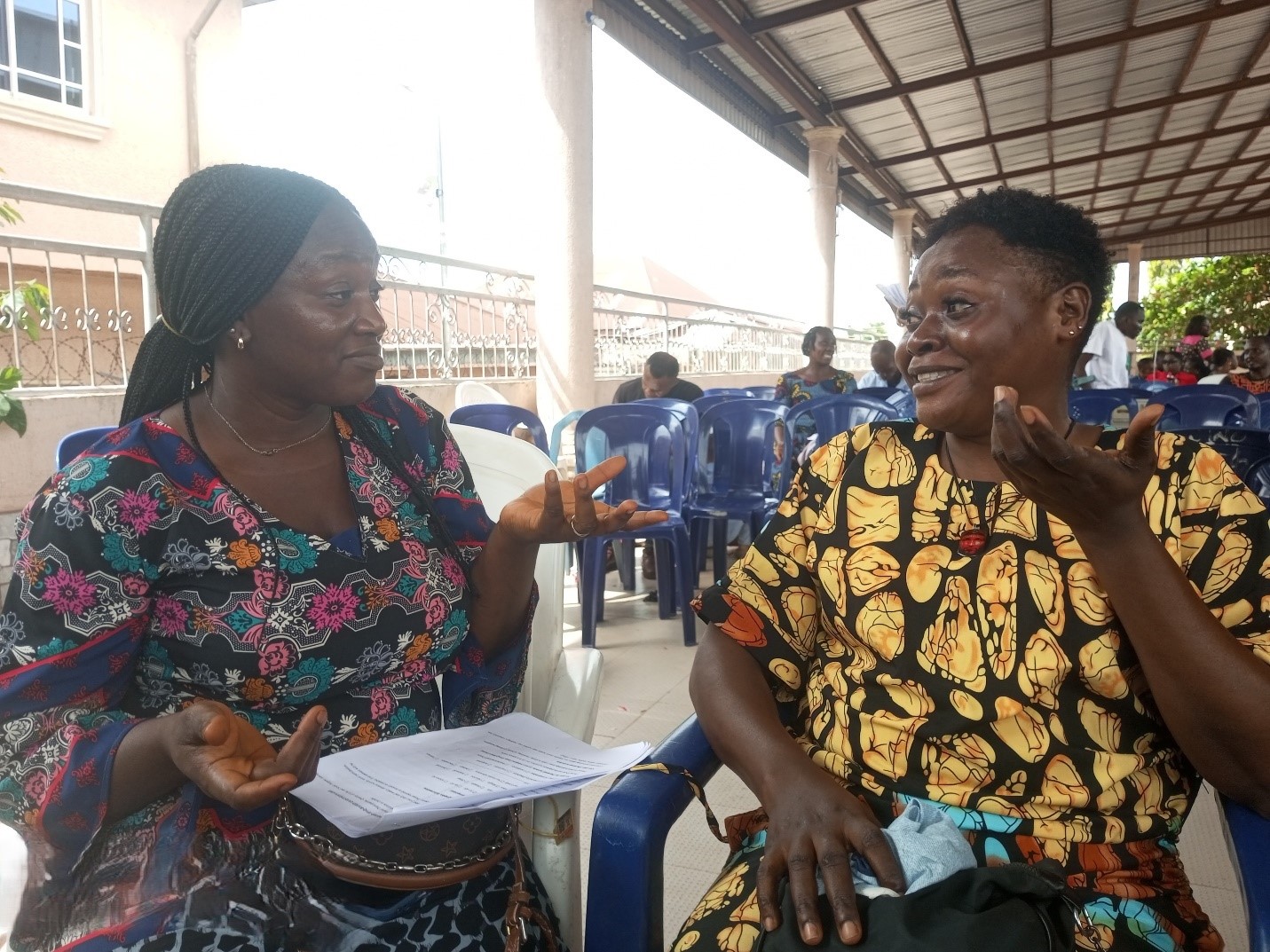
Onyekaba described her ordeal in an interaction after a Joint National Association of Persons with Disabilities (JONAPWD) meeting in Amawbia, Awka South Local Government Area, LGA.
Speaking through a sign-language interpreter, she recounted, “Anytime I go there, there’s no smooth communication. I write on paper to describe my feelings.
“But I can’t write everything about my condition. So, I take whatever treatment they give me. It is even worse for those who can’t write.”
Behind Ibeabuchi’s painful loss and Onyekaba’s frustration lies a policy framework that, on paper, promises free and equitable healthcare for all. In practice, however, it continues to exclude some of the who need it most.
About BHCPF
The Basic Health Care Provision Fund (BHCPF), established under the National Health Act of 2014 and operationalised in 2019, channels at least one percent of Nigeria’s Consolidated Revenue Fund to provide a basic package of health services through the National Health Insurance Authority (NHIA) and the National Primary Health Care Development Agency (NPHCDA).
The flagship programme is designed to ensure access to essential healthcare for all, particularly the poor and vulnerable, eliminate financial barriers, and strengthen Nigeria’s pursuit of Universal Health Coverage (UHC) by 2030.
It operates through three gateways each responsible for a specific component of service delivery. The gateways are National Primary Health Care Development Agency (NPHCDA), National Health Insurance Scheme (NHIS), and National Emergency Medical Treatment Committee (NEMTC).
While BHCPF through the health insurance gateway has increased access to health services for the elderly, children under five, pregnant women, and the poorest of the poor, persons with disabilities (PWDs) continue to face systemic barriers that go beyond mere enrolment into the scheme.
The lived experiences of those affected highlight how critical gaps continue to keep them (PWDs) outside the reach of a programme built to serve everyone.
Hidden cost of “free” healthcare
For some, like Vincent Onwubuya, a visually impaired enrollee, the problem begins long before reaching the clinic.
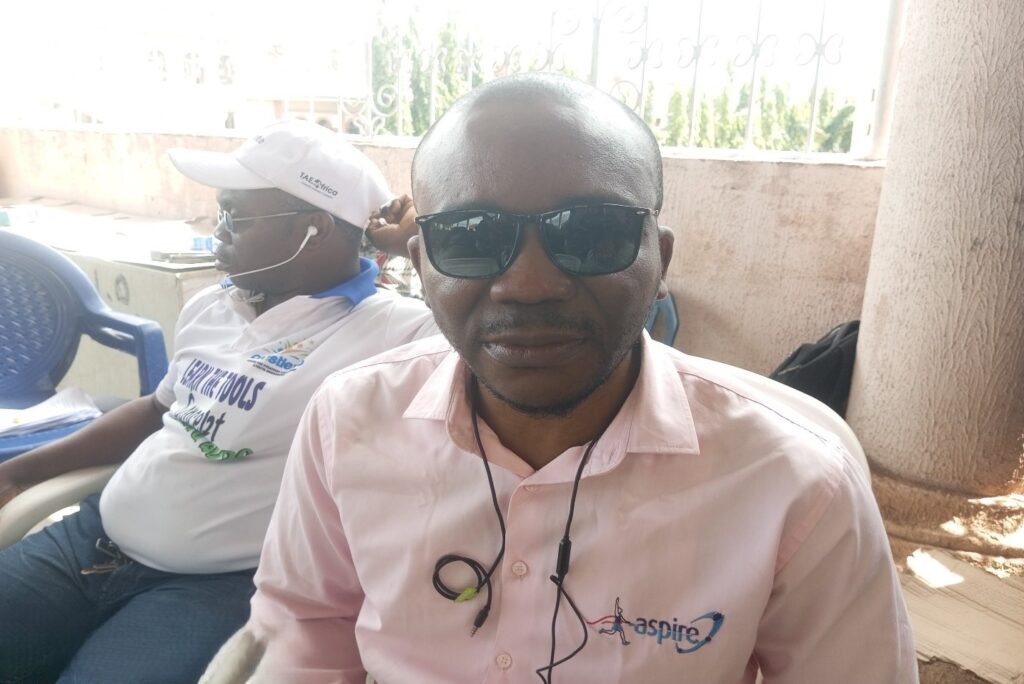
“You must pay for your guide’s transport. When you calculate how much it costs to get to the facility, you just change your mind,” he explained.
“Some of us are dying with sicknesses because of lack of access. Sometimes, health centres don’t offer 24-hour service.
“Even when they do, they often lack essential drugs. You end up buying them yourself. What then is the meaning of health insurance?”
Onwubuya recounted a near-tragic medication error. “No braille labelling so I couldn’t detect it until my wife checked and discovered it was a wrong medication. It could have been life-threatening if I had taken it.”
The loss of confidentiality in healthcare interactions is another pressing issue. Uzoamaka Ike, a disability rights advocate, explained, “When a hearing-impaired person visits the hospital, there is no confidentiality because the caregiver does not understand the signs.
“Same in the case of a blind person – a relation or any other person has to assist the individual to read the prescriptions by health givers.
“That way, other persons other than the medical or health practitioner attending to you have access to your secret information.”
Attitudinal barriers make the experience even worse. Ncheta Nwanokara, State Woman Leader of JONAPWD, described how some health workers verbally abuse women with disabilities.
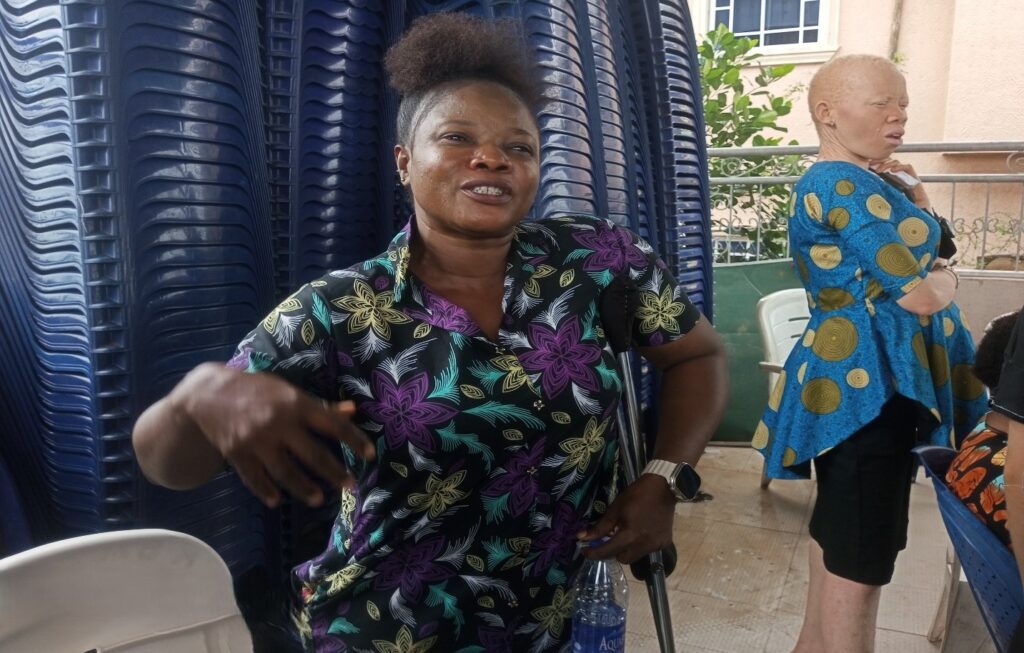
“Some health workers often use derogatory words on our women. You can imagine them asking a pregnant woman with disability why she opened her legs for a man to impregnate her.
“They forget that we are human beings with feelings like every other person. Such derogatory statements discourage women with disabilities from accessing the free ante-natal and delivery services.”
Infrastructure and service gaps
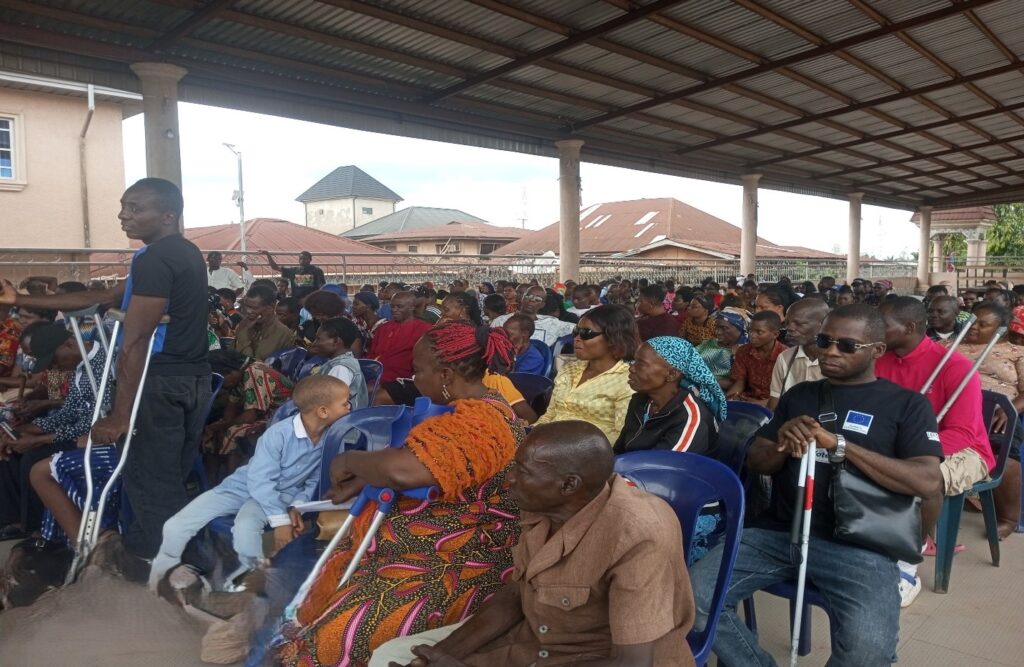
Across many primary health centres (PHCs) in Awka North, Awka South, Anaocha, Dunukofia, Aguata, Nnewi South, Anambra West, and Onitsha South LGAs, persons with disabilities, especially women of child-bearing age, continue to face multiple physical barriers.
Non-inclusive designs such as steep stairs, narrow toilet doors, and high beds make access difficult. Wheelchairs are often broken or unavailable, and, where they exist, ramps are poorly built and unsafe.
At Adazi-Ani 1 PHC, in Anaocha LGA for instance, the Officer-in-Charge (OIC), Maureen Udeorji, admitted: “Our wheelchair has a little fault, so we are not using it.” Indeed, this reporter saw the wheelchair gathering dust in one corner of the facility.
Many centres either lack ramps altogether or have ramps without handrails which should provide balance, especially for those using stretchers, pregnant women and the elderly.
The ever-busy, well-kept and recently renovated Okpuno PHC, in Awka South LGA falls in this category. The facility has several stairs but no ramps.
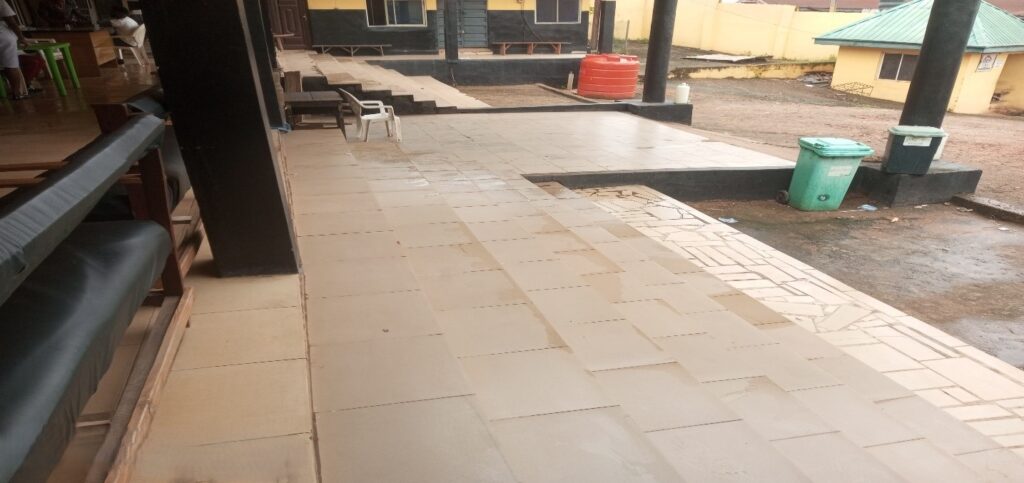
“I agree with you that we need such facility for persons with physical disability. Taking such persons through this staircase is not easy. We will work on that, “the OIC, Stella Okeke said.
At Utuh PHC in Nnewi South LGA, the ramp itself poses a risk to PWDs.
“It is too steep,” said Ogoamaka Atuenyi, Chairperson of the Ward Development Committee.
“While trying to push someone up, it draws you back. The other time, an old woman with rheumatism almost fell. The OIC had to go down to attend to her because she couldn’t climb.”
By contrast, Mgbakwu PHC in Awka North offers( a rare example of inclusive design, featuring ramps with handrails that makes accessibility easier.
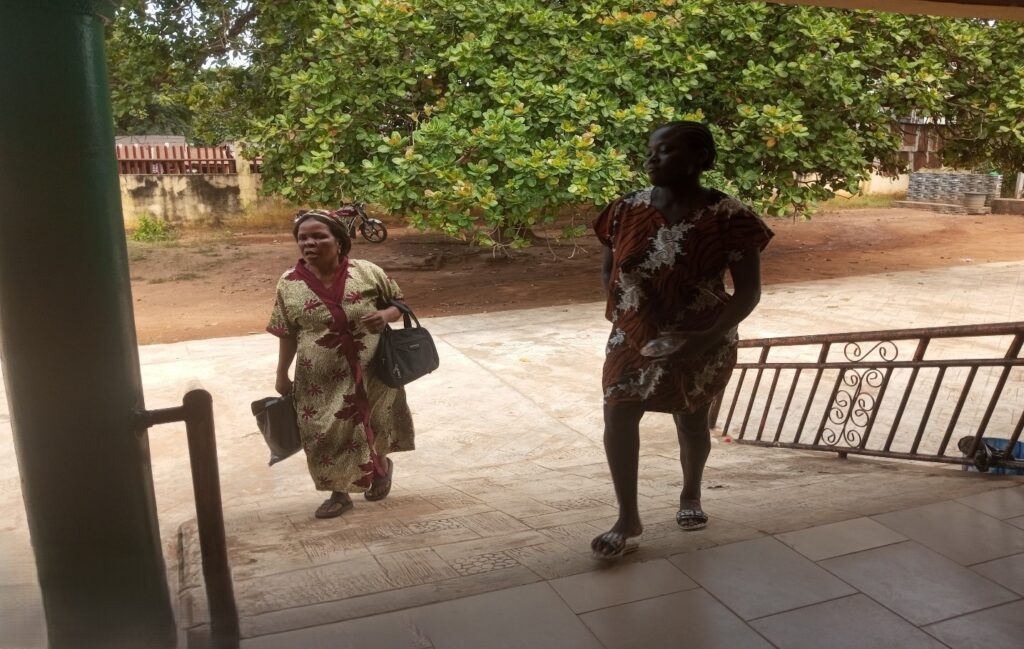
Civil society advocate Onyekachi Ololo, monitoring BHCPF implementation blamed weak oversight by government for these gaps.
“The state government mandated OICs to install ramps for wheelchair access. Some complied, but many didn’t. There were no penalties. Some of the ramps built are death traps because they didn’t meet specifications.”
In all the facilities visited tactile paving for the visually impaired is almost non-existent. Also, most OICs still lack training in disability etiquette leaving PWDs at the mercy of individual compassion rather than institutional policy.
Voices from the frontline
While some Officers-in-Charge (OICs) admitted they rarely attend to persons with disabilities, others who have shared encounters described how simple gestures of inclusion can make a difference.
Okpuno PHC, OIC, Okeke said, “We have two regular patients. One is with physical disability and another with hearing impairment. We try to communicate with our hands, but a sign-language interpreter would make things easier and improve care.”
In Urum PHC, Awka North LGA, the OIC, Marycynthia Ozoigbo recalled, “One of them is on a wheelchair. He is always happy and full of life. Whenever he comes, we help to carry him and the wheelchair.
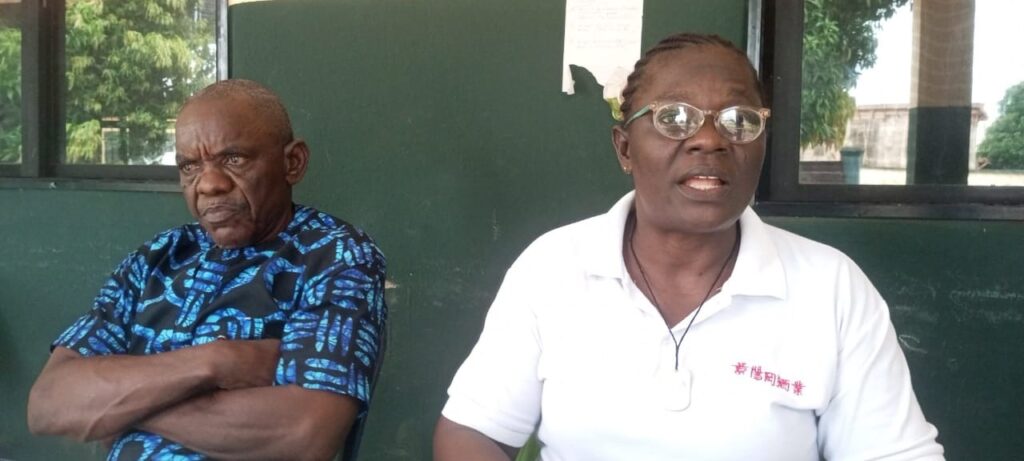
“My communication with a deaf woman was also interesting. We spoke mostly through gestures. I never studied sign language, but my psychology background helps me understand what she’s saying. She prefers to wait if I’m not around because we’ve built trust.”
Governance gaps, broken equity promise
A deeper cause of these recurring accessibility failures lies in policy making governance around health issues. Persons with disabilities are largely absent from Ward Development Committees (WDCs), the local oversight bodies that monitor and support primary healthcare centres.
Current BHCPF guideline prescribe a 60/40 male-to-female ratio in WDC composition but make no provision for disability inclusion. This gap means decisions affecting PWDs are often made without their input.
Another civil society advocate working on BHCPF implementation, Ugochi Ehiahuruike, described it as a major flaw. “We must correct this serious oversight. If Nigeria is currently reviewing the Electoral Act 2022 to improve representation, it is helpful to review BHCPF guidelines too.
“In Anambra, women make up only 11% of WDCs instead of the 40% target. It will be good to give them even if it is only 10%, representation in WDCs.
“They are Nigerians, and as we always say, ‘nothing about us without us.”
The Anambra State Health Insurance Agency (ASHIA), which manages the BHCPF health insurance gateway, confirmed that PWDs are among the scheme’s official enrollees.
According to Dr. Simeon Onyemaechi, Managing Director of ASHIA, the programme covers “persons with disabilities, pregnant women, children under five, the elderly from age 65 and above and the poorest of the poor.”
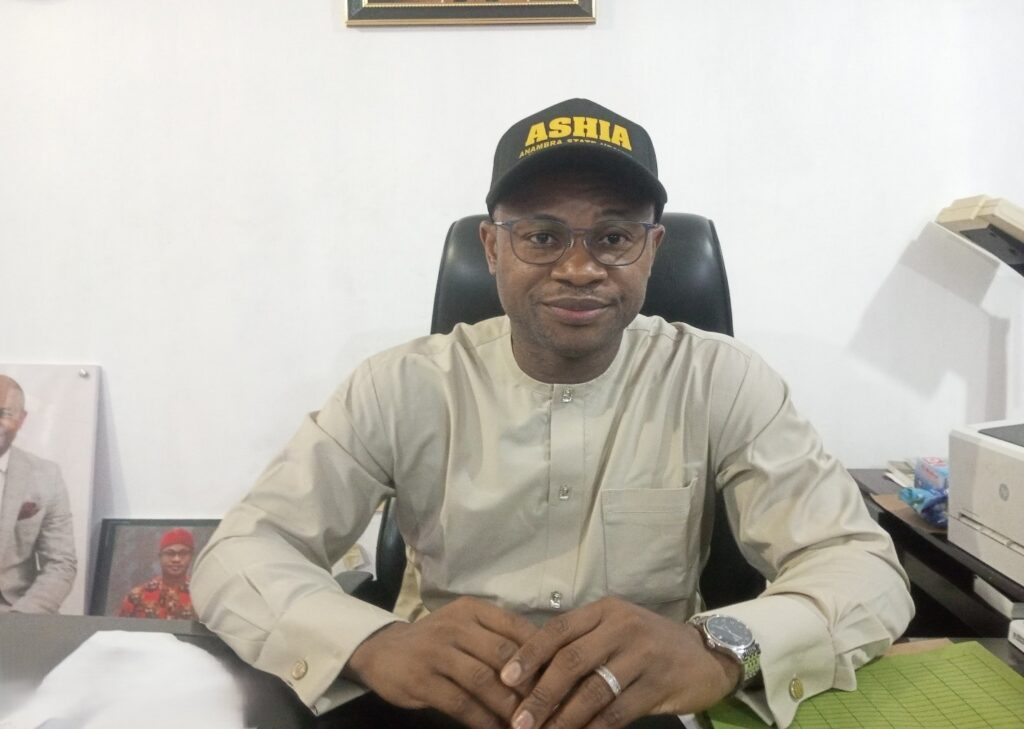
He added that Anambra has extended coverage to persons living with sickle cell anemia, recognizing their vulnerability to disability.
“We have enrolled about 800 persons with sickle cell anemia to access healthcare,” he said.
Exclusion from enrollment
However, Onyemaechi admitted that exclusion begins at the point of enrolment. “Many PWDs cannot register because they lack the National Identification Number (NIN), which is mandatory for accessing social protection programmes,” he explained.
Beyond documentation barriers, the shortage of sign-language interpreters further widens the gap.
“Even if government releases funds today, there are not enough qualified interpreters to deploy.
“It’s not just a financial issue; it’s a human resource problem,” he said.
Onyemaechi also raised a concern about patient privacy. “Engaging interpreters for every facility still doesn’t guarantee confidentiality.
“Whether it’s a family member or a hired interpreter, a third party inevitably gains access to the patient’s medical information. That’s the unfortunate reality for now.”
Activists argue that these justifications, though valid, do not excuse inaction. Onyekachi Ololo, a civil society advocate, insists that deliberate policy adjustments could close the gap.
“The BHCPF was created to help Nigeria achieve Universal Health Coverage and leaving out PWDs defeats that goal. Inclusion isn’t charity; it’s a right,” he said.
Legal and human rights imperatives
The denial of accessible healthcare to persons with disabilities (PWDs) in Anambra is not just a service delivery failure but also a violation of their rights. Both national and international laws guarantee equal access to health services without discrimination, yet in practice, these guarantees remain largely unfulfilled.
Article 1 of the Universal Declaration of Human Rights affirms that all human beings are born free and equal in dignity and rights, while Article 25 recognizes everyone’s right to an adequate standard of living, including access to health and social services.
Section 42 of the 1999 Constitution guarantees freedom from discrimination, affirming that no Nigerian should suffer any form of deprivation or unequal treatment under the law.
The Anambra State Disability Rights Law of 2018 guarantees the right of persons with disabilities to adequate healthcare. The law indicates health insurance as a vehicle for such inclusion.
Yet, despite this legal framework, exclusion persists. Research shows that PWDs generally record lower educational attainment, higher unemployment, poorer living conditions, and greater vulnerability to poverty, all of which heighten their need for health protection mechanisms like the BHCPF.
Universal Health Coverage (UHC) rests on the principle that everyone regardless of income, gender, or ability should receive quality healthcare without financial hardship. Globally, the World Health Organization estimates that about 1.3 billion people, or 16 percent of the population, live with significant disabilities.
In Nigeria, the National Commission for Persons with Disabilities (NCPWD) places the figure at 35.1 million, while local estimates suggest that hundreds of thousands of residents in Anambra live with one form of disability or another.
Experts emphasized that inclusion must go beyond physical accessibility. It requires budgetary commitment, legal enforcement, and consistent training of healthcare workers on disability-sensitive service delivery.
They say without interpreters, ramps, adjustable beds, or braille-labelled medications, the BHCPF’s impact remains partial, and inequality deepens.
Ololo warns that “excluding PWDs from the BHCPF undermines Nigeria’s pursuit of Universal Health Coverage. The programme was designed to ensure that no one is left behind, but leaving PWDs out defeats its purpose.”
Dr. Onyemaechi agrees that Nigeria’s approach to inclusion must be sustainable rather than symbolic. “We must avoid tokenistic, one-off interventions,” he said. “Sustainable health protection must be institutionalized, not ceremonially launched.”
Lessons from other states
Across Nigeria, a few states are beginning to take deliberate steps toward inclusive healthcare.
In Lagos, local government councils have taken steps such as appointing sign-language interpreters in public institutions, signaling early movement toward broader interpreter deployment. Kaduna State launched a costed inclusive healthcare plan (2025–2027) to address communication barriers and ensure participation of PWDs in health governance.
In Ondo State, an assessment by the Disability Not A Barrier Initiative (DINABi) revealed that 73.7 percent of deaf respondents lacked access to interpreters. The report sparked sustained advocacy for reforms and prompted steps toward inclusive health communication.
Experts argue that political will, infrastructure upgrades, training, and meaningful inclusion in governance structures are essential for Anambra to follow suit. They recommended sign language training to build the capacity of health workers to communicate in basic sign language.
There is also a growing call for the Anambra State Disability Rights Commission to partner with civil society to monitor how disability inclusion is implemented under the BHCPF. Members of the disability community, however, warn that the commission itself is struggling and needs urgent government attention to function effectively.
Ugochi Ehiahuruike, a civil society advocate believes inclusion must start from the top.
“For this to be institutionalized in Anambra, it will take a governor who understands disability and the meaning of equity. No one feels the pain like those wearing the shoes. As we push for special seats for women, PWDs must also be given a place at the table,” she said.
Ololo added, “…there is the need to review the BHCPF guidelines to explicitly capturethe concerns of PWDs. They should be members of WDCs. This will ensure that their needs are well-captured and access to healthcare services increases.”
“They should have seats in WDCs so their needs are represented in planning and service delivery. Inclusion won’t happen by goodwill; it has to be built into the system,” he said.
Inclusion of PWDs, Ololo insists, is a right and a prerequisite for universal health coverage. Accessibility can mean the difference between life and loss, between a policy that exists on paper and one that works in reality.
Without deliberate planning, funding, and training, the promise of Universal Health Coverage in Anambra will remain incomplete.
As Dr. Onyemaechi put it, “If even one person lacks financial or physical access to quality healthcare, Universal Health Coverage has not been achieved.”
WDC inclusion will help but …
The Coordinator, National Primary Health Care Development Agency (NPHCDA) in Anambra State and the Southeast, Obioha Agbakwuru, agreed that including PWDs in Ward Development Committees could enhance responsiveness to their healthcare needs and promote greater inclusivity but waiting for BHCPF guideline review would not deliver immediate relief for the affected persons.
“Reviewing guidelines to include PWDs is like having a clear rulebook and can make big changes happen. However, this might take time and will require people to follow the rules properly.
“Engaging communities to explore ways to include PWDs in WDCs would be a more effective strategy and foster participation and ownership. Talking to communities and working together can make healthcare and WDC more inclusive. This way, we use the real experiences of community members and PWDs to find practical solutions and can be quicker and more flexible.
Since the BHCPF aims to improve primary healthcare services and achieve Universal Health Coverage, Agbakwuru called for accessibility audits of PHCs, as well as special training for healthcare workers on disability inclusion.
“Provision of standard ramps with handrails should be mandated for all facilities including the provision of wheelchairs and accessible toilet facilities for PWDs. Engage PWD organizations in planning and governance.”
This report was made possible with support from the International Budget Partnership (IBP), and the International Centre for Investigative Reporting, (ICIR)