Alfred Ajayi
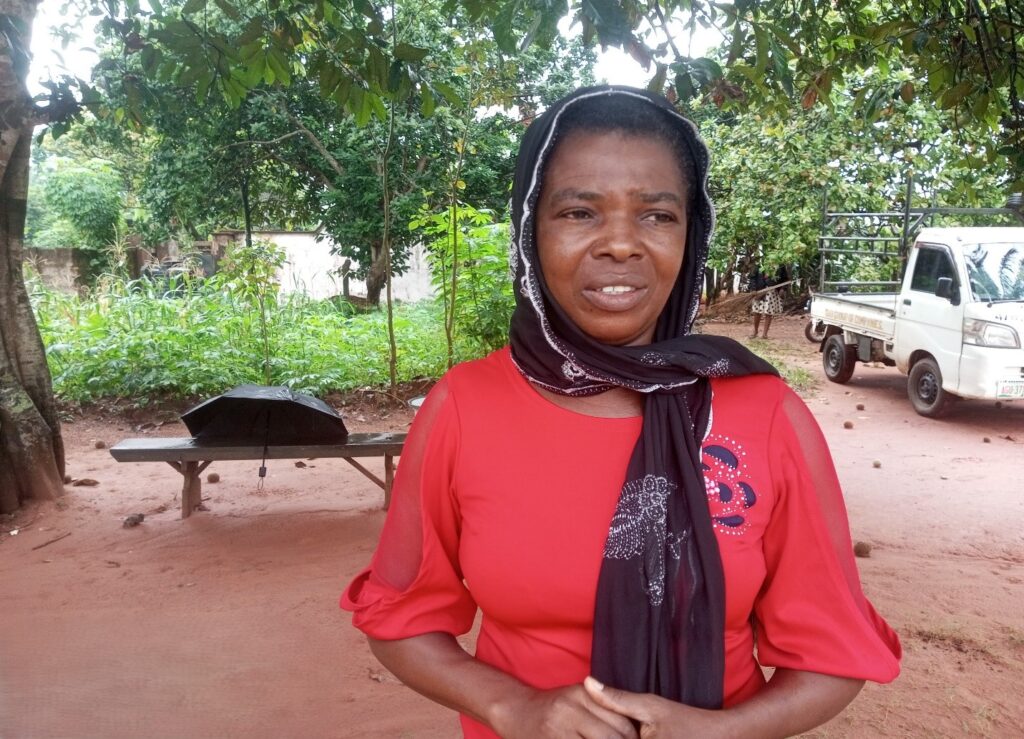
Vivian Ezeonwumelu in Adazi-Ani, Anaocha Local Government Area of Anambra State is an affirmation.
Having buried her husband, Philemon, in December 2023, Vivian thought the worst was over having sold all she had during her husband’s protracted illness.
Sharing her ordeal with this report during a recent court appearance, Vivian recalled spending over ₦12 million on treatments that ended in heartbreak.
But ten days after the funeral, the real battle began. “I went to the compound and saw my brothers-in-law measuring the land where my husband was buried,” she said in a broken voice.
“When I asked what they were doing, one of them told me it didn’t concern me.”
That small plot of land in Enugu-Adazi was Philemon’s only inheritance from his late father and a memorial showing his paternity in the community.
“I valued that land traditionally and that is why I didn’t sell it to treat him when he was sick. I can’t allow anyone to sell it and erase his existence.”
Vivian’s resistance didn’t sit well with her husband’s brothers. In a chilling twist, they accused her of everything from theft to witchcraft, and began what she calls a campaign to “drive me to madness.”
“They went to the police at Neni, made false allegations against me including kidnapping, drug trafficking, even child abuse.
Each time, I was arrested, interrogated but the police found nothing against me.”
The harassment was relentless. She was summoned by police in Zone 13, then again at Force Headquarters, Enugu.
Every visit drained her financially and emotionally. “I couldn’t eat. My boys couldn’t go to school.
My business died because I was running from one station to another to prove my innocence.”
By January 2025, her in-laws took their hostility a step further. They removed the roof of the house where she lived with her two sons.
Vivian who was alerted of the development came from Nobi market to behold her new reality – homelessness.
All her belongings have been thrown out indicating an abrupt end of the relationship between her and the late husband’s family.
In their helplessness, Vivian learnt about the International Federation of Women Lawyers, (FIDA) Anambra, a non-profit group that offers free legal services to women and children facing abuse and injustice. Desperate for help, she walked into the FIDA centre in Awka broken and world-weary.
“But FIDA members opened their arms and received me and my children. They listened to my ordeal, gave me food, a place to sleep and paid my sons’ school fees.
FIDA paid N150,000 hospital bill and N300,000 for our accommodation. They treated me like family.”
The female lawyers didn’t stop there but immediately petitioned the police and filed for a court injunction, arguing that her eviction was illegal.
She was never served any court notice. They are now seeking to reclaim her home and her late husband’s property.
Following sustained threats to her life and her two sons, Vivian fled Anambra to live with her sister in Abia State. Yet, she returns for every court hearing.
“I am committed to justice and protection and that is why I cannot back out.”
Another widow, another battle
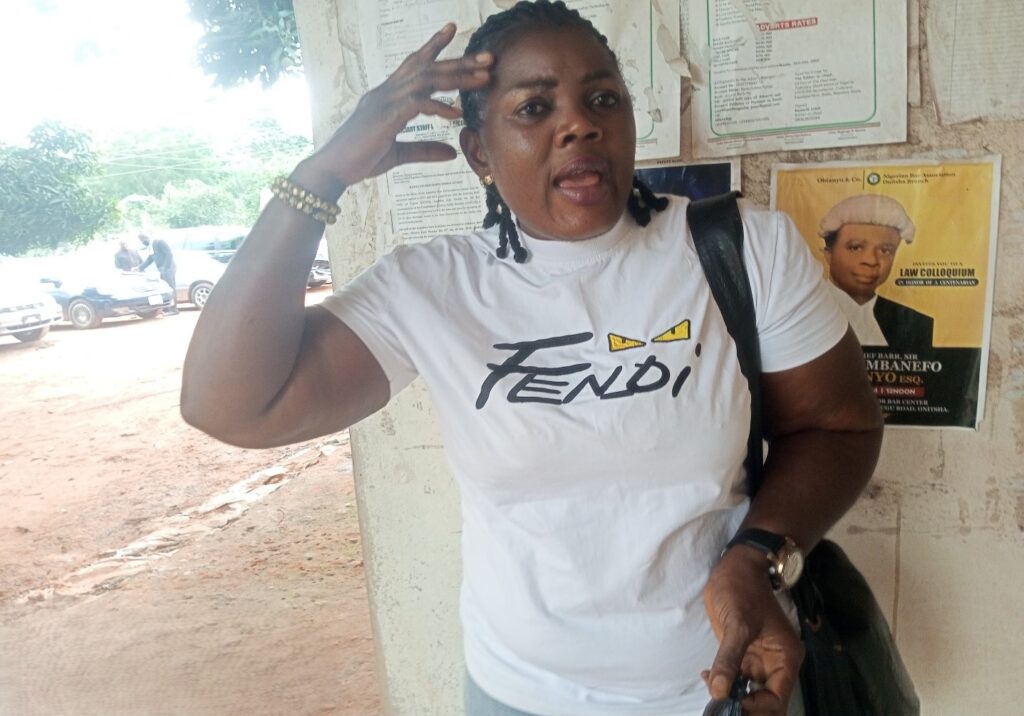
Across Anambra, stories like Vivian’s echo through countless compounds. For Mrs. Chigbo Nkemdilim, a widow from Adagbe village, Abagana in Njikoka LGA, widowhood has also been a test of survival.
According to her account, her husband died suddenly in 2020, leaving her with four tender children. Instead of comfort, the widow in her forties met rejection.
Her husband’s relatives banned her from the family home, and later broke into her apartment in another community, Nkpor, where their father has a rented apartment.
“They transferred the hatred for my husband to me and children. When my husband was in Austria, he was sending home to my mother-in-law so that he can use it to open a business in Onitsha when he returns.
He came back and the money was no where to be found. That was the genesis of the problem.
“After denying me entrance to the family house in Abagana, they went to Nkpor, where my father-in-law, has a storey-building, took my belongings away and rented the flat out.
The traditional ruler of Abagana, Igwe Mbamalu Okeke, having seen her despair, referred her to FIDA. There, she found the same empathy that Vivian found.
“FIDA changed my story. They took up my case, investigated it, and took it to court — all without collecting one naira,” she gladly recounted.
Two years later, the case is still in court, but Chigbo is hopeful. “When I see them stand for me in court, I feel I have a voice again.
You can see smile on my face. I remember that time I came to FIDA, I was dejected and without hope.
Inside FIDA’s lifeline
Behind these women’s renewed hope is a network of female lawyers working quietly, without salaries, often using their own funds to fight injustice.
According to Barr. Amara Muojeke, Chairperson of FIDA Anambra, their mission is simple but demanding: “Our mandate is to protect the rights of women, children, and the indigent.”
“Every week, we receive calls from widows thrown out of their homes, girls defiled by relatives, and women abandoned by partners,” she explained.
“Our work begins by listening, mediating, and involving community leaders. But when peace fails, we go to court.”
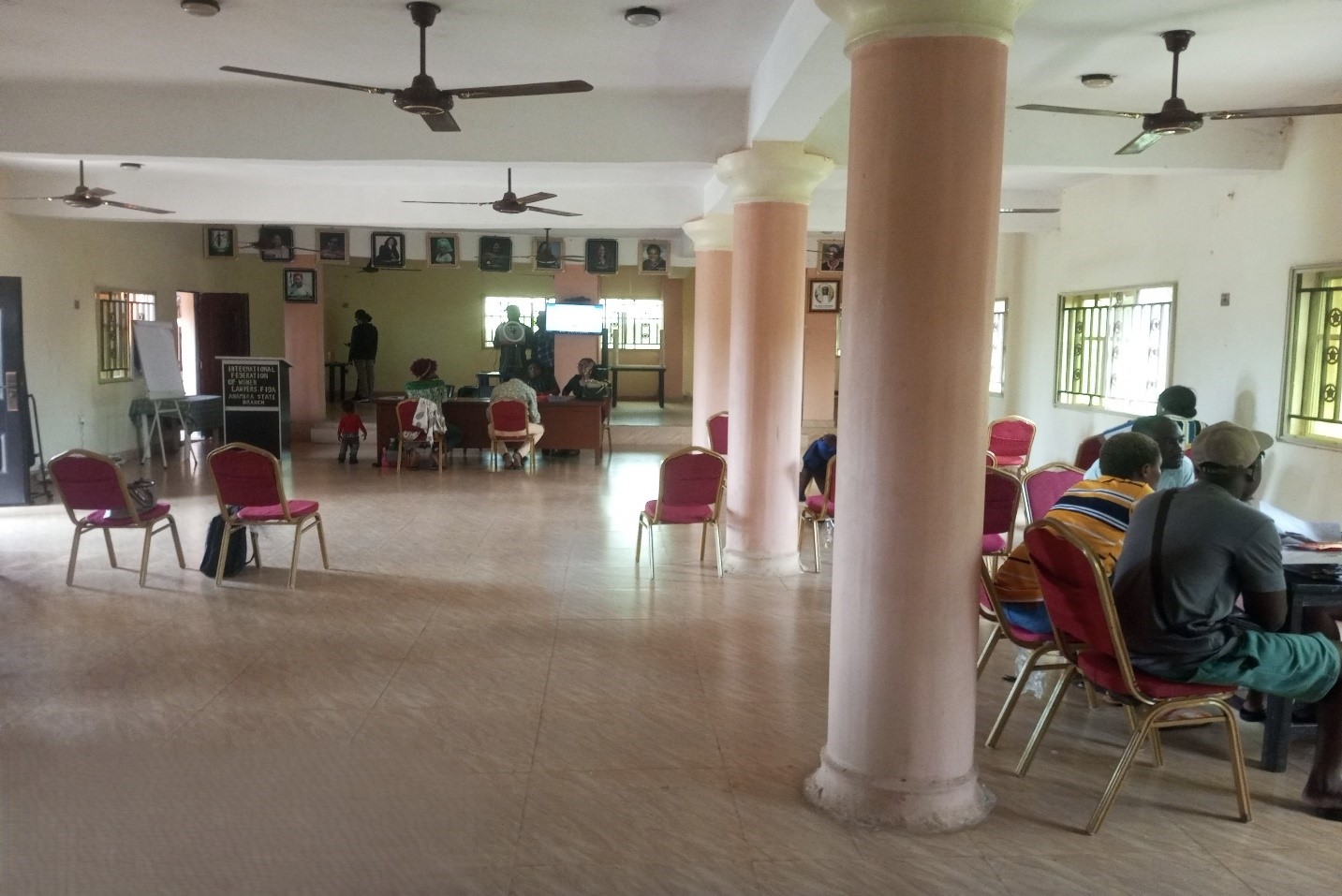
“The cases include widows’ disinheritance, and child neglect, while many others come as referrals from other states and distress calls or messages from victims.
“Sometimes we get calls at midnight and move into action immediately because every delay could cost a life,” Muojeke said.
Data trend
Within its inception year – July-December 2022, data show that the Children, Sexual and Gender-Based Court, (Magistrate) Anambra State received 99 Gender-based violence (GBV) related cases.
From January to December 2023, cases received and brought rose significantly to 553 while 2024 saw a more drastic rise to 832 cases within the same period.
In the first quarter of 2025, 225 cases were received and brought forward.
From January to December 2024, the Police Command in Anambra State reported 38 cases of GBV.
As of September 30, 2025, records from the Ministry of Justice showed that out of 132 offenders on file, only 16 have been convicted, while 69 cases remain in court.
14 cases were discontinued while 27 defendants were released.
Womanity Index Report by Invictus Africa reveals that in 2023, 75% of respondents were aware of existing GBV laws and policies on GBV in Anambra state.
Awareness dropped sharply to 57% in 2024, with 43% unaware. In terms of access to legal justice, the report revealed inconsistency in public preference of formal justice system.
As at 30th October, 2025, FIDA has recorded 152 cases for the year 34 of which are cases of domestic violence. 4 of such cases have been concluded with 2 convictions in criminal cases and victory in 2 other civil cases.
The above statistics point at a very worrisome reality around GBV in Anambra manifesting in form of domestic/intimate partner violence (IPV), sexual assault/rape, emotional/psychological harm, economic abuse including disinheritance, depriving widows of rights as well as harmful widowhood practices.
Campaigners against GBV say such acts of violence are driven majorly by cultural norms and patriarchy.
Widowhood and inheritance practices, knowledge and reporting gap, low incomes/socio‐economic vulnerability as well as weak enforcement and institutional capacity.
Tradition, silence – twin enemies
There are however some cases FIDA could not handle due largely to the uncooperative stance of victims.
This is linked to traditional belief which encourages culture of silence and respect for status quo.
This explains the experience of Ifeoma Adinma (not her real name), a 37-year-old mother of three from Nnewi.
She lives under the same roof with the man who repeatedly beat her into silence.
What began as occasional slaps soon turned into regular assaults.
She always hides the bruises beneath long sleeves, regularly making excuses for swollen eyes.
Caring neighbors were often met with denial whenever they asked.
“At some point, I told them I fell in the bathroom and got injured,” Ifeoma recalled.
However deep inside, she carried the belief taught by her elders — that a woman must never disgrace her husband, no matter what. Taking a husband to court was not an option she was told.
After another violent episode that left her unconscious, her story reached a local NGO that supports GBV victims.
Again, she blocked efforts by the organization to assist her. “I told them I want peace for my children. I just want them to warn him to stop abusing me.”
Love for her children kept Ifeoma inside the abusive relationship. Though she now receives quiet counseling and medical help, she still lives with the man who broke her spirit.
Her silence mirrors that of many women whose sufferings hide behind tradition — unseen, unheard, and unresolved.
FIDA Chairperson, Muojeke gives further insight. “There were several cases we have handled that got terminated abruptly because of influence of culture.
“We still battle against tradition which forbids women from speaking up against abuses from their husbands.
“Some families prefer to ‘settle’ rape or widow disinheritance cases traditionally.
“They collect money from perpetrators and tell affected women or girls to drop the cases.
“In a recent case, we sponsored surgery for a little girl who had been defiled, only for her parents to later withdraw the complaint after collecting money from the offender’s family.
“It breaks the heart for one to fight and spend one’s money, only for the same people one is fighting for to terminate the cases.”
However, I must say that many traditional rulers are cooperating with us. We call them allies.”
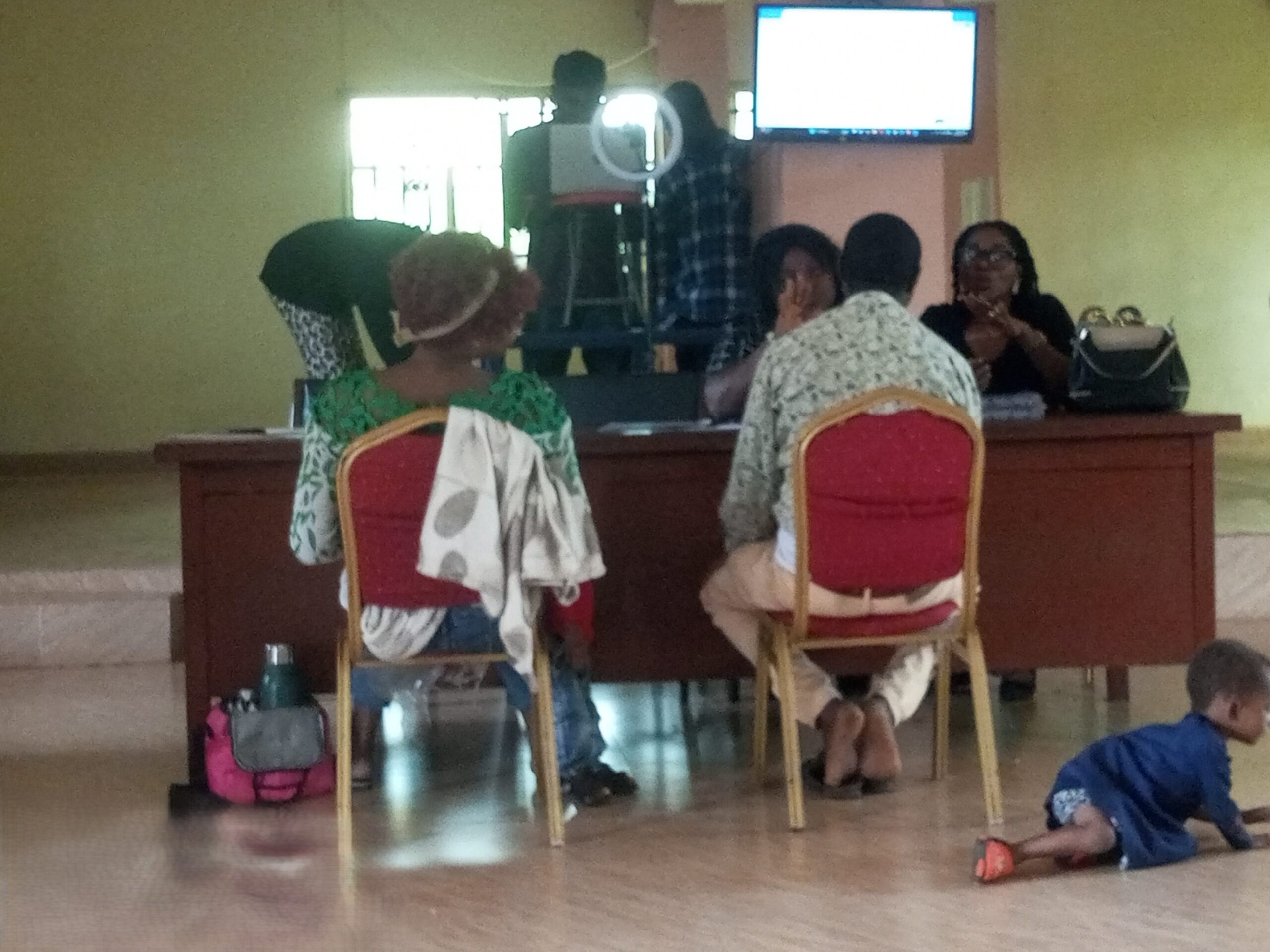
Not yet eldorado
For all its impact, logistic inadequacies are still undermining progress. Expectedly, funding challenge ranks highest.
The lawyers said they work pro bono using their personal money on transportation, court filing, and sometimes accommodation for victims.
“It’s emotionally and financially draining,” said Lauretta Ikwuka, FIDA’s Litigation Committee ‘s Chairperson.
While FIDA has a place being used as a shelter, its chairperson still rated shelter among the most pressing needs. “We often rescue women from abusive homes, but there’s nowhere to keep them safely. Sometimes we pay rent for a few months, but we can’t sustain it. If we have more shelters, more women would escape violence.”
Courts of hope and soaring cases
Anambra now has specialized Gender-Based Violence (GBV) courts – Magistrate and High Court, a development which commentators including “Fidans” acknowledged has improved prosecution and convictions.
“Before these courts were established, many GBV cases died quietly. Most of them didn’t get to court while some that were charged to court didn’t get to conclusive end,” Ikwuka said. “But, now, the judges are firm.”
However, judges in the two designated courts are overwhelmed with rising cases from across the state. “There are too many cases for the two judges we have,” she added. “Victims travel from distant communities like Ogbaru, Orumba and Omambala to Awka for hearings. Most can’t even afford transport.”
Yet, even with limited resources, FIDA’s volunteers keep pushing. “Our greatest reward is seeing a woman who once came here crying walk out smiling,” Muojeke said.
An appeal for help
Despite its visible impact, FIDA Anambra funds its activities mainly through members contribution and selfless services. “What we need are not just praises but practical support. We need money to pursue cases and even empower survivors so that they will be economically independent,” Muojeke said.
Pivotal roles of traditional and faith leaders were acknowledged but FIDA noted that sometimes some of them ignorantly obstruct justice, a reality that calls for sustained sensitization. We keep going back to sensitize them because when they understand the law, they become allies,” Muojeke explained.
Besides, lack of standard shelters in the state further undermines efficiency as the ad-hoc arrangement by FIDA is said to be insufficient. It calls for allocation of budget lines for NGOs that provide legal aid. Appeals were also directed at philanthropists and organizations to help in building shelters, funding education for victims’ children, and support their vocational training.
The chairperson argued that empowering victims economically is key to breaking the cycle. “When a woman can feed her children, she’s less likely to return to an abusive home. We want to see women and children live with dignity.”
Proffering solutions to the rising GBV cases in the two special courts, which also slows down the course of justice, FIDA urged the state government to establish more special courts across the three senatorial zones and to support legal aid funds. “If we can get justice decentralize, I’m sure that it will propel more victims to speak out and seek justice from nearby courts.
Every rescued widow, every girl who gets justice, every family restored — each one is a quiet victory against a loud culture of oppression.
For Vivian, the fight continues. She still travels from Abia to attend hearings in Anambra. “I’ll keep fighting until I get justice,” she vowed tearfully. “Not because I’m strong, but because I have people like FIDA who believe in justice and will fight to any extent to get it.”
And for Nkemdilim, who now lives with her children in her parents’ house, hope flickers in the form of court updates from FIDA. “I lost everything but I didn’t lose my faith in God or in good people.”
Both women dream of a day when widows won’t have to beg for the right to stay in their own homes — when justice won’t depend on luck or charity.
Until then, FIDA’s women — lawyers, mothers, volunteers — remain the thin line between despair and deliverance.
Their message is clear: “No woman should walk alone through injustice.”
The report was supported by the Nigeria Health Watch as part of the Solutions Journalism Africa Initiative