
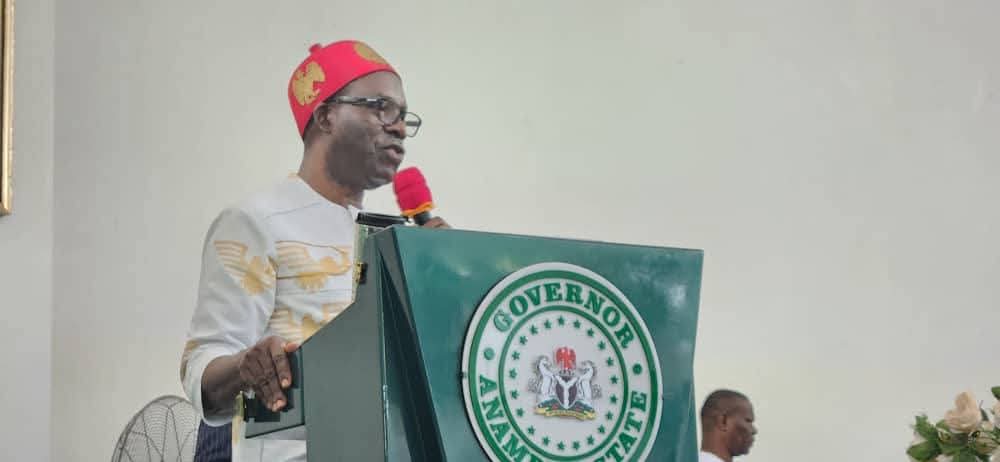
Gov. Chukwuma Soludo of Anambra has called on Nigerian academics to move beyond passive teaching and embrace developmental intellectualism to promote public policy and societal transformation.
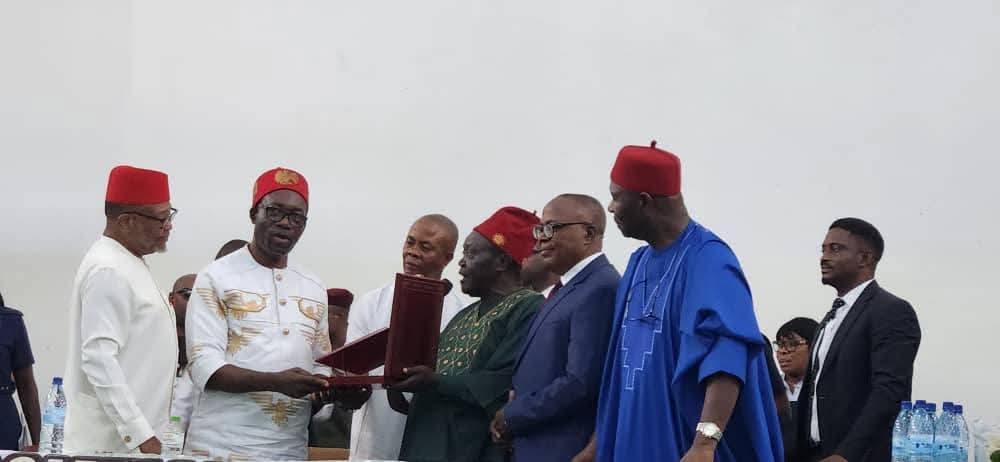
Soludo made the call on Tuesday while delivering a lecture at the 6th Biennial Adada Lecture Series organised by the Association of Nsukka Professors (ANP) at the University of Nigeria, Nsukka (UNN).
He said the wealth of knowledge within universities should translate into practical solutions that address societal challenges and influence governance.
The governor lamented the disconnect between academic research and national governance.
He noted that despite the large volume of scholarly works produced in the country, their impact on public policy remained minimal.
According to him, history has always been shaped by a combination of ideas and action.
He cited figures such as Isaac Newton, Dr Nnamdi Azikiwe and Kwame Nkrumah as examples of intellectuals whose ideas contributed to nation-building and societal progress.
Soludo observed that although Nigeria now had more academics than in previous decades, intellectual discourse had lost relevance in national life.
“We are in a period of more noise but less light, where the link between intellectual change and government policy has been severed,” he said.
Nations are Built by Ideas
The governor stressed that nations were built not only by natural resources but by ideas that shaped institutions and governance structures.
He challenged scholars at the event to reflect on the impact of their expertise on their communities, questioning why the Adada zone had yet to attain significant development despite being home to many professors.
Soludo described intellectualism without activism as sterile, adding that academics should combine rigorous research with a sense of responsibility toward solving societal problems.
He advocated “sacrificial volunteerism,” urging professors to contribute actively to addressing collective challenges regardless of institutional limitations.
The governor said his administration in Anambra had, over the past four years, focused on laying the foundation for sustainable development by integrating intellectual responsibility into governance.
On regional issues, Soludo spoke on state creation, marginalisation and the agitation for Biafra, stressing the need for scholars to provide intellectual leadership on such matters.
He noted the historical significance of the Nsukka auditorium during the Nigerian Civil War and expressed concern over the limited academic research on the subject within the institution.
Soludo reiterated his belief that the interests of the Igbo people were best served in a united and functional Nigeria.
He urged intellectuals to lead conversations that would produce sustainable solutions for the advancement of the South-East and the country at large.
The governor also warned against indifference to the nation’s future, saying talent alone was insufficient without active participation in nation-building.
He charged members of the Association of Nsukka Professors to ensure that their research findings influenced policy-making and contributed to Africa’s renaissance.
Earlier, the Vice-Chancellor of UNN, Prof. Simon Ortuanya, described Soludo’s visit as a homecoming and commended his contributions to national development and humanity.