Community leaders, security experts, and youth stakeholders in Nigeria have raised serious concerns over the rising consumption of illicit drugs among young people, identifying it as a major driver of increasing domestic violence and criminal activities across the country.
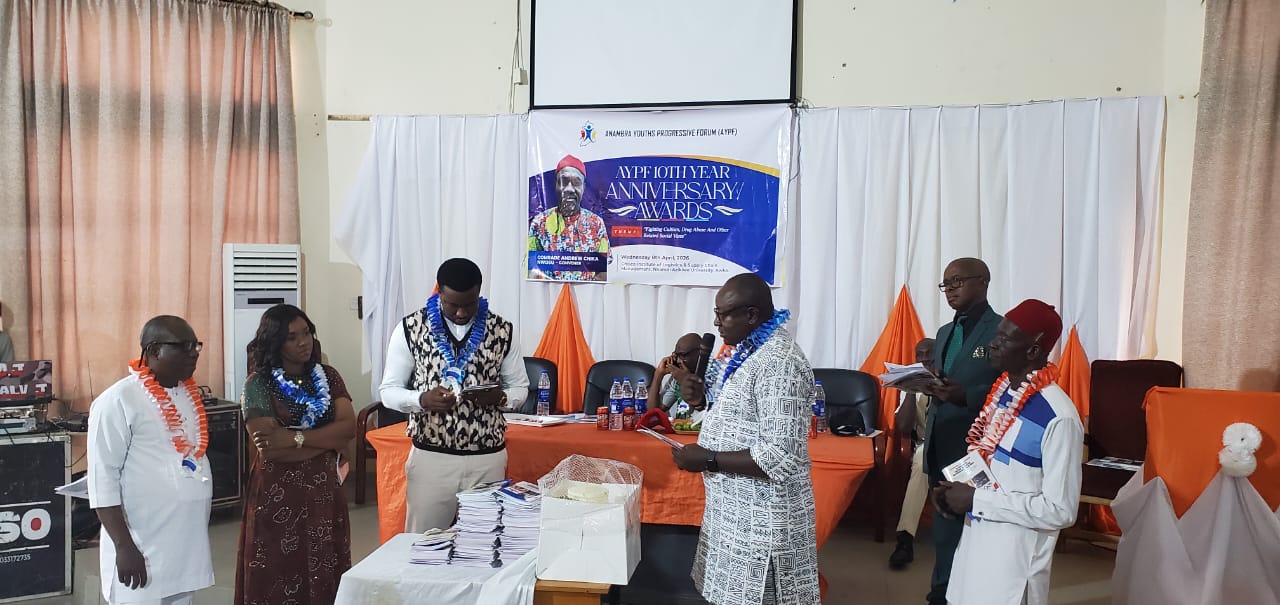
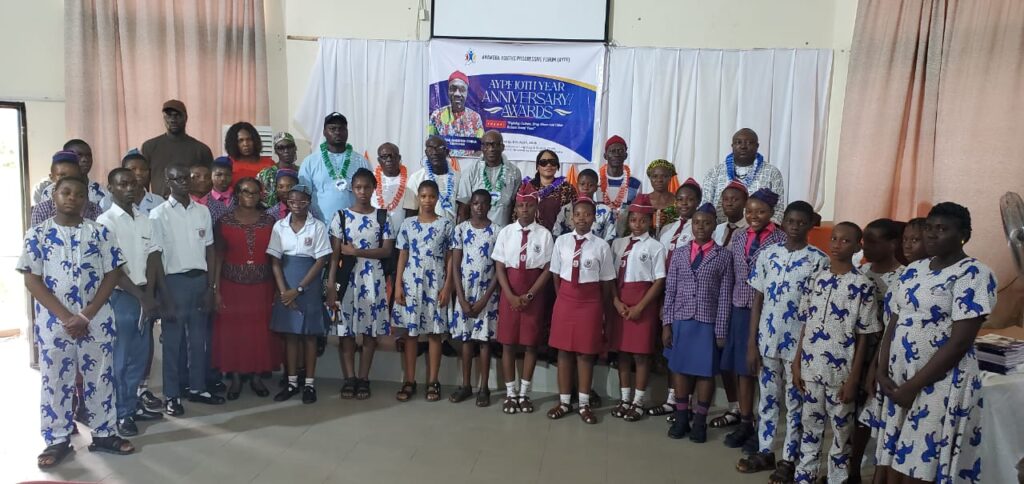
The call to action came during the 10th anniversary and award ceremony of the Anambra Youth Progressives Forum (AYPF), held at Nnamdi Azikiwe University.
The event, themed “Fighting Cultism, Drug Abuse and Other Related Social Vices,” brought together key actors to address the growing menace threatening Nigeria’s social fabric.
Stakeholders at the gathering urged governments at all levels, alongside relevant agencies, to intensify efforts against the sale, distribution, and consumption of hard drugs and other dangerous substances.
They warned that failure to act decisively could further erode public safety and national stability.
A report by the United Nations Office on Drugs and Crime, in collaboration with the National Drug Law Enforcement Agency, was cited at the event, highlighting Nigeria as a hub for the production, trafficking, and use of narcotics.
This, stakeholders noted, persists despite ongoing government interventions aimed at curbing the trend, particularly among youths.
In his remarks, the President of AYPF, Chika Nwosu, described cultism and drug abuse as grave threats to society.
According to him, these vices not only destroy individual lives but also destabilize families, weaken institutions, and undermine societal values.
He stressed that many promising young Nigerians have lost their futures due to involvement in drug abuse and cult-related activities.
Mobilizing collective action
Nwosu emphasized that the anniversary event was not just a celebration but a platform to mobilize collective action, raise awareness, and promote responsible decision-making among youths.
As part of his contribution to the campaign, Nwosu unveiled a book titled “Exposing the Dangers of Drug Abuse, Cultism, Alcoholism and Other Anti-Social Vices,” aimed at educating young people through practical insights and real-life experiences.
Also speaking, Chairman of the Police Campaign Against Cultism and Other Vices in Anambra State, Kingsley Ezika, called for stricter laws and stronger enforcement mechanisms to tackle drug trafficking and abuse.
He lamented that many youths are being misled by the lure of quick wealth, often resulting in violence and societal breakdown.
A representative of Safenest, Ruth Okolie, linked drug abuse to the rising cases of domestic violence, noting that abuse often manifests in physical, emotional, and psychological forms.
She advocated for stronger support systems, accountability, and integrated treatment approaches to break the cycle of addiction and violence.
The university community also lent its voice to the campaign. The Dean of Student Affairs, Professor Kingsley Ubaoji, representing the Vice Chancellor, reiterated the institution’s zero-tolerance policy toward cultism and drug abuse.
Similarly, the Chairman of the Anambra State Post Primary School Service Commission, Professor Nkechi Ikediugwu, represented by Anulika Adibe, urged parents to monitor their children closely and guide them away from negative influences.
Other speakers, including Emeka Obi of the National Youth Council of Nigeria, advised youths to shun violence and destructive behaviors, warning that such actions only cut short their dreams and potential.
The consensus at the event was clear: tackling drug abuse requires urgent, collective, and sustained action to safeguard Nigeria’s future generation.