
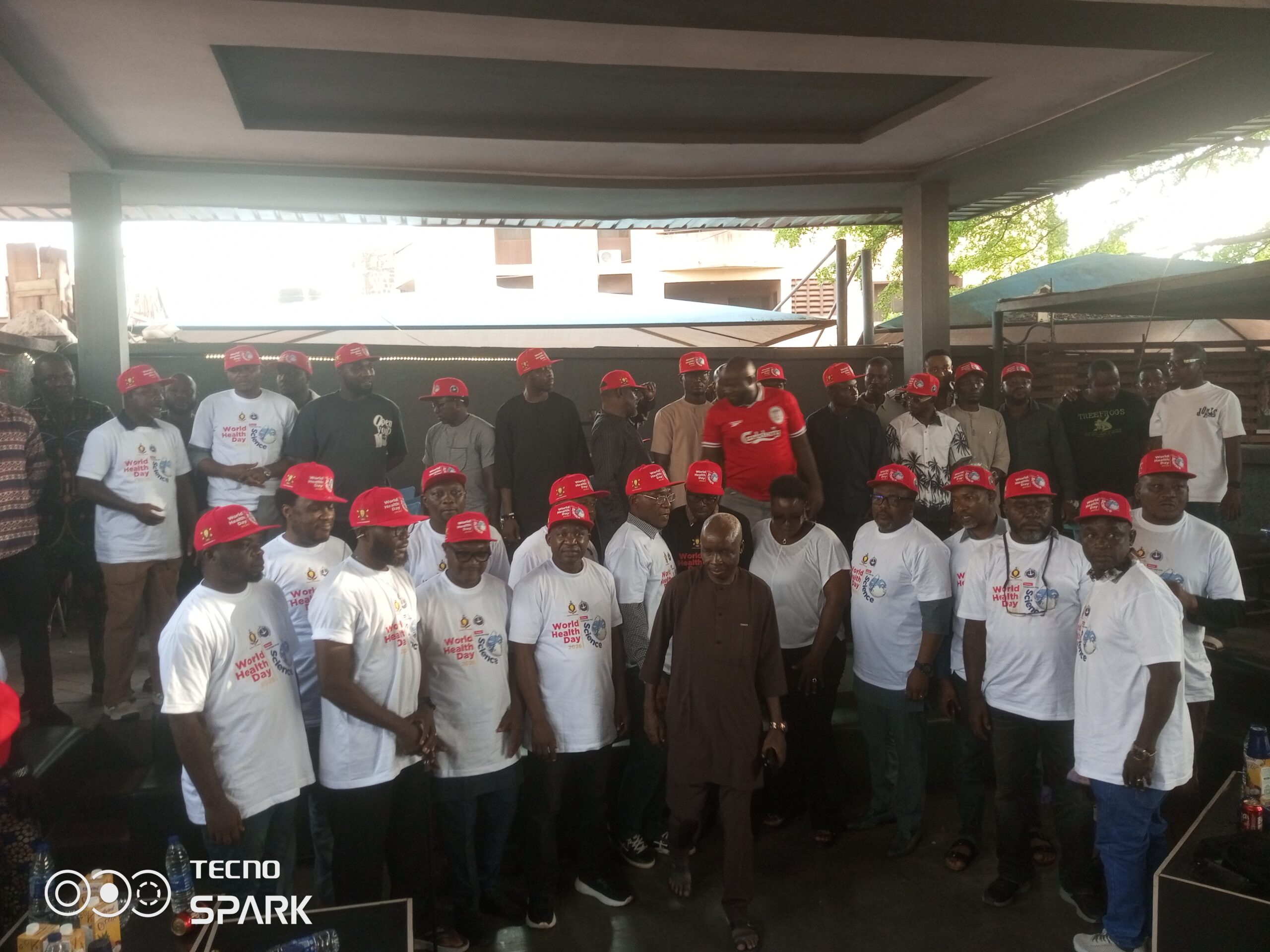
The hall in Awka carried an unusual blend of urgency and hope as health professionals, advocates, and community members gathered to mark the 2026 World Health Day. Organized by the National Association of Sea Dogs (Pyrates Confraternity), Awka Chapter.
The seminar was a meeting point of science, culture, and lived realities, where experts challenged deeply rooted beliefs about health.
At the center of the gathering was a clear message: health must be intentional, informed, and evidence-based.
For the organizers, this was not a new mission, but a continuation of a long-standing commitment. Friday Okata, President of the chapter, set the tone early.
“Today is World Health Day across the globe… what we did today is part of our advocacy program,” he said, emphasizing that such outreach has been embedded in the organization’s identity since 1952.
His message was simple but firm—people must move away from assumptions and self-medication.
“You visit the hospital… rather than relying on self-medication,” he urged, reminding attendees that “health is wealth and wealth is health.”
In one of the paper presentations, Dr. Boniface Okpala, a consultant gynecologist, delivered one of the most compelling sessions, focusing on the role of technology in reproductive health, particularly In Vitro Fertilization (IVF).
With clarity and confidence, he demystified a procedure often misunderstood in many communities.
“IVF is a technology through which you fertilize egg outside the body and implant inside the woman’s womb,” he explained.
But beyond the science, his presentation addressed human struggles—infertility, stigma, and cultural resistance.
He outlined how IVF offers solutions to a wide range of challenges, from blocked fallopian tubes to zero sperm count. “For a man that has no sperm… you can also borrow sperm and do IVF.
Gender selection
“With IVF also, you can select the gender of the baby… you can also assess the chromosomal abnormality,” he said, pointing to its role in preventing conditions like Down syndrome and hereditary diseases such as sickle cell disorder.
Yet, despite its benefits, he acknowledged a major obstacle. “The awareness is not that wide. Secondly, we have problem with cultural beliefs.
“Some people also believe that the babies born out of IVF are not normal. But that is not true. Rather, such children should be more normal than others.”
Dr. Collins Alutu, a consultant in community medicine and primary health care, speaking on the theme “Together for health, stand for science,” stressed the importance of evidence in every health decision.
“Whatever we do towards achieving a healthy living… it needs to be evidence-based,” he said.
His message cut across all aspects of healthcare—from diagnosis to treatment—urging people to rely on trained professionals rather than hearsay.
“It’s always good to meet health care professionals. They are in the right position to tell you all those evidence-based information,” he concluded, reinforcing the day’s central theme of informed choices.
Equally powerful was the presentation by Professor Nnaemeka Abamara, a clinical psychologist with Nnamdi Azikiwe University Awka, who shifted the focus to mental health—an area often neglected in public discourse.
His talk painted a vivid picture of how everyday struggles, especially economic hardship, are silently shaping mental well-being.
“Most people in Nigeria today don’t eat well as a result of economic situation,” he observed, linking poor nutrition to both physical and psychological decline.
He explained how unhealthy diets disrupt the body’s balance and contribute to mental disorders.
“When you eat healthy, it can translate to a good mental well-being. Conditions like depression and anxiety are often rooted in these overlooked factors”.
Professor Abamara also addressed societal pressures, particularly on men. “When you’re not able to maintain a family, it can affect your mental well-being,” he noted, highlighting how financial and social expectations can trigger psychological distress.
Mental health centres
Drawing from international experience, he pointed out the absence of community mental health centers in Nigeria.
“We must put that in place for people to… have a very solid and stable mental health,” he said, challenging policymakers and stakeholders to act.
In a short remark, Second Vice President of the association, Michael Okechukwu reflected on the broader purpose of the gathering.
“We deem it necessary to mark special days like this… to bring support, knowledge, and awareness to the doorstep of the common man,” he said, tying the seminar to the organization’s wider humanitarian efforts.
From the testimonies of participants like Ofong Nkemakolam and Raleke Chukwuogo, the seminar had planted something deeper than the speeches.
For them, it has triggered a call to rethink health not as a reaction to illness, but as a deliberate, informed way of living.