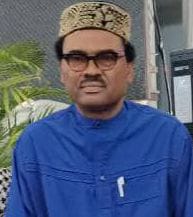
Prince Chris Azor
The Federal Government’s decision to set aside N135.22 billion in the 2026 budget for “Electoral Adjudication and Post-Election Provision” should give us pause. It is more than a budget line. It reflects what the system expects of itself, and that expectation is not reassuring.
At a time when the Independent National Electoral Commission is already projected to receive over N1 trillion, alongside another N873.78 billion proposed for the 2027 general elections, setting aside such a large sum for post-election disputes raises a basic question. If the process is credible, why prepare so heavily for its breakdown?
Elections are meant to settle political contests, not extend them. When the State anticipates litigation on this scale, it quietly admits that outcomes will likely be contested. That weakens public confidence.
As Kofi Annan once observed, “good governance is perhaps the single most important factor in eradicating poverty and promoting development.” Credible elections are the entry point into that promise.
There is also a deeper structural concern around campaign finance. A democracy that does not deliberately design and enforce a clear campaign finance architecture leaves room for abuse.
When incumbents have access to state resources and there are weak controls on how those resources are deployed during and after elections, the line between public funds and political advantage becomes blurred.
This is where the danger lies. If public money, including allocations like this, can be used in ways that indirectly support political actors in litigation, then the electoral field is no longer level.
Political equality
As Robert Dahl argued, democracy rests on political equality and meaningful competition. That competition is hollow if one side can lean on the weight of the state while others rely on private means. A credible system must ensure strict separation between state resources and partisan interests, backed by enforceable rules, real-time disclosure, and sanctions that actually bite.
The fiscal implications are just as troubling. N135 billion is not a marginal figure in an economy dealing with inflation and serious development gaps. It raises the question of priorities. Why should public resources be heavily committed to managing disputes instead of preventing them? It speaks to a pattern where we fund consequences rather than fix causes.
Transparency concerns follow naturally. Allocations under broad headings like Service-Wide Votes often lack clarity in execution. Without detailed disclosure, independent oversight, and public reporting, such funds risk becoming opaque pools. As Louis Brandeis put it, “sunlight is said to be the best of disinfectants.” This is one area where sunlight is badly needed.
There is also the wider democratic space to consider. Elections are not only about the mechanics of voting but about the freedom to compete. A healthy democracy protects the opposition’s right to organise, campaign, and challenge power without intimidation or structural disadvantage.
That open space is the heart of democratic life. As Nelson Mandela reminded us, “a critical, independent and investigative press is the lifeblood of any democracy.” The same spirit applies to political opposition. Without space to operate freely, elections become ritual rather than choice.
Emphasis on prevention
In stronger democracies like United Kingdom and Canada, the emphasis is on prevention. Campaign finance rules are clear and enforced. Spending limits exist. Disclosures are mandatory. Public institutions do not double as partisan tools. As a result, disputes exist but do not dominate the system or consume public finances at this scale.
Nigeria’s approach appears inverted. We spend heavily to conduct elections and then prepare to spend heavily again to argue about them. That cycle cannot sustain trust.
The way forward is not complicated, but it requires discipline. Public funds should support institutions, not individual political battles. The judiciary must be properly funded. Electoral bodies must be able to defend their processes. But candidates must bear the cost of their own disputes. That principle is essential to fairness.
There is also a need for a deliberate campaign finance framework that closes the door on misuse of state resources. This includes strict limits on spending, transparent reporting, independent auditing, and real consequences for violations. Without this, incumbency advantage will continue to distort the system.
The allocation itself should be revisited. It is excessive by any reasonable standard. A leaner, clearly defined provision tied strictly to institutional support would be more defensible. The savings should be redirected into strengthening electoral integrity, better technology, transparent result management, and citizen trust.
Dispute resolution before inauguration
Resolving election disputes before swearing-in is another reform worth pursuing. It reduces the advantage of incumbency and restores some balance. But it cannot substitute for fixing the process itself.
At its core, this is about trust and rights. The right to vote, the right to contest, and the right to a fair process. When these are compromised, governance loses legitimacy. As Abraham Lincoln described it, democracy is “government of the people, by the people, for the people.” That ideal depends on a system where competition is real, rules are fair, and outcomes are respected.
There is a simple principle often repeated in public administration: the best government is the one that is best administered. Nigeria does not need to normalise electoral disputes through budgeting. It needs to reduce them through integrity, accountability, and a system that gives both incumbents and opposition equal ground to stand on.
Planning for failure is not reform. It is an admission that the real work remains undone.
Prince Chris Azor is a Citizen advocate, and President, International Peace and Civic Responsibility Centre (IPCRC)
08032102294 (SMS Only)