Emma Elekwa
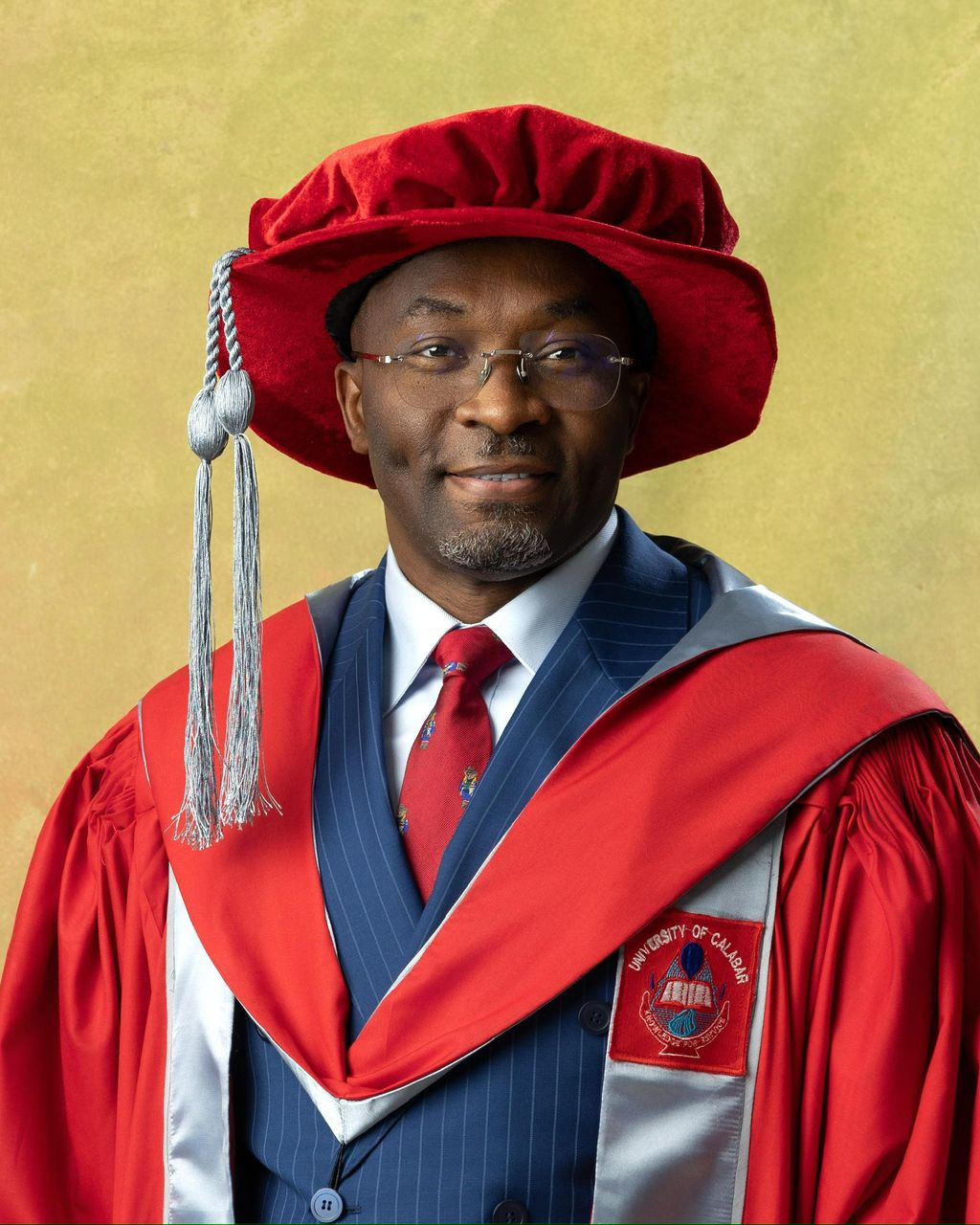
Deputy Speaker of the House of Representatives and APC Abia guber hopeful, Benjamin Kalu will be conferred with a Doctor of Philosophy degree in Law on Saturday, April 11, 2026.
This marks a remarkable academic milestone as he adds a second Ph.D to his credentials.
In a proud precursor to the convocation ceremony, the University of Calabar on Tuesday, April 7, 2026, held a major academic exhibition that brought together faculties and colleges from across the institution to showcase their most outstanding scholarly works.
In a moment that drew significant attention, the university’s Postgraduate College selected Kalu’s doctoral thesis as one of the finest research works it has ever produced using it as a centre-piece of their contribution to knowledge display.
The exhibition, which celebrated academic excellence and innovation across disciplines, saw Kalu’s work stand out among peers for its exceptional depth, policy relevance, and scholarly rigour.
Assessors formally rated his research as excellent, a distinction that speaks to the quality and significance of his academic contribution.
His doctoral dissertation, titled “Evaluating the Efficacy of Anti-Terrorism Legislation in Nigeria: Human Rights Challenges and Lessons for Emerging Democracies,” tackles one of the most pressing intersections of law, security, and governance in the contemporary world.
Counter-terrorism legal framework
The research provides a comprehensive examination of Nigeria’s counter-terrorism legal framework, analyzing it across international, regional, and domestic dimensions.
At the heart of the study is a critical question that resonates far beyond Nigeria’s borders: how can a nation confront the existential threat of terrorism without compromising the fundamental human rights that define democratic governance?
Kalu’s research argues that security measures must carefully align with the protection of civil liberties and the rule of law, a balance that remains elusive for many emerging democracies grappling with insurgency and extremism.
Beyond diagnosis, the research advances concrete, actionable recommendations aimed at strengthening legal frameworks, building institutional capacity, and fostering rights-conscious approaches to terrorism response.
Scholars and policymakers in emerging democracies across Africa and beyond stand to benefit from the lessons articulated in the work.
That one of Nigeria’s most senior legislators produced such a study adds a compelling dimension to its significance.
As Deputy Speaker plays a direct role in shaping the very legislative landscape, his academic work is equally not merely theoretical, but deeply consequential to real-world law and policy.
His doctoral degree at the university’s convocation ceremony marks not only a personal triumph but a powerful statement about the role of intellectual pursuit in leadership and nation building.