
Nigeria’s democratic journey has been long, fragile, and hard-earned. From years of military dictatorship to the return of civil rule in 1999, the country has steadily built a multi-party system designed to reflect its diversity and protect its citizens from authoritarian excesses.
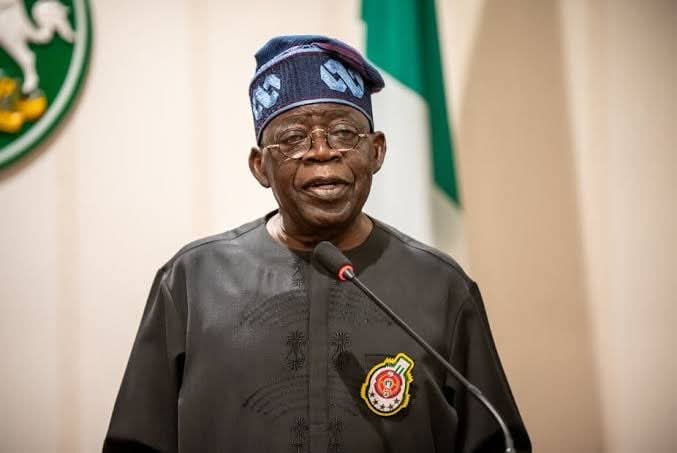
However, there have been growing concerns across the country about what many terms attempt by the ruling All Progressives Congress (APC) under President Bola Ahmed Tinubu to hegemonize the country’s political space. This has sparked renewed debate about the dangers of a creeping one-party state.
Incontrovertibly, at the heart of democracy lies competition—of ideas, policies, and leadership while a one-party state weakens the competition, often leading to complacency, lack of accountability, and ultimately poor governance. When opposition voices are diminished, citizens lose viable alternatives, and leadership becomes less responsive to the needs of the people.
Recent wave of defections by governors, lawmakers, and influential politicians into the ruling party has significantly weakened opposition parties, raising concerns about shrinking political space. Critics argue that such consolidation of power—whether voluntary or induced—risks creating an uneven political landscape where dissenting voices struggle to thrive.
More troubling are allegations—though denied by the government—that state institutions may be used, directly or indirectly, to pressure opposition figures. Observers warn that even the perception of such actions can erode public trust in democratic institutions.
In a country already grappling with economic hardship, insecurity, and governance challenges, weakening democratic checks and balances could worsen the situation.
Nigeria’s complexity
Nigeria’s complexity makes the danger even more pronounced. As a multi-ethnic, multi-religious nation, political inclusiveness is not just desirable—it is essential. A one-party dominance risks alienating groups who feel excluded from power, potentially fueling division, agitation, and instability.
There are also economic implications. Without strong opposition scrutiny, policy decisions—such as subsidy removals, tax reforms, or borrowing—may proceed without sufficient debate, increasing the likelihood of policies that burden citizens. Nigeria is already facing high inflation and cost-of-living pressures, underscoring the need for robust democratic engagement.
History offers clear lessons. Across Africa and beyond, one-party systems have often led to authoritarian rule, corruption, and stagnation. Countries that thrive tend to have strong institutions, vibrant opposition, and active citizen participation.
Zimbabwe under Robert Mugabe and the long-ruling ZANU-PF effectively operated as a one-party dominant state for decades. Opposition voices were suppressed, elections were frequently disputed, and the country experienced severe economic collapse, including hyperinflation in the late 2000s. Concentration of power weakened accountability and contributed to governance failures.
Eritrea is one of the few countries in Africa with an official one-party system, controlled by the People’s Front for Democracy and Justice under Isaias Afwerki. There are no competitive elections, opposition parties are banned, and civil liberties are heavily restricted. The result has been prolonged political repression, mass emigration, and limited economic progress.
Led by Teodoro Obiang Nguema Mbasogo since 1979, the dominance of the Democratic Party of Equatorial Guinea has created a near one-party state. Despite vast oil wealth, most citizens live in poverty, highlighting how unchecked power can lead to inequality, corruption, and poor wealth distribution.
Cameroon’s weakened opposition
On its part, Cameroon though technically multi-party, has been dominated for decades by the Cameroon People’s Democratic Movement under Paul Biya. Weak opposition and entrenched leadership have contributed to political stagnation, governance concerns, and unresolved internal conflicts, including the Anglophone crisis.
After independence, Tanzania operated as a one-party state under Chama Cha Mapinduzi led by Julius Nyerere. While Nyerere promoted unity, the absence of opposition limited political competition and policy debate, contributing to economic inefficiencies that later required major reforms when multiparty democracy was introduced in the 1990s.
For Guinea – early post-independence, under Ahmed Sékou Touré and his Democratic Party of Guinea, the country became a strict one-party state. The era was marked by political repression, human rights abuses, and economic mismanagement, leaving long-term scars on the nation’s development.
Key lessons for Nigeria
These examples show a consistent pattern: where one-party dominance takes root, accountability weakens, dissent is stifled, and governance often deteriorates. For a diverse and complex country like Nigeria, preserving a vibrant multi-party democracy is not optional—it is essential for stability, inclusion, and sustainable development.
Leaders within the ruling party have repeatedly denied any intention to establish a one-party state, emphasizing that defections are part of democratic freedom and that multiple parties still exist. However, democracy is not judged only by intentions, but by outcomes and perceptions. When one party becomes overwhelmingly dominant, the line between democracy and dominance can begin to blur.
For Nigeria, the path forward must be deliberate and principled. Political parties—both ruling and opposition—must strengthen internal democracy. Institutions like the electoral body and judiciary must remain independent and credible. Civil society, the media, and citizens must stay vigilant, holding leaders accountable regardless of party affiliation.
Ultimately, the survival of Nigeria’s democracy depends not just on elections, but on the preservation of choice, competition, and accountability. A one-party state, whether by design or by gradual drift, poses a real danger to these ideals.
Nigeria must remember: democracy thrives not in uniformity, but in diversity of voices. Safeguarding that diversity is not just a political necessity—it is a national imperative.