
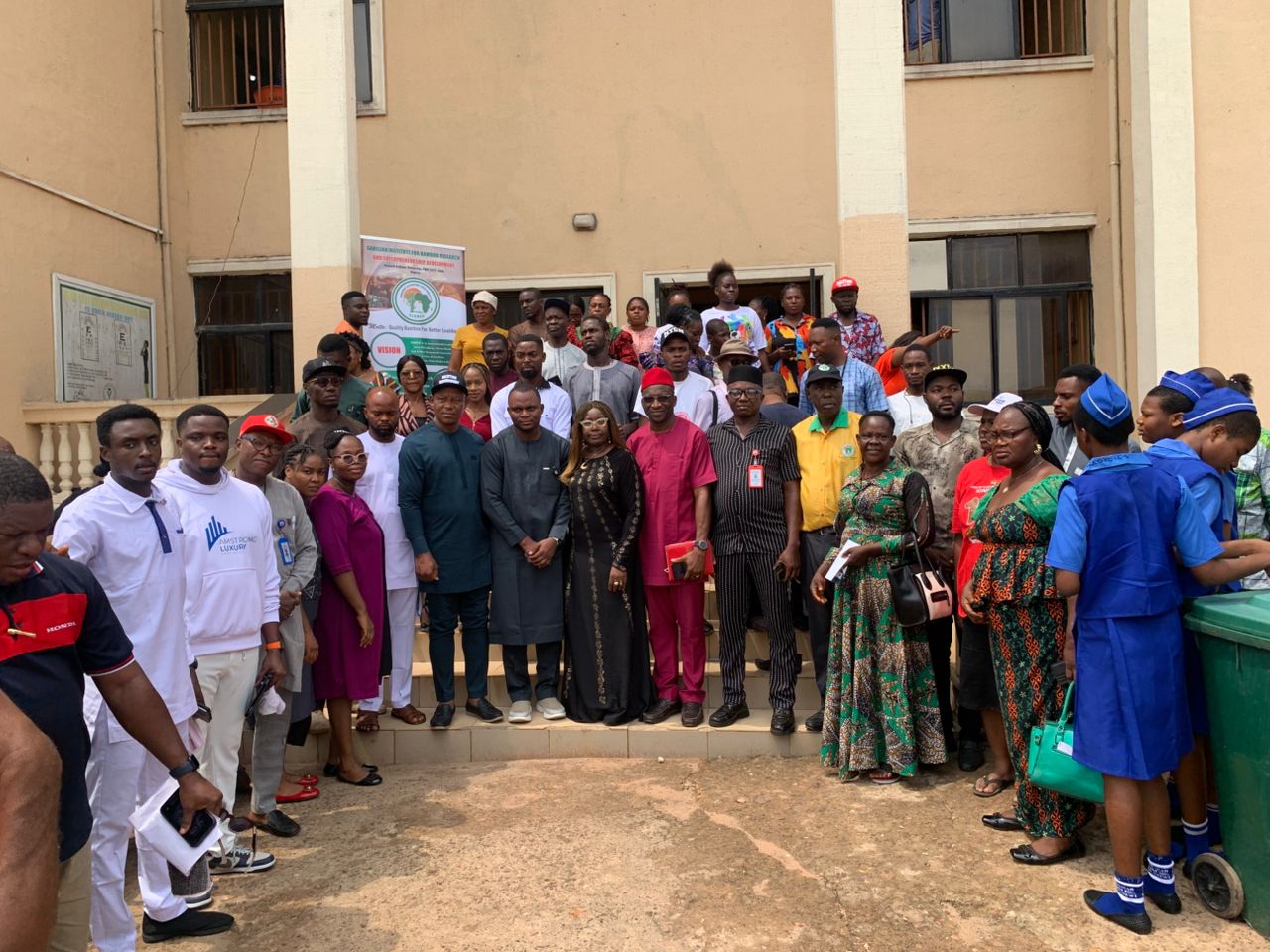
Residents of Anambra State and Nigerians at large have been urged to embrace climate-smart agriculture and harness the vast potential of bamboo as a sustainable solution to climate change, food insecurity, and youth unemployment.
The call was made at a one-day Anambra South Climate Smart Agriculture and Bamboo Entrepreneurship Programme held in Awka.
The event was hosted by Chibuike Kas Obiwuzie, Youth Senator representing Anambra South in the Nigerian Youth Parliament, in collaboration with the Sahelian Institute for Bamboo Research and Entrepreneurship Development at Nnamdi Azikiwe University.
The programme, themed “Sowing Seeds, Growing Futures,” attracted academics, policymakers, farmers, students, and industry stakeholders, with support from organizations including Giftnoa Agrifood Limited and Food Soldiers Enterprises Limited.
Chairman of the occasion and Vice-Chancellor of Nnamdi Azikiwe University, Ugochukwu Bond Stanley Anyaehie, represented by the Dean of Student Affairs, Professor Kingsley Ubaorji, emphasized the importance of early engagement of young people in climate action and agriculture.
He noted that the future of sustainable development lies in preparing the younger generation with the right knowledge and mindset. According to him, catching young people early is critical to securing a better future. “As soon as they catch this vision early, then we are safe. But if they don’t, they will struggle,” he said.
Bamboo cultivation
The Vice-Chancellor stressed that agriculture, particularly bamboo cultivation, offers enormous opportunities for economic growth if properly harnessed.
He highlighted the need for collaboration among government, institutions, and individuals to strengthen food production systems.
Prof. Anyaehie further pointed out that population growth continues to put pressure on food systems, making it imperative to invest in knowledge and innovation. He also underscored the importance of security in farming, warning that without a safe environment, agricultural productivity cannot thrive.
Drawing from personal experience, he encouraged participants to remain focused and consistent, noting that success requires strategy, resilience, and a willingness to grow alongside others.
In his keynote address, former Commissioner for Agriculture in Anambra State, Forster Ihejiofor, painted a vivid picture of the agricultural challenges confronting the state.
He identified land scarcity, high population density, erosion, unpredictable rainfall, and unemployment as major obstacles.
“Despite these challenges, Anambra possesses significant advantages, including fertile soils, access to markets, and a vibrant youth population,” he noted.
The former commissioner explained that climate-smart agriculture offers a pathway forward through improved productivity, climate adaptation, and environmental sustainability.
Strategic resource
Highlighting bamboo as a “green gold,” Ihejiofor described it as a strategic resource capable of addressing multiple challenges simultaneously. “Bamboo helps control erosion, restores degraded land, and absorbs more carbon than many tree species.
Beyond environmental benefits, bamboo equally supports industries such as construction, furniture, textiles, packaging, and renewable energy, while also offering strong export potential.”

“There is need for policy reforms to support climate-smart agriculture, including incentives for farmers, access to financing, and youth-focused land initiatives.”
Also speaking, the Director of Sahelian Institute for Bamboo Research and Entrepreneurship Development, John Ogbodo, described the programme as timely, given the growing global concerns around climate change and food insecurity.
He emphasized the need to balance agricultural productivity with environmental sustainability, noting that bamboo plays a crucial role due to its carbon sequestration capacity and adaptability within agroforestry systems.
Bamboo potential
Ogbodo further highlighted bamboo’s potential to reduce plastic pollution through eco-friendly alternatives, urging participants to embrace innovation and practical application of knowledge gained.
“We are planting seeds today—not just physical seeds, but knowledge,” he said, encouraging participants to act promptly, especially with the onset of the rainy season.
In his remarks, the host, Chibuike Kas Obiwuzie, described the initiative as a deliberate effort to reposition agriculture as a viable and profitable sector for young people.
He challenged the perception of agriculture as a last resort, insisting that it remains the foundation of economic growth and national development.
Obiwuzie explained that the programme was designed to engage youths in conversations on food security, bridge the gap between policy and practice, and empower the next generation with practical knowledge.
“Involving students directly in presentations was intentional, as it fosters ownership and prepares them for leadership roles in the agricultural sector.
“The future of our people, the security of our nation, and the prosperity of our youth are tied to the soil beneath our feet,” he said.
Earlier, Chairman of the Central Planning Committee, Franklin Ezeilo, described bamboo as an untapped green goldmine with vast potential to combat environmental degradation, particularly plastic pollution.
“I implore everyone here and beyond to aspire green, grow seeds and advance the futures through green and healthier horizons”.
“Together let’s make our world a better place through using more cutting-edge bamboo finished products thereby reducing environmental hazards of plastic wastes to both aquatic, humans and nature.”
Goodwill messages
Goodwill messages from international stakeholders, including Alexander Gbedo and Dr. Muralidharan EM, commended the initiative, highlighting bamboo’s role in climate resilience, job creation, and the transition to a circular economy.
The event featured technical sessions, field demonstrations, and the launch of agricultural guidebooks aimed at equipping farmers with practical tools for improved productivity.
Supervisors in charge of agriculture in all the seven local government areas under Anambra South Senatorial District and their representatives also gave solidarity messages on the occasion.