
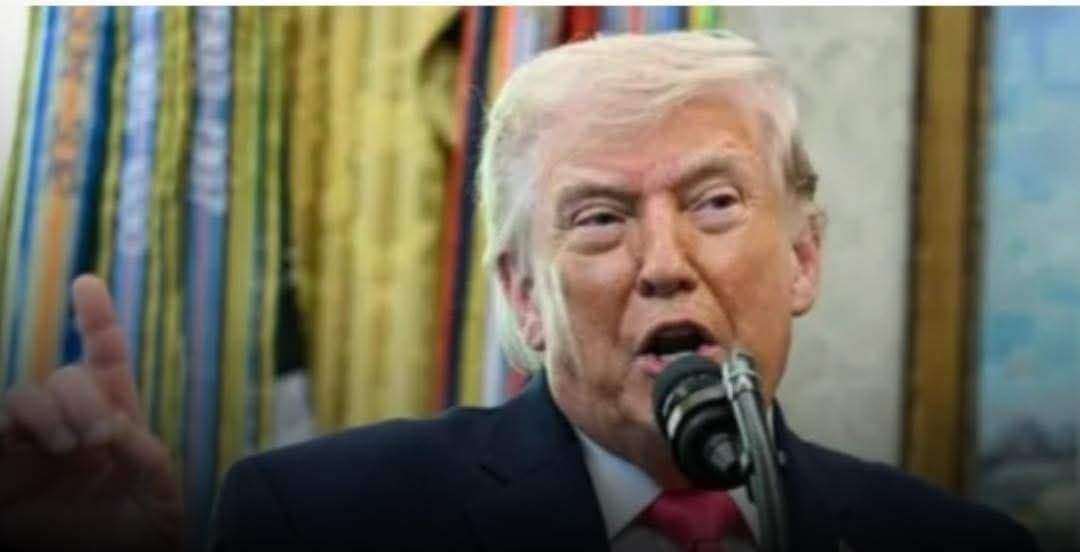
Global financial markets declined on Monday as oil prices surged following comments by former U.S. President Donald Trump suggesting that the United States could take control of Iran’s oil resources amid escalating tensions in the Middle East.
Brent crude, the international oil benchmark, rose to about 116 dollars per barrel in early trading, gaining roughly two per cent after Trump’s remarks over the weekend.
He had indicated that seizing Iran’s oil assets, including the key export terminal at Kharg Island, remained a possible option.
The development triggered anxiety across global markets, with major Asian indices recording losses.
Japan’s Nikkei 225 fell by about three per cent, while South Korea’s KOSPI dropped 3.4 per cent.
Hong Kong’s Hang Seng Index also declined.
European markets opened lower, although the UK’s FTSE 100 recorded marginal gains, supported by mining stocks.
Energy prices climbed amid fears of supply disruptions in the Gulf region, with European natural gas prices also rising due to growing uncertainty over global supply stability.
Tensions in the Middle East have intensified following reports of additional U.S. troop deployments and missile launches by Houthi rebels in Yemen targeting Israel, raising concerns over a broader regional conflict.
Analysts warned that further escalation could push oil prices significantly higher, with projections indicating crude could reach up to 150 dollars per barrel, and potentially higher in extreme scenarios.
They, however, cautioned that sustained price increases could weaken global demand and increase the risk of an economic slowdown.
Brent crude is currently on track for its largest monthly gain, amid fears that disruptions to critical shipping routes, particularly the Strait of Hormuz, could tighten global energy supplies.
Meanwhile, world leaders and energy industry executives are said to be holding emergency talks on measures to mitigate the impact of rising fuel costs and possible supply shortages.