Emma Elekwa
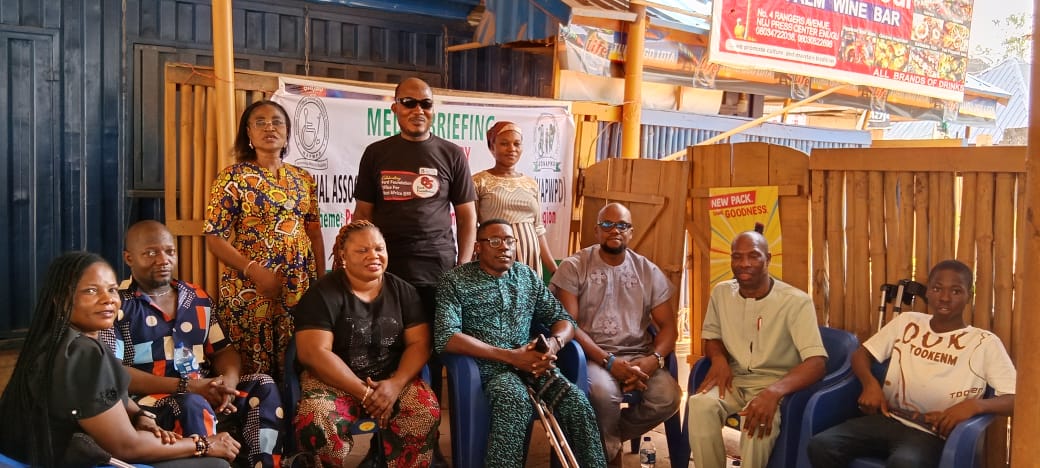
National Association of Persons with Physical Disabilities (NAPWPD) has called on media organisations across the South-East to play more active role in promoting awareness and accountability of its activities.
President, Comr. Rilwan Mohammed who made the call during a press briefing in Enugu powered by Joint National Association of Persons with Disabilities (JONAPWD) said media organisations have the power to bring visibility to issues that might otherwise remain ignored.
Mohammed, represented by Team lead, NAPWPD South East Advocacy Group, Comr. Ugochukwu Okeke noted that accessibility is not a luxury but basic requirement for inclusion and equal participation.
He regretted varying forms for challenges facing PWDs in the region, including that of accessibility in three major areas: public structures, transportation systems and enforcement of existing disability laws.
Describing the media as critical partner in the journey toward inclusion, Okeke noted that the media could help accelerate implementation of policies that protect the rights of millions of Nigerians.
Media assistance to PWDs
He recommended certain measures the media could take towards assisting PWDs in addressing the challenges, including highlighting stories of PWDs, exposing accessibility gaps and educating the public about disability rights laws.
He said, “Journalists can conduct periodic audit to help in assessing whether public institutions, schools, hospitals, transport systems, and government buildings comply with accessibility requirements under the disability law.
“Public enlightenment campaigns. Radio, television, newspapers, and digital platforms can help educate citizens about the provisions of the disability rights law and why accessibility benefits everyone in the society.
“Inclusive programming. Media organisations should ensure their own platforms are inclusive by incorporating sign language interpretation, accessible communication formats, and participation of persons with disabilities in discussions and programs.
“Increase coverage of disability issues. Media houses should dedicate more airtime and publication space to disability inclusion, accessibility challenges, and the rights of persons with disabilities.
“Amplifying the voices of persons with disabilities. Rather than speaking for persons with disabilities, the media should create opportunities for them to tell their own stories, share their experiences, and contribute to policy conversations.
“Accessibility is not only about persons with disabilities; it benefits older persons, pregnant women, injured individuals, and even parents pushing strollers. A society that builds for accessibility builds for everyone.
Innovation and resilience
“The South-East region is known for its resilience, innovation, and strong sense of community.
“We believe that with greater awareness, stronger partnerships, consistency and intentional media engagement, the region can become a model for disability inclusion in Nigeria,” he stressed.
He reiterated the body’s commitment to working with government institutions, private sector actors, civil society organisations, and media partners to ensure accessibility becomes a reality rather than just a promise written in law.
Okeke urged stakeholders to remember that disability rights are human rights. “When public spaces remain inaccessible, citizens are excluded.
“But when accessibility becomes a priority, society becomes more humane, more inclusive, and more just.
“We thank the media for your continued partnership and look forward to working together to build a South-East where no one is left behind,” he added.