
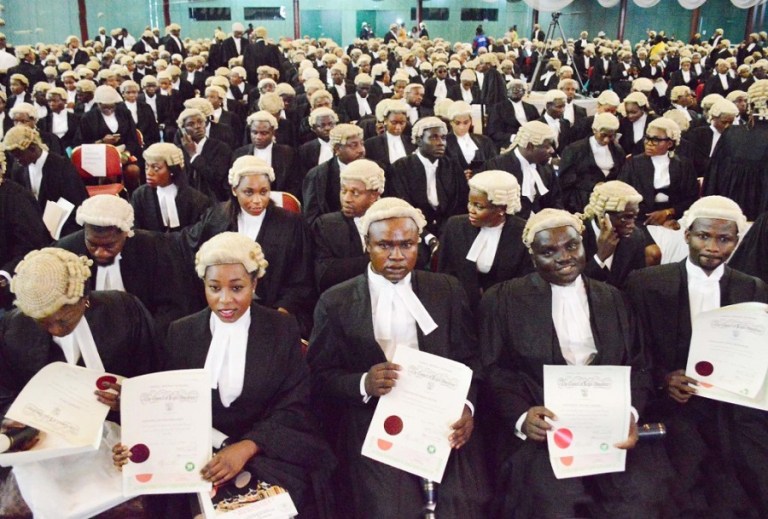
Human rights lawyer and lead counsel to the Indigenous People of Biafra (IPOB), Ifeanyi Ejiofor, has raised serious concerns over what he describes as a steady decline in moral, ethical, and professional standards within Nigeria’s legal profession.
In a statement issued on Wednesday, Ejiofor called on key regulatory bodies—including the Nigerian Bar Association and the Body of Benchers—to take urgent and decisive action to restore the integrity of the Bar.
He lamented that the legal profession, once regarded as a noble and disciplined calling anchored on justice and integrity, has lost much of its former prestige.
According to him, Nigeria once witnessed an era where legal practice was defined by excellence, discipline, and deep ethical commitment.
He cited icons such as Frederick Rotimi Alade Williams and Gani Fawehinmi, whose contributions shaped the moral authority of the Bar.
Ejiofor also referenced respected jurists like Chukwudifu Oputa and Kayode Eso, noting that the judiciary once embodied intellectual depth, courage, and institutional integrity.
He warned, however, that those standards are fast eroding.
Admission into the profession, he said, is increasingly focused on academic qualification with insufficient attention to character and ethical grounding.
The consequences, he noted, are already evident. Ejiofor decried what he described as declining courtroom discipline, weakening advocacy skills, and a growing tendency toward unprofessional conduct among some practitioners.
“In some instances, courtrooms—once sanctuaries of reason—have become arenas of disorder,” he said, adding that even the judiciary is beginning to reflect these deficiencies.
Questionable judicial conduct
He cited instances of questionable judicial conduct, including what he described as arbitrary courtroom directives that undermine professional dignity.
He warned that such actions signal a troubling erosion of institutional standards.
Ejiofor further condemned the rise of unethical practices within the profession, including procedural manipulation and deliberate attempts to frustrate court proceedings.
He recounted a personal experience where a senior lawyer allegedly withheld court documents meant for opposing counsel, only to serve them on the day of hearing, thereby disrupting proceedings.
Such actions, he argued, not only amount to professional misconduct but also threaten the administration of justice and erode public confidence in the legal system.
“The legitimacy of the law rests on public trust. Once that trust is compromised, the very foundation of society is at risk,” he said.
Calling for urgent reforms, Ejiofor urged institutions such as the Legal Practitioners Disciplinary Committee and the Council of Legal Education to strengthen oversight, enforce discipline, and uphold merit in the training and regulation of lawyers.
He stressed the need to move beyond rhetoric to concrete action, warning that failure to address the decline could have far-reaching consequences for the justice system.
“What is required is courage—the courage to confront uncomfortable truths, enforce standards without fear or favour, and restore the legal profession to its rightful place as a pillar of justice,” he added.