Global oil prices have surged sharply as the ongoing US-Israeli war against Iran enters its third week, heightening fears of prolonged instability in the Middle East and potential disruptions to key supply routes.
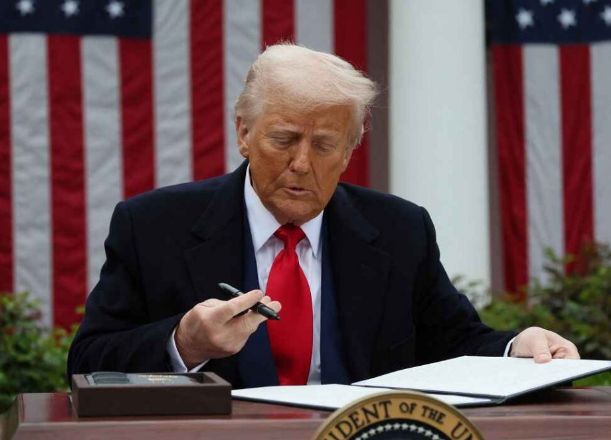
Amid the rising economic and geopolitical tension, Donald Trump is confronting decisions that could define the remainder of his presidency.
The conflict, which risks spiralling beyond control, is increasingly shaping both US foreign policy and global market sentiment.
Despite the mounting stakes, Trump has shown little public sign of being consumed by the war.
In more than an hour of remarks at the White House on Monday, he shifted between topics—including renovations at the John F. Kennedy Center for the Performing Arts, plans for a White House ballroom, the upcoming World Cup, and domestic political issues—while offering only limited focus on the conflict.
The wide-ranging appearance mirrored his usual unscripted style.
Over the weekend, Trump spent time at his Florida resort playing golf and posted extensively on Truth Social, where commentary on the Supreme Court rivalled updates on the Iran war.
However, history suggests that war has a way of dominating presidencies, regardless of other priorities.
For Trump, that reality is becoming increasingly apparent as evidence mounts that the conflict—once described by him as “already won” and “very complete”—may extend for weeks or even longer.
In a sign of the war’s growing impact, Trump announced that a planned presidential trip to China in early April would be postponed by a month.
White House Press Secretary Karoline Leavitt поted that the president’s primary responsibility remains ensuring the success of “Operation Epic Fury,” the military campaign against Iran, as global attention—and economic pressure—continues to intensify.