Emma Elekwa
Prisoners Rehabilitation and Welfare Action (PRAWA) has identified ignorance and public perception as challenges affecting effective utilization of Non-Custodial Measures (NCMs) in Nigerian Correctional Service (NCoS).
The body also listed lack of synergy between judiciary and officers of NcoS as well as confidence and trust of the judiciary in using non-custodial sanctions as other militating factors.
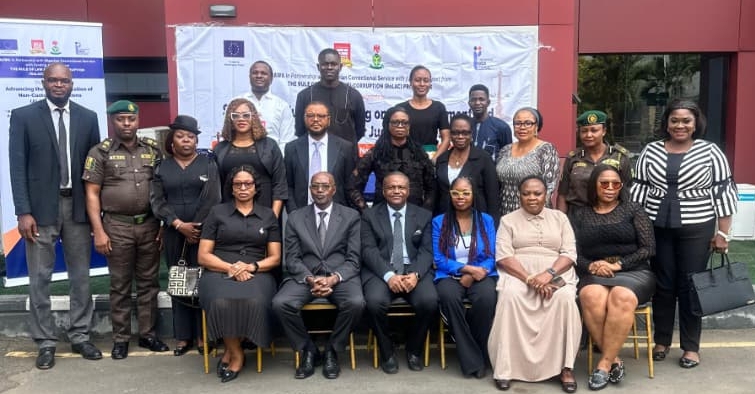
Programme Planning Manager and Team Lead of Advancing Implementation of Non-custodial Solutions project, Chioma Anuna raised the concern in Awka, Anambra state at the Specialized Judicial Training on Risk Assessment and Sentencing Guidelines for Non-Custodial Measures funded by European Union through International IDEA under RoLAC 2 Program.
Addressing participants, comprising Judges, Magistrates, Court officials and NCoS senior officers, Anuna called for increased utilization of the NCMs, as well as strong synergy and collaboration between judiciary and NCoS officers.
She said, “As gatekeepers to criminal justice system, the judiciary is expected to issue non-custodial sanctions, without which NCoS won’t have any supervisor. Hence the need for this capacity building in terms of objectives, applications and benefits of the NCMs.
Law utilization
“The training will expose participants to challenges hindering utilization of the laws and to proffer solutions.
“It will also look at ways to strengthen collaborations with NCoS towards ensuring that use of NCMs is advanced in the criminal justice system.
“We expect that justice from the criminal justice system will be proportionate and rehabilitative aimed at correcting and not just punishing offenders.”
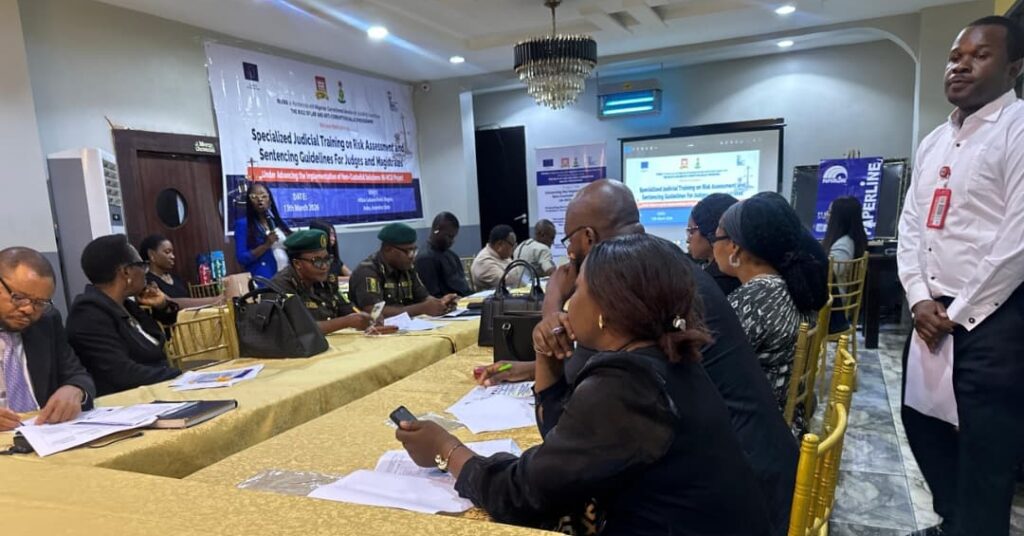
Controller, NCoS Anambra state Command, Ike Anslem said the training was targeted at deepening participants’ collective understanding of legal foundations of non-custodial sentencing, introduce risk assessment tools that support informed judicial decision-making and strengthen collaboration between the Judiciary and the Non-Custodial officers of the Nigerian Correctional Service.
Ike, represented by the Command PRO, Francis Ekezie appreciated judicial officers and partners at the engagement, describing their presence as demonstration of strong commitment to strengthening the administration of justice and improving the effectiveness of our criminal justice system.
Worsening inmates conditions
Also speaking, Program Assistant, PRAWA, Edo state, Abraham Naibo expressed concerns over worsening conditions of inmates in correction centers across the country.
Naibo, a clinical psychologist who blamed the situation on lack of adequate care and environmental conditions of the facilities, called for support from organizations and spirited individuals and other stakeholders in assisting government address the trend.
“Currently, about 8,500 inmates are suffering from one form of mental disorder or another which needs urgent attention from organizations, spirited individuals and other stakeholders to ensure they get care and medications.
State Coordinator Rule of law and Anti-corruption (RoLAC) who doubled as International IDEA Representative, Josephine Onah pledged RoLAC’s commitment to mechanisms targeted at assisting inmates and reducing number of those on awaiting trials.
“Incarcerating people all the time is not the best option. There’s need for alternatives, including community service, especially for those with minor offences.
“That will not only assist in rehabilitating them, but reintegrating them back into the society seamlessly.
“We’re optimistic that the NCMs issues will become active and optimally utilized.
“We want to see more of those non-custodial alternatives to incaseration after this training.
Onah expressed joy over fruitful partnership with PRAWA, especially in the three thematic areas of criminal justice delivery, access to justice for women, children and PWDs and anti-corruption.
“These are large scope of work we can’t do alone, reason we’re partnering with PRAWA who we’re sure has the capacity to deliver under a grant arrangement,” she added.