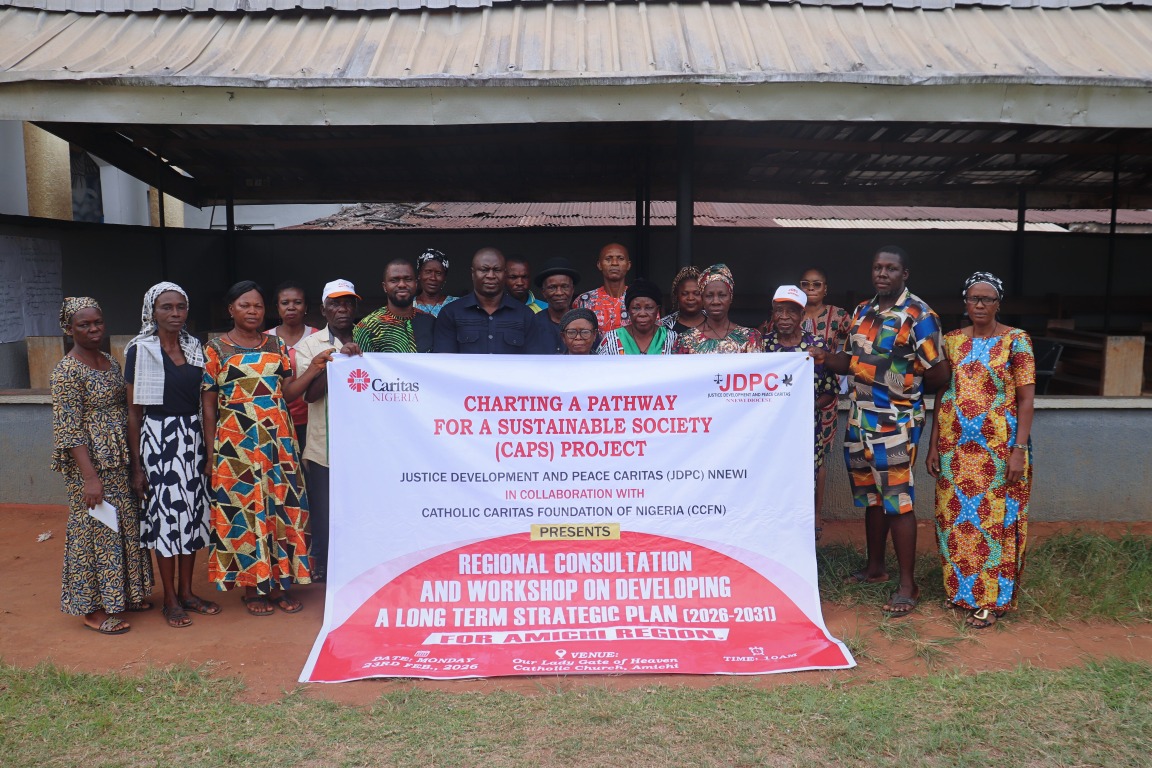
Justice Development and Peace Caritas (JDPC) Nnewi has begun a series of community consultations across the four regions of the Catholic Diocese of Nnewi as part of efforts to develop a participatory five-year strategic plan aimed at strengthening its humanitarian and development interventions.
The consultations, organised under the Community Action Planning System (CAPs) Project is supported by the Catholic Caritas Foundation of Nigeria (CCFN).
They are designed to give grassroots stakeholders the opportunity to assess the organisation’s past activities, identify institutional gaps and contribute ideas that will shape its development priorities over the next five years.
One of the regional consultations took place at Our Lady Queen of Heaven Catholic Church, Amichi, bringing together parish-based JDPC volunteers, community leaders, youth and women representatives, Ward Development Committee members and regional coordinators.
Participants reflected on community realities and discuss how JDPC programmes could be strengthened to respond more effectively to local development needs.
In his opening remarks, JDPC Nnewi Director, Rev. Fr. Ben Okolo, described the meeting as a significant step towards building stronger community structures and deepening development partnerships within the diocese.
He said the CAPs project offered stakeholders an opportunity to collectively reflect on existing challenges and develop stronger institutional capacities to address them.
“Through dialogue, shared experiences and collaborative engagement, we hope this meeting will deepen our understanding and strengthen the partnerships needed to achieve the goals of this project,” he said.
JDPC’s interventions
“Over the years, JDPC Nnewi has implemented initiatives targeting vulnerable groups and strengthening community systems across education, healthcare, governance, human rights and economic empowerment.
“Beneficiaries include students receiving scholarships and educational support; women and widows benefiting from livelihood empowerment and micro-credit programmes.
“Youth and unemployed persons engaged in vocational training and leadership development; as well as orphans and vulnerable children receiving welfare support.
According to him, the organisation also works with Ward Development Committees and community groups to improve healthcare delivery and governance accountability, while supporting civic education, election observation and protection mechanisms for survivors of gender-based violence and human rights defenders.
JDPC Nnewi’s Programmes Manager, Onyekachi Ololo, said the CAPs Project was part of CCFN’s Small Grants Programme which seeks to strengthen the operational capacity of Justice, Development and Peace Commissions across Nigeria.
According to him, JDPC Nnewi was selected to implement the project for the Onitsha Province as part of efforts to enhance institutional systems, improve advocacy and enable development organisations to respond more effectively to community challenges.
He said the consultations were aimed at gathering stakeholders’ perspectives on JDPC’s Strengths, Weaknesses, Opportunities and Threats (SWOT).
“The CAPs project seeks to create a platform where stakeholders can reflect on current realities, identify gaps and collectively build the knowledge and skills required to improve programme delivery and impact within our communities,” Ololo explained.
Session facilitator
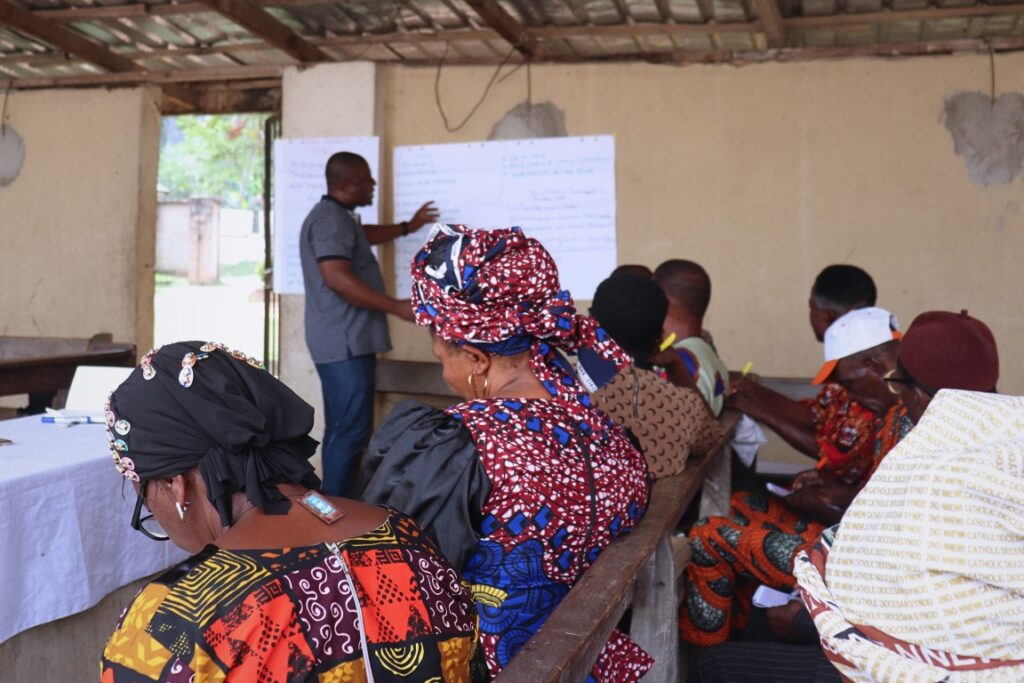
A development expert, Dr. Onyeka Ebenebe facilitated the session, guiding stakeholders through participatory discussions and strategic assessments based on global, national and sub-national development indicators.
Participants identified several institutional challenges affecting JDPC’s operations, including the absence of a long-term strategic roadmap, limited visibility of its activities across communities and weak coordination between diocesan and regional structures.
They also noted that these gaps sometimes make it difficult for the organisation to attract long-term donor partnerships.
However, stakeholders pointed to several opportunities that JDPC could leverage.
These include its strong parish network, a large base of committed volunteers and the trust it enjoys among communities as a credible civil society actor.
They also highlighted the growing relevance of programmes focused on healthcare, governance, youth empowerment and human rights.
At the end of the consultation process, a diocesan-level validation workshop will be held to harmonise inputs from all the regions and review the draft strategic plan before final approval.
JDPC officials say the final document will translate the organisation’s mission into clear strategic priorities, strengthen accountability systems and improve coordination between regional and diocesan structures.