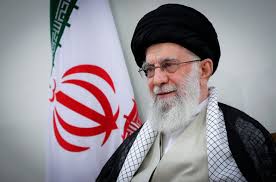
Tens of thousands of Iranian-Americans took to streets across major U.S. cities this week amid a surge of both celebration and anxiety after the reported death of Iran’s Supreme Leader Ayatollah Ali Khamenei in a massive joint U.S.–Israeli military offensive.
This development has sparked hopes for regime change among some in the diaspora and deep fears about the future of Iran and regional stability.
Fatemeh Shams who has lived in the United States since 2009, is among Iranian-American exiles who have long opposed the Tehran regime from abroad.
She does not mourn the death of Supreme Leader Ayatollah Ali Khamenei in Saturday’s bombing.
“We all have very mixed feelings about what’s happening,” Fatemeh, based in Philadelphia, said.
“On the one hand, we are extremely happy that our killers… they no longer breathe.
“The fact that [Khamenei] was killed in less than a moment, after 38 years of corruption and crime, it kind of feels that we didn’t have any control over the justice we had been fighting for.”
Relief and concern
Members of the Iranian diaspora across the United States expressed both relief and concern — relief at the leader’s death and concern over the rising death toll and the uncertainty surrounding how long the conflict may last.
Many took to the streets in cities from Boston to Washington, DC, and Los Angeles to celebrate Khamenei’s death.
On Sunday in Los Angeles often nicknamed “Tehrangeles” for being home to more than a third of the 400,000 Iranian immigrants in the United States, police closed streets outside a federal building to allow demonstrators to gather.
The Iranian-American crowd waved flags as a plane circled overhead carrying a banner that read, “THANK U TRUMP.”
Hoda Zeaighamnia danced in the streets with her three children — one of whom was only days old when the family fled Iran.
Her daughter, Donya Cheshmaghil, recalled, “I was born in Iran. My family was forced to flee because we’re not Muslim and they’re very oppressive against anyone that’s not Muslim.
“We’re hoping this leads to regime change. We’re very grateful for the US for finally intervening.
“The people in Iran have been asking for this. This is what the people in Iran want.”
Sister mourned collateral losses
Her sister, Mona Cheshmhehil, added: “I’m sorry that it just had to take so many lives being lost for this to happen.
“But right now all we can think about is we’re just so happy to have the chance to go back, see where we came from. We couldn’t have thought this would happen.”
However, the mood was not uniformly celebratory. A day earlier outside Los Angeles City Hall, anger filled the air.
Actress Jane Fonda joined several hundred protesters opposing the military action.
“You may wage this war in our name, but not with our consent,” Fonda, 88, a long-time anti-war activist, shouted to the crowd.
In other U.S. cities, demonstrators both supporting and opposing the military intervention made their voices heard.
“We don’t call it a war,” Sherry Yadegari of Atlanta, Georgia, told AFP news agency. “We call it the Iran Rescue Operation.”
But at a protest in New York, activist Layan Fuleihan said “Bombing people does not help them free themselves.
“If Trump cared about democracy or if he cared about the well-being of Iranian people, he would have lifted the brutal sanctions on the Iranian economy that have made it impossible for everyday working Iranians to find enough to put food on their table.”
Divisions also emerged among U.S. members of Congress with Iranian heritage.
Congresswoman Stephanie Bice, an Oklahoma Republican whose father is half-Iranian, posted on X: “Now is the time for Iranians to stand up and take back their nation and bring lasting peace to the Middle East.”
Meanwhile, Yassamin Ansari, an Arizona Democrat whose parents fled the 1979 Iranian Revolution to the United States, expressed reservations.
No need for war
In a statement, she said she wants a free Iran but does not want the U.S. entangled in “another endless war in the Middle East.”
Back on the streets, many Iranian-Americans chose to focus on the moment rather than the uncertainty ahead.
They celebrated what they described as the downfall of a regime they blame for the deaths of thousands during widespread protests this year.
“This is a great day,” Meraa Tcheshmaghio told the BBC at Sunday’s Los Angeles rally. “Our country has been wanting this for a while.
“It’s beautiful. It really is.”