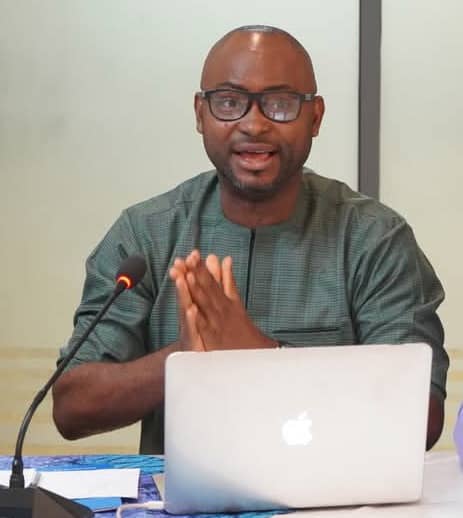
A political affairs commentator, Chidozie Ezeugwa, has warned that Nigeria’s democracy faces serious threats if authorities fail to ensure full electronic transmission of election results.
Ezeugwa argued that the retention of manual collation creates fertile ground for manipulation and could trigger voter apathy and instability ahead of 2027.
In an interview with Core Truth Online, Ezeugwa said democracy thrives on checks and balances, stressing that citizens must hold leaders accountable at all levels — from communities to the national government.
According to him, when citizens remain silent in the face of actions that undermine transparency, leaders may drift toward autocracy.
“At every level, the people must serve as a check on those in power.
“The current national governance structure will continue to operate “like a cartel” if citizens do not demand transparency.”
He expressed concern about the recent amendment to the Electoral Act passed by the National Assembly and assented to by the President, which allows both electronic and manual transmission of election results.
“While the House of Representatives had initially supported electronic transmission of results from polling units directly to the IReV portal, the final version retained manual collation.
Combination dangerous
Ezeugwa argued that combining manual and electronic systems defeats the purpose of reform.
“Electronic transmission from polling units to the IReV portal would enable real-time tracking of results and make it easier to detect irregularities.
“The moment you allow manual collation, you create room for manipulation at the collation centre,” he said.
“A candidate who wins at the polling unit can lose at the collation point.”
He cited the recent FCT elections as a demonstration of how the system could be exploited and warned that the same pattern may reoccur in 2027.
According to him, retaining manual transmission signals what Nigerians should expect in the next general election.
“My fear is that 2027 will look like 2023. Persistent doubts about result credibility could push citizens to lose faith in the electoral process.
Ezeugwa extolled civil society actors and other concerned Nigerians who protested against the National Assembly on the amended Electoral Act.
He however expressed disappointment that protests and advocacy did not achieve the desired outcome since the manual option was retained.
Reason for resistance
Ezeugwa insisted that politicians resistant to electronic transmission are often those uncertain of their popularity.
“Only those who are afraid of free and fair elections fear electronic transmission. Some politicians rely on manipulation at collation centres rather than voter support.
Ezeugwa also criticized the speed with which the amended bill was transmitted to and signed by the President.
The Political commentator suggested it reflected prior alignment between the executive and legislature.
He argued that the President could have returned the bill for reconsideration in line with public concerns.
“If the President is honest, he should have sent it back and allowed the people’s wish to prevail,” he said, claiming that the current framework may benefit incumbents.
He warned that continued public distrust could lead to voter apathy, with citizens withdrawing from participation if they believe their votes will not count.
According to him, mass participation is a core ingredient of democracy, and its erosion could have dangerous consequences.
Potential unrest
“When people feel suppressed and ignored, they may resort to self-help,” he cautioned, warning of potential unrest if frustrations deepen.
Ezeugwa linked electoral distrust to broader insecurity challenges, arguing that systemic exclusion and poverty create conditions for lawlessness.
He noted rising crime, banditry, and insurgency as symptoms of deeper governance failures.
“When citizens lose faith in the system, some fall out of it entirely,” he said. “That is when you begin to see instability escalate.”
He also pointed to economic hardship, unpaid or poorly paid civil servants, and widening inequality as factors fueling discontent.
If governance does not improve, he warned, the country risks further decline.
Ezeugwa urged authorities to demonstrate transparency not merely through speeches but through concrete action.
He called for clear assurances that election results would be transmitted electronically from polling units to final collation points without interference.
“The President must demonstrate transparency from the polling unit to the announcement of results.
“There is a limit to how far leaders can go without carrying the people along.”
He concluded that Nigeria cannot afford to move backward while the rest of the world embraces digital electoral systems.
With off-cycle elections and bye-elections still ahead, he said there remains an opportunity for the government and electoral authorities to rebuild trust — but only if they commit fully to credible, transparent processes.
“Without such reforms, the consequences for Nigeria’s democracy could be severe,” he concluded.