
By Our Correspondent
The Anambra Civil Society Network (ACSONet) has called for urgent multi-stakeholder intervention to address infrastructure and operational challenges affecting the ongoing National Identification Number (NIN) enrollment exercise in Anambra State.
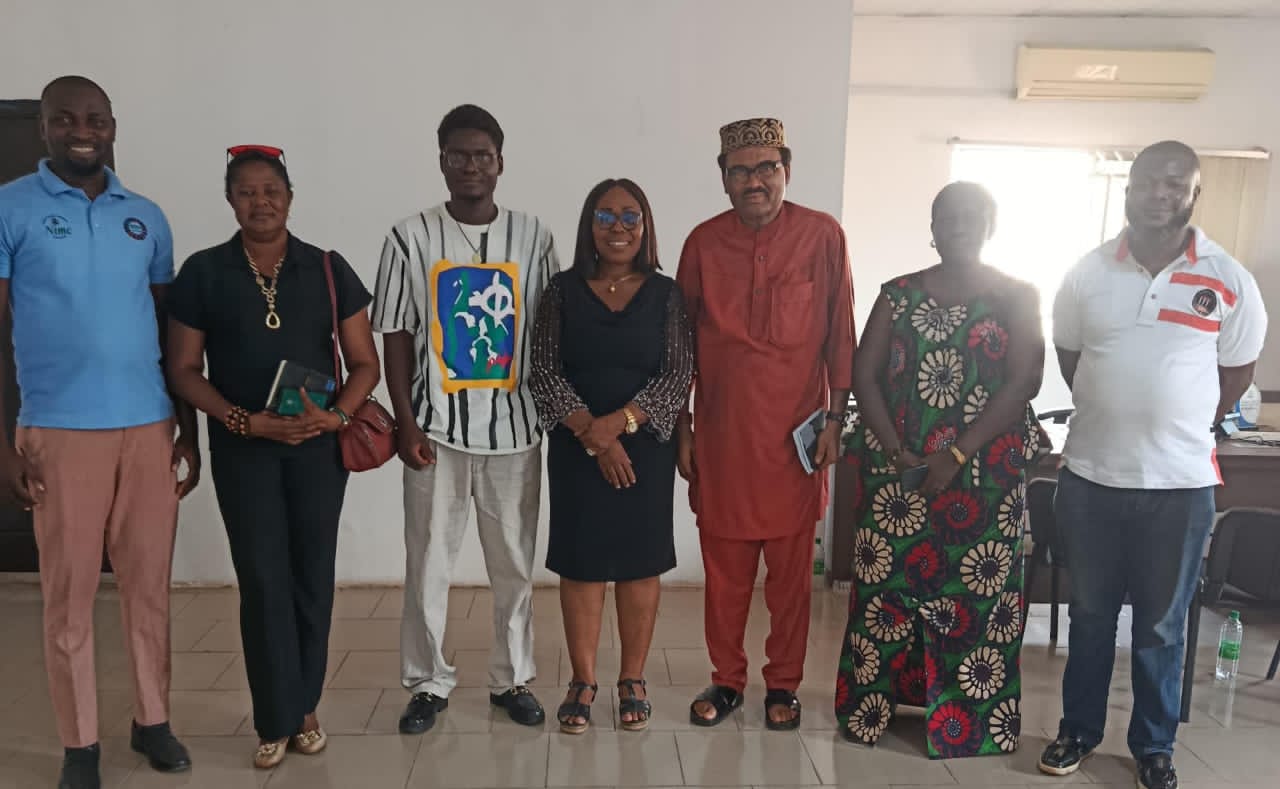
The call followed an advocacy visit led by its Chairman, Prince Chris Azor, to the Anambra State office of the National Identity Management Commission (NIMC) in Awka.
The visit came on the heels of a recent civil society coalition engagement in Lagos under the ID4D Initiative in collaboration with NIMC.
ACSONet said the engagement in Awka was aimed at obtaining first-hand updates on the six-week ward-level enrollment exercise, understanding implementation realities, identifying practical challenges, and exploring how civil society can support more inclusive access to the NIN across communities.
Receiving the delegation, the Anambra State Coordinator of NIMC, Mrs. Maureen Abazu, disclosed that the ward-level enrollment exercise commenced on February 16, 2026, and is focused primarily on fresh registrations, especially for persons aged 16 years and above.
Deepening identity coverage
She explained that the exercise aligns with the Renewed Hope agenda of President Bola Ahmed Tinubu and seeks to deepen identity coverage at the grassroots level.
According to Abazu, previous enrollment drives failed to reach some underserved local government areas such as Ayamelum and Anambra West due to poor network connectivity, lack of electricity, and difficult road access.
“As a result, residents from those areas were directed to the state office in Awka for registration — a move that significantly limited participation, particularly among vulnerable populations.”
She noted that the state office works with Front End Partners under a World Bank-supported framework and partnered with the National Orientation Agency for public sensitization ahead of the exercise.
Abazu welcomed ACSONet’s involvement, acknowledging the critical role civil society plays in community mobilization and public accountability.
On enrollment procedures, the coordinator clarified that children under 16 must present a parent’s NIN for enrollment.
Upon attaining the age of 16, they are required to migrate to adult enrollment status. She stressed that a NIN is issued once and remains unchanged for life.
“While certain personal details — such as date of birth, phone number, address, and name arrangement — can be corrected, she said the NIN itself does not change.
Accurate biometric data
“Corrections require a Remita payment receipt, sworn affidavit, police extract for phone number changes, utility bill for address changes, and a recommendation from a traditional ruler or President General.
Abazu also emphasized the importance of accuracy during biometric capture and warned against allowing anyone to thumbprint on behalf of another person.
She described such practices as illegal and capable of compromising data integrity.
Responding, ACSONet Chairman, Prince Azor, underscored the need for immediate intervention to address all operational challenges facing the NIMC office.
He pledged to engage the Anambra State Governor to seek urgent infrastructure support, particularly the installation of the existing transformer and improvement of infrastructural conditions at the office.
ACSONet said further engagements would target the Commissioner for Local Government, Chieftaincy and Community Affairs, the Ministry of Budget and Economic Planning and Local Government Council Chairmen.
Other stakeholders for engagement include: the State Traditional Rulers Council, Presidents General of communities, and philanthropists within the state to mobilize support for equipment and logistics.
Critical exercise
ACSONet described the ward-level enrollment as a necessary step toward expanding identity coverage.
It maintained that bridging funding, infrastructure, and equipment gaps remains critical to ensuring that residents across Anambra State can access enrollment services in a timely and dignified manner.
The network pledged sustained engagement to support improved identity access and accountability in the state.
Facility tour during the visit revealed several operational constraints threatening the smooth implementation of the exercise.
The office currently lacks mobilization funds for 2026 activities while there is a shortage of functional laptops and desktop systems, with some requiring urgent upgrades.
The state office is also not connected to the national grid despite the availability of a transformer provided during the previous administration.
The general condition of the office environment raised concerns, a reality ACSONet said undermine service delivery.
It feared it could erode public confidence in the office whose mandate is central to accessing government programmes, financial inclusion initiatives, and other essential services.