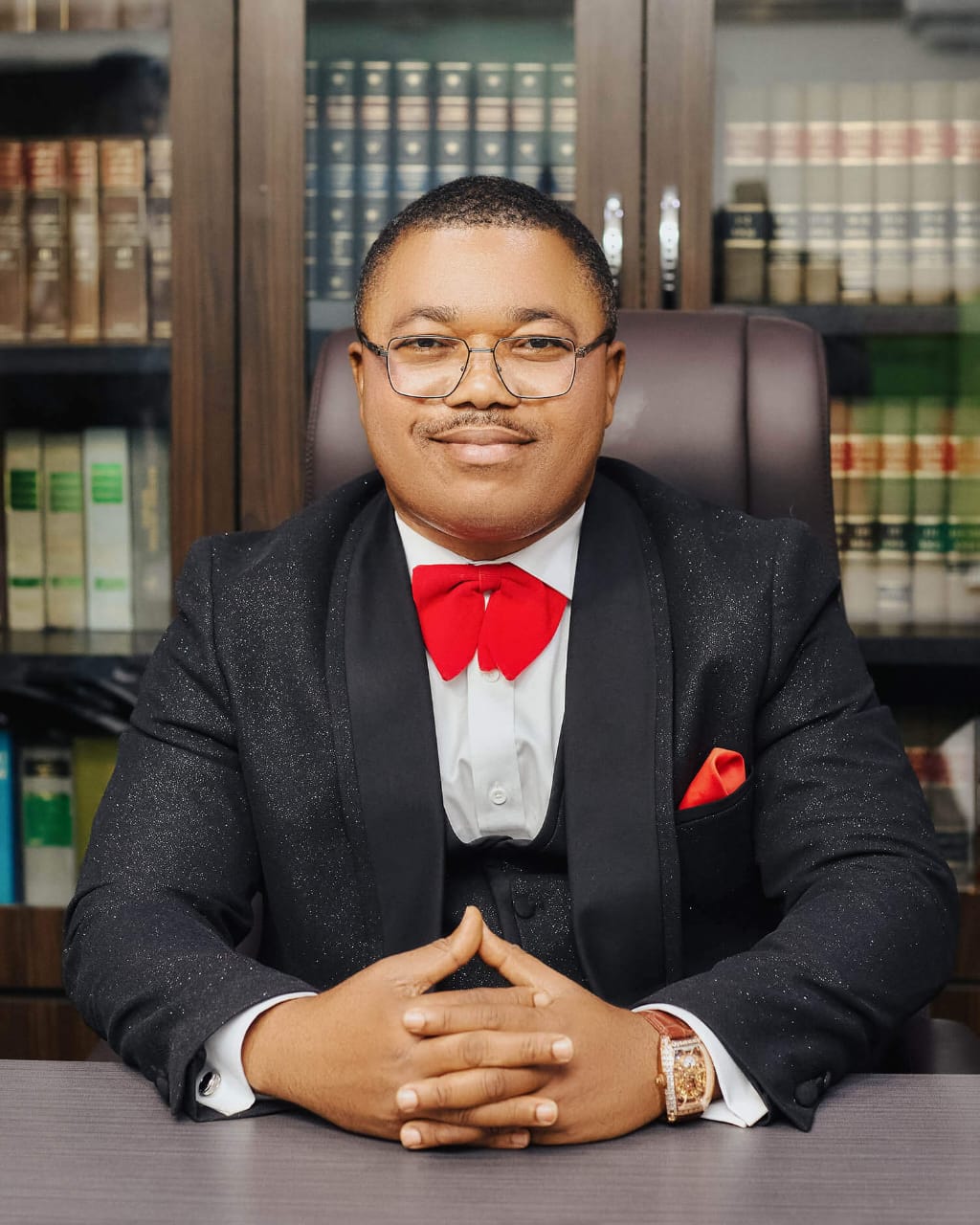
Nigerian human rights lawyer, Ifeanyi Ejiofor, has welcomed the recent deployment of United States troops to Nigeria following bilateral security engagements with the Federal Government.
Ejiofor described it as a decisive and positive development in the country’s protracted war against terrorism.
In a statement on Monday titled “Monday Musing: When Allies Arrive — Why The Deployment Of United States Troops Signals A Turning Point In Nigeria’s War Against Terror,” Ejiofor said the move marks a significant shift from rhetoric to firm action.
“There are moments in the life of a nation when rhetoric must finally give way to resolve,” the lead counsel to the Indigenous People of Biafra (IPOB), said.
“The recent deployment of troops from the United States of America, following bilateral security engagements with the Federal Government of Nigeria, appears to mark one such moment,” he declared.
Ejiofor said Nigerians, especially vulnerable Christian communities in Kaduna, Plateau, Benue, Niger and other affected states, have endured years of relentless violence.
He painted a grim picture of repeated attacks and official reassurances that failed to match realities on the ground.
“For years, Nigerians, particularly vulnerable Christian communities in parts of Kaduna, Plateau, Benue, Niger and other affected states , have endured a cycle of carnage so relentless that it risks becoming normalised.
“Churches attacked during worship. Villages razed in the dead of night. Innocent citizens abducted and paraded in macabre propaganda videos by marauding extremists.
“Yet, in the face of this grim reality, we have often been treated to familiar refrains: ‘The situation is under control.’ One is tempted to ask — under whose control?”
Strategic seriousness
“The reported arrival of experienced American ground troops, supported by logistical capabilities and operational resources, signals not merely military reinforcement but strategic seriousness.
“It suggests that insecurity in Nigeria is no longer to be viewed as an unfortunate domestic inconvenience, but as a destabilising phenomenon with regional and global implications.”
Ejiofor insisted that international military cooperation remains a standard feature of modern counter-terrorism efforts.
“Security collaboration between sovereign nations is neither novel nor sinister. It is the very architecture upon which contemporary counter-terrorism operations are built.
“The alliance between the United States and various nations across Africa in confronting insurgent networks is well documented.
“Why then should Nigeria be treated as an exception, particularly when the scale of bloodshed has reached intolerable proportions?”
Intelligence gathering
“If anything, this collaboration has the capacity to strengthen intelligence gathering and operational precision; disrupt terror financing networks; expose enablers and logistical backers operating behind carefully curated façades.
“It will also curtail incessant attacks on defenceless worshippers and rural communities; and restore confidence in the State’s monopoly of legitimate force.”
Ejiofor said the sharp objections from certain ideological quarters revealed deeper political motives.
“What has proved particularly revealing, however, is the swift and animated objection from certain ideological quarters.
“Some fundamentalist voices, whose doctrinal rigidity has too often coincided with escalating insecurity, now demand exhaustive details of bilateral security arrangements and, in some instances, declare the collaboration ‘unacceptable.’”
For years, innocent Nigerians have been unacceptable collateral. Worshippers have been unacceptable targets. Entire communities have been unacceptable casualties.
Yet it is the prospect of international cooperation to curb these atrocities that suddenly triggers constitutional purism and procedural anxiety.”
While acknowledging that scrutiny of foreign military presence remains legitimate, he warned against politicising insecurity.
“But it is disingenuous to weaponise sovereignty as a shield for impunity, or worse, as a bargaining chip for political relevance.”
Insecurity as political capital
“Nigeria’s prolonged insecurity has, regrettably, been exploited as political capital.
Fear has been monetised. The time has come to halt the cynical weaponisation of bloodshed for sectarian leverage or ideological posturing.”
“If the collaboration with the United States succeeds in exposing not only the foot soldiers of terror but also the financiers, recruiters, propagandists and ideological incubators behind them, then it will represent far more than a military intervention.
“It will mark the dismantling of an ecosystem of death. And perhaps that prospect explains the discomfort in certain circles.”
He concluded by stressing that history would judge actions taken to protect lives rather than loud opposition.