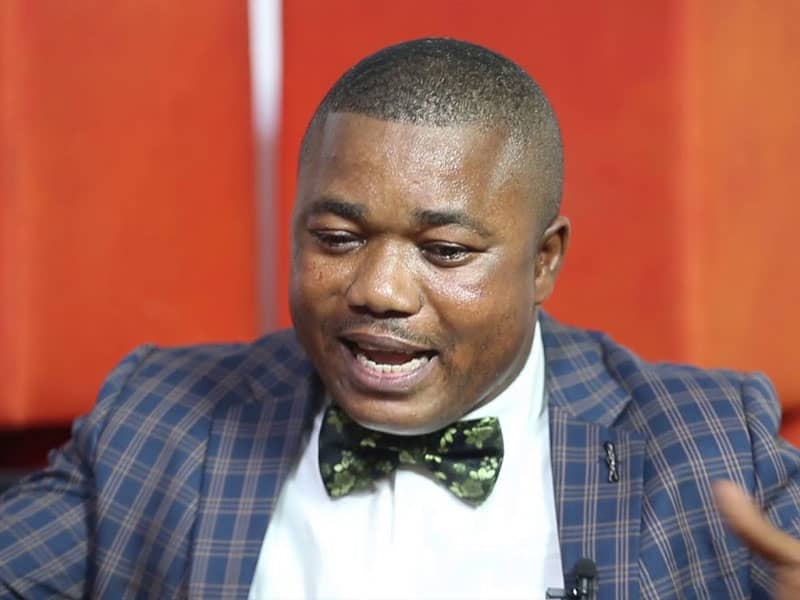
Nigerian human rights lawyer, Ifeanyi Ejiofor, has condemned what he described as the Federal Government’s “ritualised indifference” to the killing of more than 400 Nigerians within a single week.
Ejiofor warned that the nation’s political class appears more invested in strategising for the 2027 general elections than in stemming the bloodshed across the country.
He have the condemnation in a statement released on Saturday titled “Weekend Musing: When the State Negotiates with Terror and Campaigns on Corpses,”
Ejiofor lamented that while communities in parts of the North-West, North-Central and North-East reel from coordinated attacks by bandit and jihadist networks, Nigeria’s leaders seem preoccupied with political calculations.
“Nigeria has lost well over 400 prospective voters in a single week. Four hundred citizens who might have queued peacefully in 2027 now lie in shallow graves.
“As the attacks continue, one is compelled to ask – how many Nigerians will still be alive to exercise their franchise by 2027, if death continues to enjoy such unfettered electoral advantage?”
Ejiofor argued that the pattern of response to mass killings has become predictable as the Presidency issues solemn condemnations and announces the “deployment of security forces,” after which the cycle repeats itself.
“The curtain then falls until the next massacre. If the Nigerian state is not complicit by conduct, omission, or deliberate acquiescence, what becomes of the intelligence warnings routinely issued ahead of these attacks? Why are the monsters not intercepted before they strike?”
Ejiofor further queried how major terrorist operations continue to succeed “without resistance, interception, or consequence,” raising concerns about possible institutional lapses within the security architecture.
Kaduna recent abduction
The lawyer also referenced the recent release of 183 abducted worshippers in Kaduna State, which Governor Uba Sani publicly welcomed.
While acknowledging the relief of their freedom, Ejiofor expressed concern over the circumstances surrounding the release.
He recalled reports that the abductors initially demanded ₦28 million, allegedly as compensation for damaged motorcycles, before negotiations advanced.
“Authorities later attributed the captives’ freedom to the efforts of the Office of the National Security Adviser and the Department of State Services.
“How many terrorists were neutralized in this operation?” Ejiofor asked. “None are named, paraded or prosecuted.”
He noted that the freed worshippers returned “newly clothed, well presented,” while Nigerians were left without clarity on whether any ransom was paid.
“One suspects that the truth will only surface when these terror merchants decide to weaponise it,” he added.
Turning to recent killings in Kwara, Benue and Katsina states, Ejiofor decried what he described as discrepancies between community-reported casualties and official figures.
He cited reports from Woro community in Kwara State, where local sources placed the death toll at over 300, describing residents as “exhausted from burying their dead.”
“These were Nigerians, indigenous people, Christians and Muslims alike. Their crime was existing.”
Ejiofor also referenced attacks in Benue State’s Gwer West Local Government Area, where at least 20 people were reportedly killed in a market shooting, and further violence in Katsina State that sparked public protests.
Amid the violence, Ejiofor accused members of the political class of focusing on defections and alleged manoeuvres around the Electoral Act ahead of 2027.
One party state
He warned that governance was beginning to resemble “a glide into a one-party state,” while security of lives appeared secondary.
“With this velocity of killing, is the survival of Nigerians now subordinate to the survival of political ambition?”
“Is the primary duty of the state — security of life — now a negotiable afterthought?”
He criticised what he described as the retroactive deployment of troops to affected communities, questioning why security forces often arrive after attacks have occurred.
“Are soldiers now assigned to guard graveyards and deserted villages?” he queried.
Ejiofor called for an immediate national security emergency declaration and a decisive dismantling of terror networks.
He insisted that the time for routine condemnations had passed.
“Death has become so routine that it is now reduced to statistics.
“And statistics, as history teaches us, are the final stage before conscience collapses.”