The Deputy Director of the Nnamdi Azikiwe University (UNIZIK) Zoological Garden, Mohammed Adeyemi, has called on Nigerians to adopt a holistic understanding of biodiversity, stressing that effective conservation must recognise the interdependence between plants and animals.
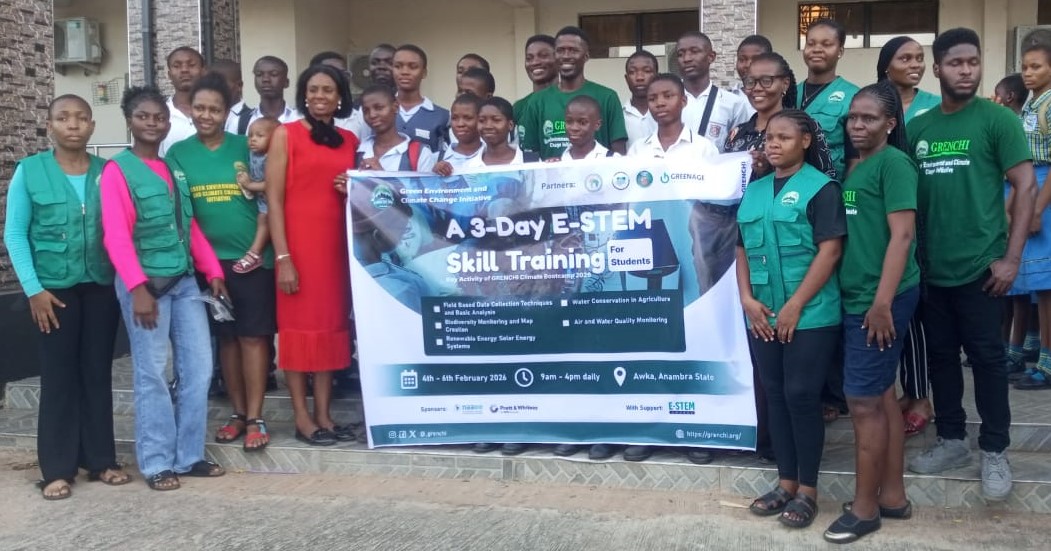
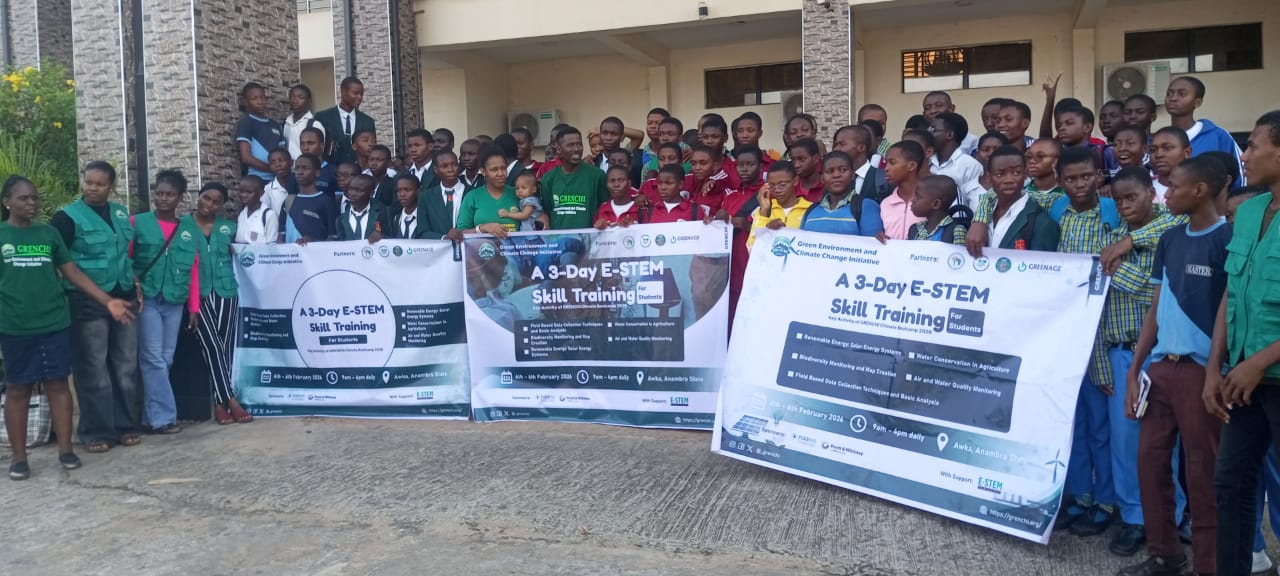
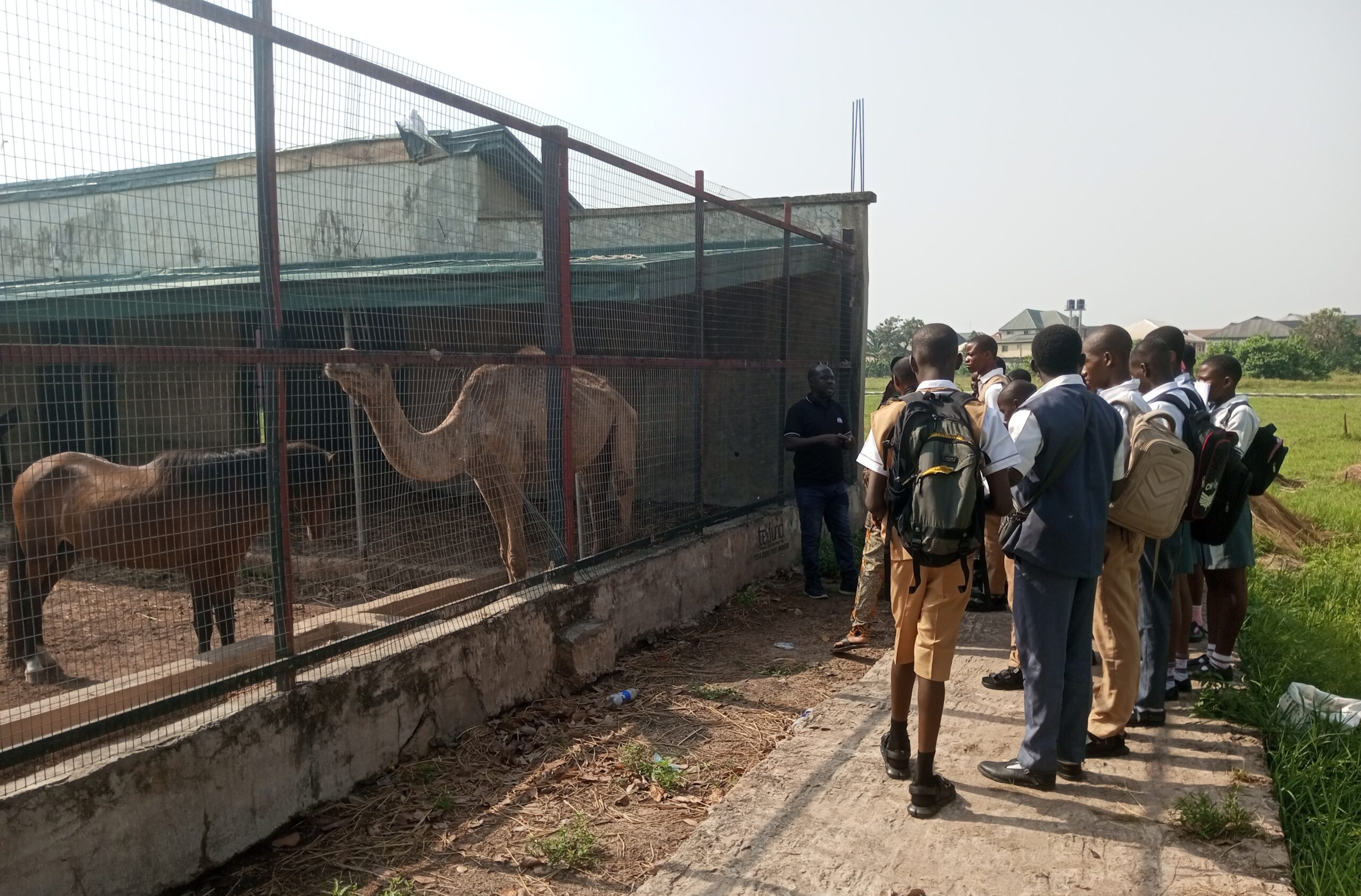
Adeyemi made the call during a guided biodiversity session for students at the UNIZIK Zoological Garden in Awka, as part of the 2026 Climate Bootcamp—an annual climate education programme organised by the Green Environment and Climate Change Initiative (GRENCHI).
The Climate Bootcamp exposes students to practical climate solutions, including solar energy installation, air and water quality measurement, biodiversity monitoring, mapping and basic data analysis, as well as water conservation in agriculture.
Participants are trained as citizen scientists and equipped with green skills aimed at preparing them for emerging green jobs and real-world climate challenges.
The three-day E-STEM training attracted students aged between eleven and twenty years drawn from environmental clubs in secondary schools.
The programme is funded by the North American Association for Environmental Education (NAAEE) and Pratt & Whitney, and implemented in collaboration with local partners including Green Age Technologies, the Departments of Crop Science and Horticulture, and Forestry and Wildlife at UNIZIK, the Sahelian Institute of Bamboo Research and Entrepreneurship Development (SIBRED), and the National Environmental Standards and Regulations Enforcement Agency (NESREA).
Broad view of biodiversity
After leading students through the zoological garden, Adeyemi, a wildlife biologist, emphasised that biodiversity should not be narrowly defined.
“When we talk about biodiversity, people often think it is too narrow, but it must be viewed holistically,” he said.
“Some people believe biodiversity is only about plants. Plants are very important, but they are not the only thing we have to look at.”
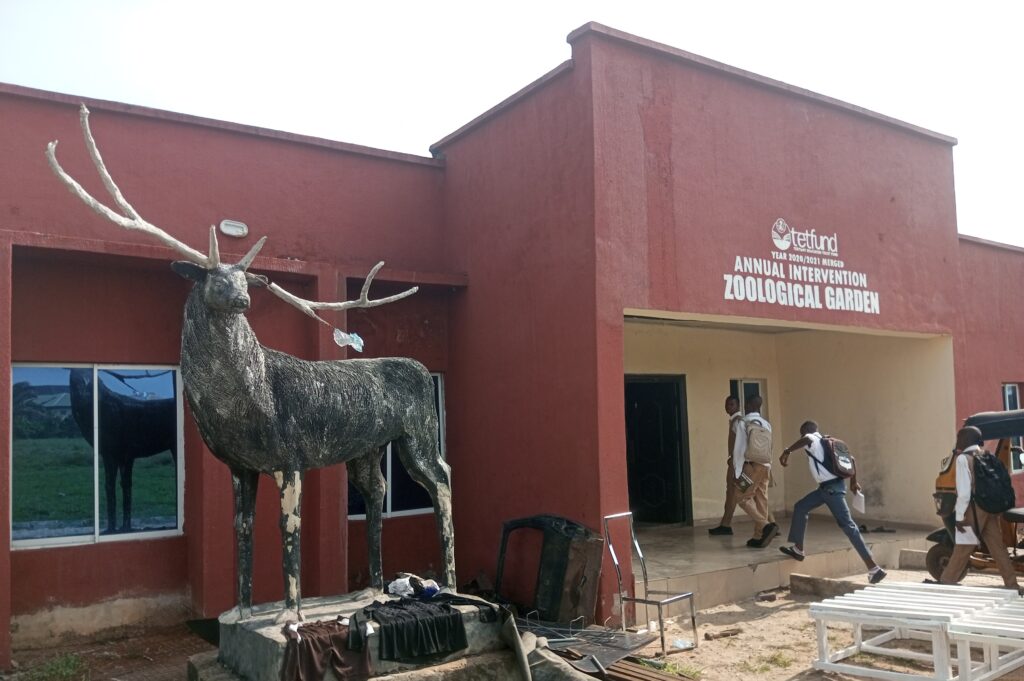
According to him, biodiversity is rooted in the complex relationship between plants and animals and how each depends on the other for survival.
“There is a strong relationship between plants and animals. The first thing to consider is how does one help or affect the other?
“Without plants, there will be no animals. Without leaves, there will be no animals,” he explained.
Adeyemi noted that understanding this relationship naturally leads to the need for conservation.
“The next question is how do we sustain both plants and animals? That leads us to conservation. The main reason we talk about conservation is posterity,” he said.
He added that sustainability must come before posterity. “Anything you cannot maintain, you cannot sustain.
“That is why we must conserve resources that make up biodiversity—both plants and animals.”
In-situ and ex-situ conservation
The wildlife biologist explained that conservation can take place either in natural habitats or outside them, describing the concepts of in-situ and ex-situ conservation.
“In-situ conservation means protecting species in their natural environment, such as national parks with rangers and guards.
“However, animal populations are declining,” he noted.
“In such cases, a few animals can be taken to zoos or rehabilitation centres for captive breeding to preserve the gene pool.”
He said animals bred in captivity could be reintroduced into the wild if properly managed, although the process requires careful planning to ensure they adapt successfully.
Adeyemi also stressed the importance of teaching young Nigerians how to identify the conservation status of species.
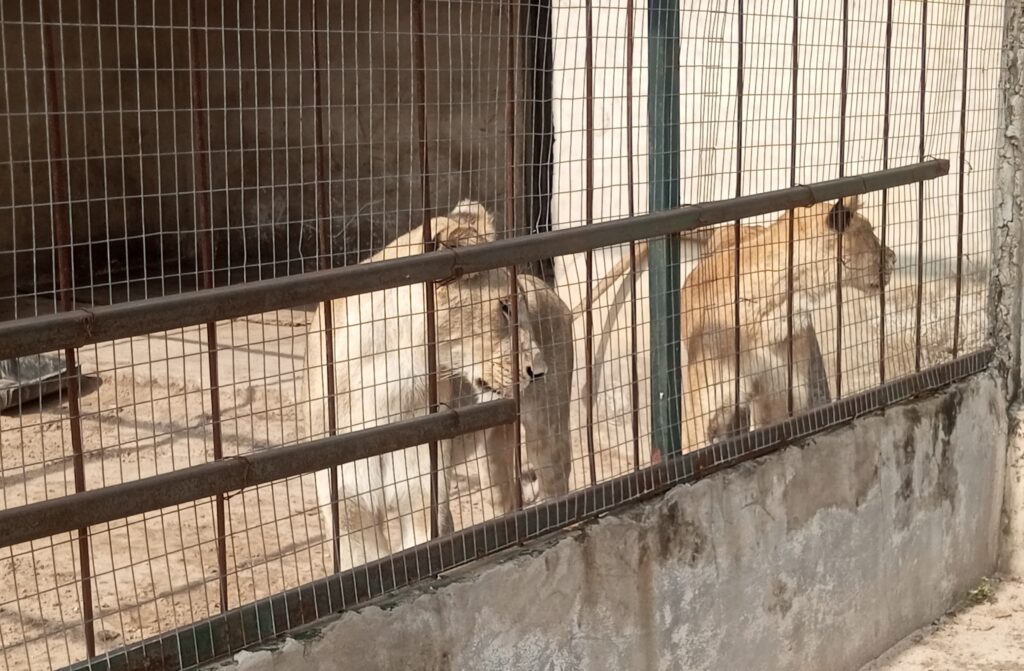
“They must know whether species are least concerned, vulnerable, threatened, endangered, critically endangered, or extinct in the wild,” he said, noting that extinction affects plants as much as animals.
He urged students to consult global conservation benchmarks such as the CITES Red List and the International Union for Conservation of Nature (IUCN) Red List, which identify species protected under international law.
“In this training, we want children to understand that animals have rights. We must protect them and, most importantly, conserve them,” he added.
Drawing lessons from history, Adeyemi referenced extinct species such as dinosaurs and the dodo, recalling popular cartoons about the dodo between 1988 and 1991 as reminders of what happens when conservation fails.
“The trees that give us fresh air—if we cut them carelessly, we will face problems. The animals we see today, if care is not taken, may go into extinction before today’s children grow up,” he warned.
Renewable energy
On the renewable energy component of the bootcamp, facilitator, Precious Eze, encouraged youths to address unemployment through skill acquisition in solar panel installation.
“Job scarcity is ravaging youths and even adults in this country. Catching people young through this kind of training is of great interest to the community, states and the nation,” he said.
Eze explained that the skills could enable participants to start small businesses within their homes before expanding.
He also linked solar energy skills to climate change mitigation, noting that deforestation for firewood and lumber, combined with emissions from generators and vehicles, contributes to environmental degradation.
“We want power without smoke and hydrocarbon discharge,” he said.
“Solar energy allows us to convert what God has given us—the sun—into clean electrical energy.
“If possible, I want the whole country to quit generators completely,” he concluded.
The children especially those who visited the zoological garden, including Mmesoma Udeonu, expressed gladness for the exposure which they said has positively impacted their education training.