
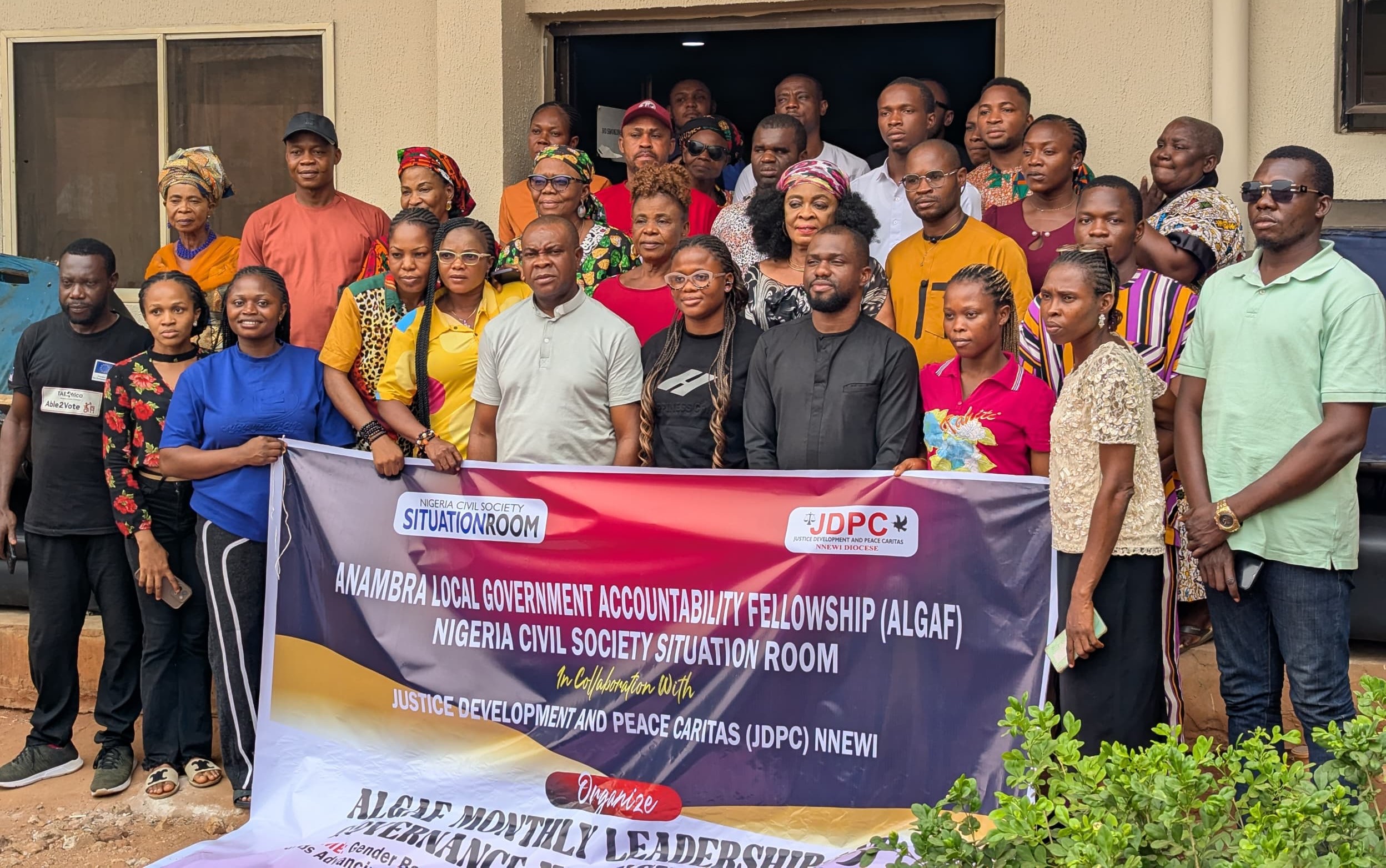
The Director, Justice Development and Peace Caritas, (JDPC) Nnewi, Reverend Father Ben Okolo, says active citizens’ participation will promote efficient local government administration in Anambra and Nigeria at large.
Fr Okolo gave this submission during the Anambra Local Government Accountability Fellowship (ALGAF) Monthly Leadership and Governance Workshop (MLGW) organized by JDPC Nnewi in collaboration with the Nigeria Civil Society Situation Room with funding support by the UK Foreign Commonwealth and Development Office (FCDO).
The January edition of the workshop was themed, “Gender Based Violence and Power Mapping for Strategic HDI Advocacy Towards Advancing Inclusive Local Governance at community levels in Anambra State.”
In his opening speech, JDPC Director glowingly acknowledged the support of the UK FCDO through Nigerian Civil society (Situation Room) for sustained funding of the project.
Recalling the journey so far, he said, “We first began with careful selection of members (Fellows), followed by strategic trainings which carefully dealt with the approaches to adopt by the fellows and coordinators. We also strategically identified issues in our LGAS and did courses on methodology of research and administration of LGAS.
Other activities
“Others include: Advocacy strategies, public speaking, persuasive communication, story-telling, policy analysis, social media advocacy, rights-based advocacy, disability rights laws which were all designed to equip participants with the knowledge and skills to effectively engage and advance local governance system.
“Each Monthly Leadership and Governance Workshop provides platform for strategic learning, reviews of fellows’ approaches and co-ordinations, strategic visibility of identified issues linked to the LGs by the fellows featuring two resource persons at each monthly workshop to lead in the structured interactive training sessions.
“As we continue in this fellowship, let us continue pushing for more inclusivity in our society – politically, economically, religiously and otherwise,” Fr Okolo concluded.
In a paper presentation on “Gender, human rights and civic participation: Advancing inclusive local governance from the community level,” a civil society activist, Eucharia Anekwe, established the intersection of gender, human rights, and civic participation within the context of local governance.
Gender-friendly strategies
Anekwe – the Executive Director, Gender Perspective and Social Development Centre (GPSDC), argued that advancing inclusive local governance requires intentional strategies to dismantle gendered barriers to participation and to institutionalize human rights-based approaches at the grassroots.
“Local governments are duty bearers responsible for respecting, protecting, and fulfilling the rights of citizens within their jurisdiction. Therefore, a human rights-based approach to local governance should be grounded in internationally-recognized human rights principles.
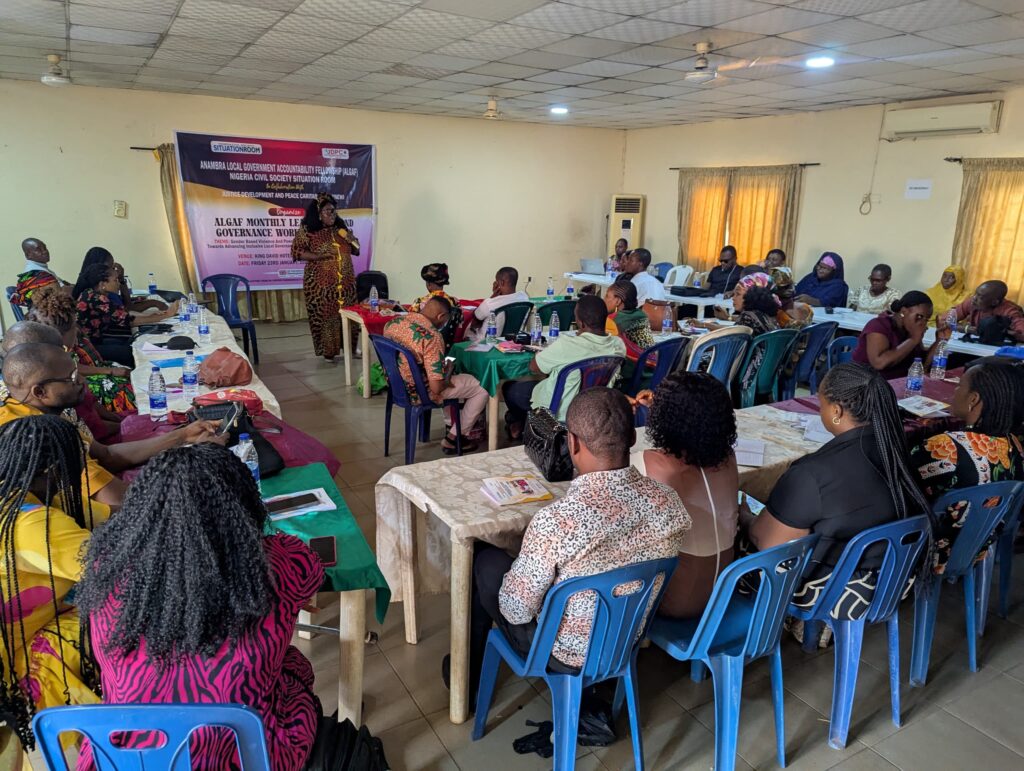
“These include: participation and inclusion, equality and non-discrimination meaning that no one should be excluded on the basis of gender, age, disability, status, or social identity.
“There is also the principle of accountability – duty bearers (LG officials, councillors, traditional authorities) must be answerable to the people. Another principle is transparency which mandates that information on policies, budgets, and decisions must be accessible to all citizens regardless of gender divide.”
Another paper presenter, Dr Onyeka Ebenebe, spoke on “Stakeholders and power mapping for strategic Human Development Index (HDI) advocacy at Local Government Level.”
He charged the ALGAF fellows to arm themselves of with requisite information and data and while engaging their local government functionaries.
“Power mapping is a very powerful tool for advocacy. You must identify those power influencers who can help you to reach the duty bearers you want to engage with.
“You must also be able to determine the right time and place for engagement.
“Above all, you must be open-minded in your engagement and understand the temperament of the persons you are talking to,” Ebenebe counseled.
Closing remarks
The Programme Manager, JDPC Nnewi and ALGAF Team Lead, Onyekachi Ololo, charged the fellows to continue to live up to the goal and essence of the fellowship.
“The ultimate goal is to revive local government administration and make it people-oriented.
“We cannot achieve that without being actively involved. So, take this task very seriously.
“Local government being the closest tier of government to the grassroots should impact people more positively and that is why you must give your best with all the tasks being given.
“We expect each of you to administer twenty forms to people to ascertain their experiences with their local government officials.
“Please do this promptly to justify your inclusion in this fellowship.
“It may also lead to another intervention if we can convincingly present people’s views about local government administration across the state,” Ololo anticipated.