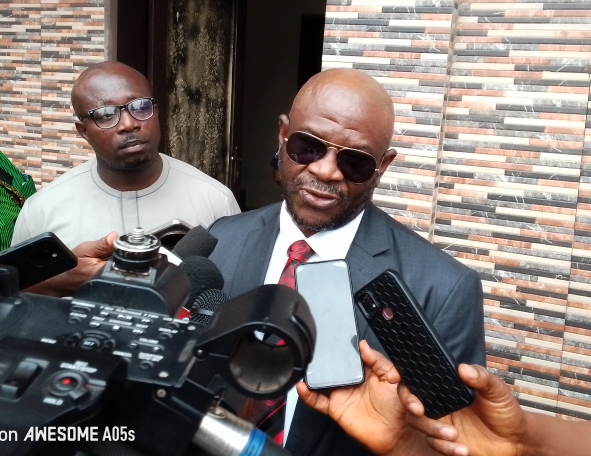
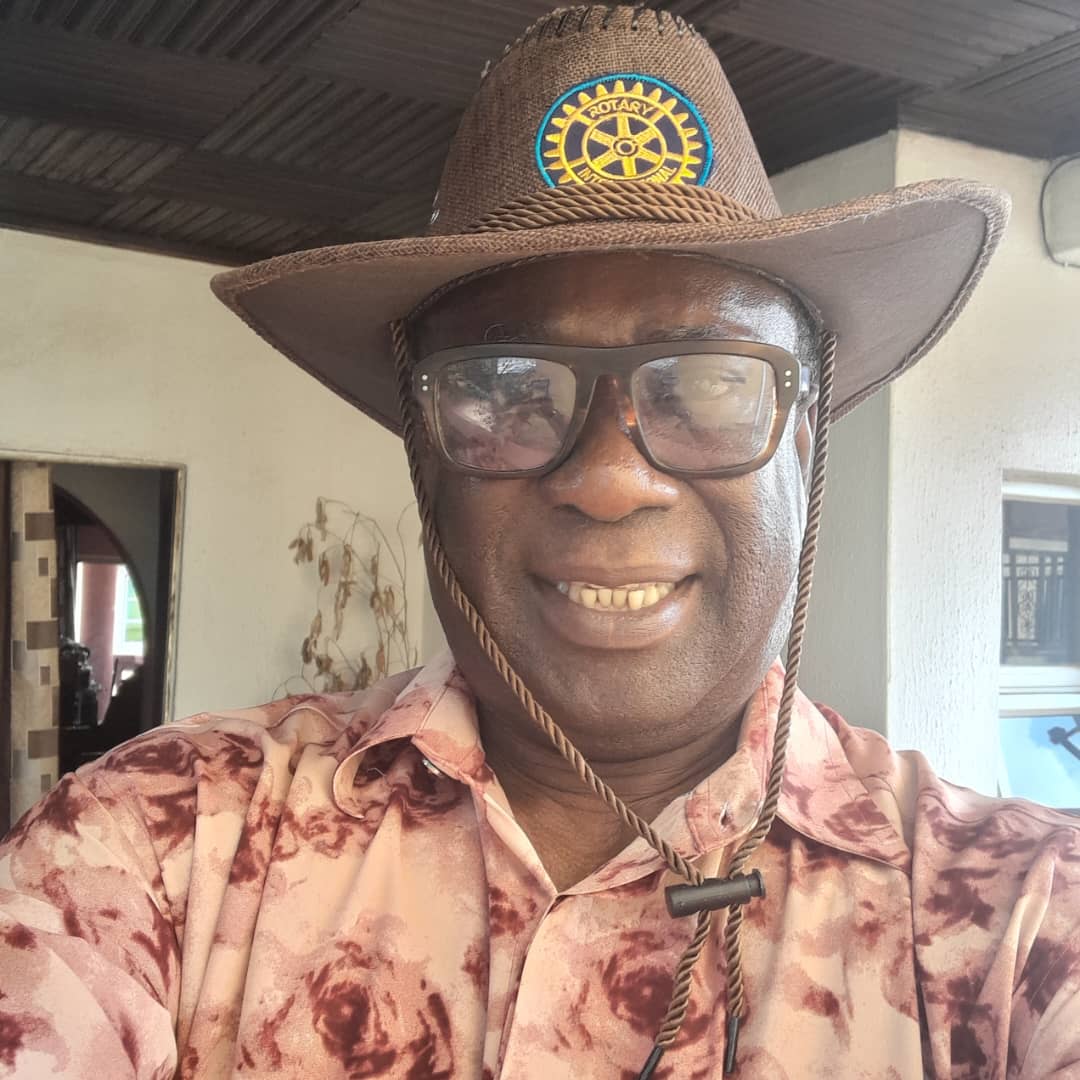
Political affairs analyst, Chief Kanayochukwu Obidigbo, has faulted Nigeria’s long-standing reliance on zoning, ethnicity and religious balancing in politics, describing it as a fundamental contradiction of democratic ideals and global best practices.
According to Obidigbo, no functional democracy thrives on zoning arrangements, insisting that Nigeria’s obsession with rotational politics has weakened leadership quality and stalled national development.
“I have not studied in any country where politics of zoning has actually helped to endure a democracy,” he said.
“It is unfortunate that Nigeria has a domesticated democracy to the extent of thinking about ethnicity, tribalism, zoning and all that. And it does not align with global best practice of democracy. I have not seen it, I have not read it.”
Speaking against the backdrop of the People’s Democratic Party (PDP) zoning its 2027 presidential ticket to Southern Nigeria, Obidigbo argued that democracy should be a contest of competence, vision and leadership, not geography.
He noted that nations progress when they deliberately search for the best among them to lead, regardless of origin.
“All the narratives towards zoning by a particular political party that their presidential flag bearer should be coming from a particular zone, it is not done. A nation looks forward to the best among them to be their leaders, no matter where he comes from, because he’s going to lead the country, not a particular zone.”
Describing zoning as counter-productive, Obidigbo said the practice reduces leadership selection to political arithmetic rather than national interest.
“Particularizing presidential flag bearer to a particular zone is funny in the sense that it does not make a country grow.”
‘Convention of Convenience’
While proponents of zoning argue that it helps manage Nigeria’s heterogeneous nature and preserves fragile peace, Obidigbo dismissed that reasoning, describing zoning as merely a “convention of convenience” adopted by politicians to suit prevailing interests.
“In actual fact, it’s not about peculiarity but a convention of convenience reached by Nigerian politicians,” he said.
“When it is convenient for them, like today, we have Muslim-Muslim. When Abiola came, it was also a Muslim-Muslim ticket, and it was popular and acceptable.”
However, he warned that over time, excessive politicisation of religion and ethnicity has discouraged capable citizens from participating in politics and deepened national divisions.
To illustrate his point, Obidigbo referenced Rwanda, a country that experienced a devastating ethnic conflict but deliberately dismantled ethnic politics afterward.
“Rwanda went to war due to ethnic problems, but at the end of that war, a leader emerged and became a unifying factor. He studied their differences and found out that what nearly killed the country was ethnicity.
“They deliberated on it and decided to kill ethnicity, and once that was done, the country became a united entity.”
1966: The Broken Flow
Obidigbo traced Nigeria’s lingering development challenges to the first military intervention in January 1966, which he said disrupted a promising democratic trajectory shortly after independence.
“Like Chinua Achebe wrote ‘there was a country’, Nigeria was truly a country immediately after independence in 1960 because our leaders had a vision. But the army aborted it when they struck six years later.”
“Since January 1966 to date, we have not come out of that disruption of the flow of a government that came out of independence and struggle.”
He argued that returning to a genuine regional system would help restore healthy competition and development across the country.
“We saw regions developing at their pace. We must de-emphasize this Abuja, this Aso Rock hold on power. Until we do that, political parties zoning candidates from one zone to another will not help.”
PDP Zoning and Southern Fault Lines
On the PDP’s recent decision to zone its presidential ticket to the South, Obidigbo said the move still leaves unresolved problems, especially deep-seated ethnic divisions within the region itself.
“We have serious ethnic bias in the country even within the same region. Now that the PDP has zoned the presidency to the South, it won’t be easy.
“Once they come down South, they start breaking it into ethnic colorations, and that makes it unworkable.”
While he described the zoning decision as “good riddance to bad rubbish,” he cautioned that it must not become another tool for fragmentation.
“Nigeria must start from somewhere — building an understanding for a better tomorrow, an understanding to have one Nigeria.”
Beyond ‘State of Origin’
Obidigbo stressed that true unity begins when citizenship transcends ethnic labels and state of origin.
“If an Igbo man cannot go to Sokoto and become a Sokoto person, or a man from Sokoto comes to Awka and becomes an Awka person as a Nigerian with one identity, then we have not started.”
“A guy from New York cannot tell a guy from Maryland that you are from here. State of origin is a no-no in any developed democracy.”
“If you relocate from Texas to New York, you trade in your Texas driver’s license for a New York license because you now live there.”
Leadership, Not Zoning
Ultimately, Obidigbo said Nigeria’s salvation lies not in zoning formulas but in people-oriented leadership.
“Instead of zoning, I’m rooting for good leadership. If a leader emerges from Bauchi and becomes president, he must see Imo State as his constituency.”
“Programs should affect Nigerian people, not Bauchi, not Imo. We must get to the point where the president of Nigeria is the president of everybody.”
He concluded that tribalism and religion remain the greatest threats to Nigeria’s democracy, but expressed hope that the country would one day produce a leader committed to unity.
“All the same, we are praying for a leader who will see us as one, no matter where he comes from, and think positively to develop Nigeria for Nigerians.”