
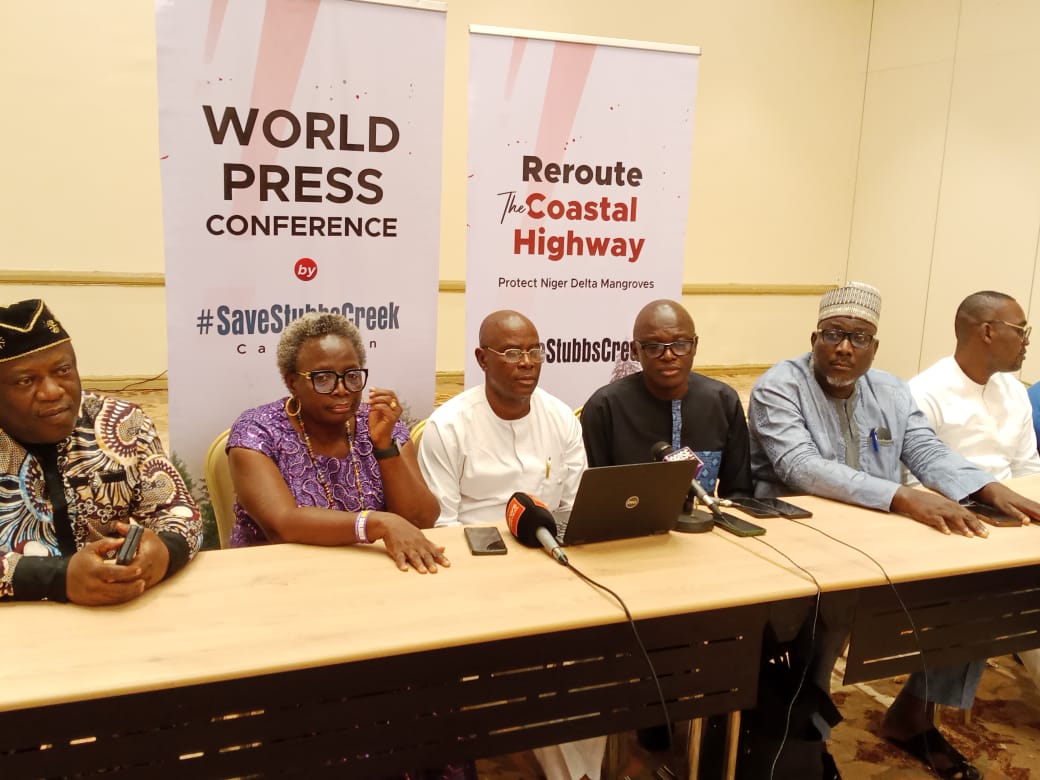
Some civil society organisations have expressed concerns over plans to route the proposed Lagos–Calabar Coastal Highway through the Stubb’s Creek Forest Reserve in Akwa Ibom State,
At a news briefing in Abuja, a coalition of over sixty CSOs said the move could cause irreversible environmental damage and breach Nigeria’s environmental laws.
Speaking on their behalf, Executive Director, Neighborhood Environment Watch Foundation, Dr. Kelechukwu Okezie, explained Stubb Creek Forest Reserve reserve is one of Nigeria’s most ecologically significant mangrove–freshwater ecosystems in the oil-rich Niger Delta.
He maintained that routing a major highway through the reserve would lead to large-scale deforestation, disruption of water systems, loss of biodiversity and heightened vulnerability to flooding and coastal erosion, with social and economic costs.
“The reserve, located in the oil-rich Niger Delta, is home to thousands of plant and animal species, some of them rare or endangered.
“It provides vital services including coastal protection, flood control, fisheries breeding grounds and livelihoods for forest-dependent communities”
Also Speaking, the Director, Policy Alert and Coordinator of the Save Stubb’s Creek Campaign, Mr. Tijah Bolton-Akpan, explained that the Forest reserved since colonial era has been a source of livelihood to many people in Akwa Ibom and neighbouring states.
He contended that the planned degrading of the reserve as a result of the Coastal highway would have grave impacts.
To this end, the Coalition appealed to the Federal Government to consider the future implications of allowing highway to pass through the Stubb’s Creek Forest Reserve
According the CSOs, the highway can be rerouted as other sections of the Lagos–Calabar project have already been realigned to address social and environmental concerns.