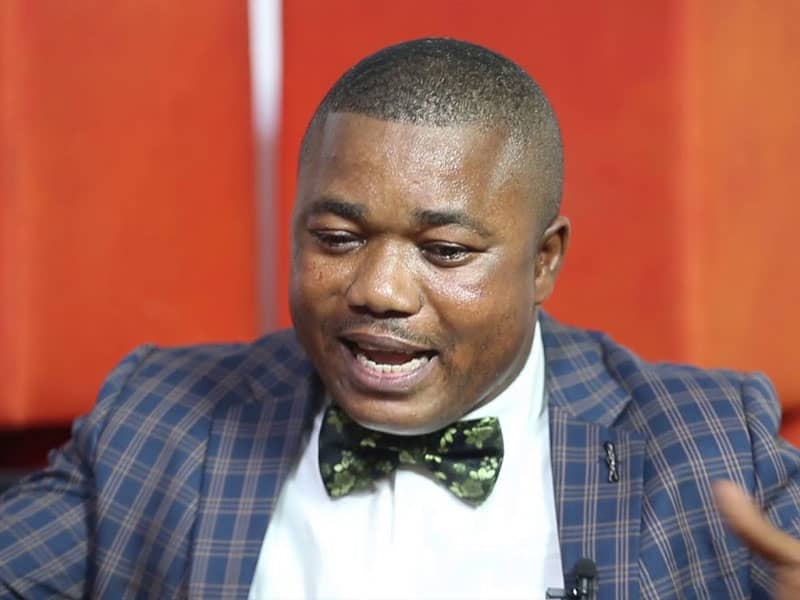
Renowned human rights lawyer Ifeanyi Ejiofor, has decried what he described as the normalization of abnormality in Nigeria.
Ejiofor who is also the lead counsel to the Indigenous People of Biafra (IPOB), warned that insecurity has become an entrenched and accepted feature of national life.
He disclosed this in a reflective statement titled “Midweek Musing: A Year Reviewed — Nigeria’s Political Pilgrimage Through Turbulence, Policy Myopia, and the Undying Mercy of God,”.
The lawyer said any honest assessment of Nigeria in 2025 must place insecurity at the centre of national discourse.
According to him, insecurity remains the single most destructive factor shaping the country’s political, social, and economic realities.
He said the impact of violence cuts across every sector of national life, leaving devastating consequences in its wake.
Across the country, he noted, lives have been brutally cut short, homes destroyed, families torn apart, schools forced into silence, farms abandoned, and commercial activities crippled.
Childhood innocence, he added, has been violently interrupted, while national development has once again been postponed.
Ejiofor argued that insecurity in Nigeria has ceased to be an episodic or temporary crisis.
Instead, he said, it has evolved into a permanent condition of national existence, leaving deep and indelible scars on the collective memory of the people.
Growing boldness for violence
More disturbing, he observed, is the growing boldness of those who enable violence.
According to him, the sponsors, financiers, apologists, and ideological drivers of terror—particularly across large parts of Northern Nigeria—have become increasingly emboldened, visible, vocal, and alarmingly confident.
He described as scandalous the reality that some of these actors are not strangers to the Nigerian state.
Rather, he alleged, they include individuals who once occupied sensitive government and military positions—custodians of public trust—who now appear to have defected, morally if not physically, to the camp of chaos.
“One would have expected outrage but instead, Nigerians were offered silence.
“One would have anticipated decisive action; what the nation received was equivocation.”
On the economy
Turning to the economy, Ejiofor painted a bleak picture, saying key indicators point unmistakably to widespread hardship.
Hunger, he said, has become democratised, while poverty is no longer selective. Inflation, he added, stalks households with relentless persistence, even as wages remain frozen in what feels like a different decade.
According to him, Nigeria in 2025 has been governed not by economic empathy but by theoretical abstractions—policies seemingly designed for academic journals rather than for markets, factories, or family kitchens.
He said harsh fiscal measures, tax reforms without adequate social buffers, subsidy removals without cushioning mechanisms, and currency instability have combined to punish businesses, manufacturers, and ordinary citizens.
Ejiofor also criticized the National Assembly, accusing it of abandoning its constitutional role.
He questioned the independence of the legislature as an arm of government which now appears like an extension of the executive.
Rubber stamping NASS
Constitutionally empowered to make laws and check executive excesses, he said the National Assembly in 2025 has perfected the art of rubber-stamping.
“Bills arrive. Bills pass. Questions are discouraged. Dissent is treated as heresy,” he said.
Ejiofor cited the Tax Reform Act scheduled to take effect in January 2026 as a troubling example, warning that it could become a fiscal guillotine capable of strangling struggling businesses, escalating unemployment, and deepening hunger.
He also referenced allegations by a member of the House of Representatives that the bill currently in circulation differs from the version actually passed,
The human right lawyer noted that calls for transparency have been met with suppression rather than accountability.
Despite the grim assessment, Ejiofor said Nigerians survived the year through resilience and divine mercy.
He expressed gratitude to God for preserving lives in a period when governance faltered and institutions failed.
As the country steps into a new year, he prayed for leaders guided by conscience and courage, policies shaped by compassion, security rooted in justice, and the healing of a nation strained by violence, hardship, and broken trust.