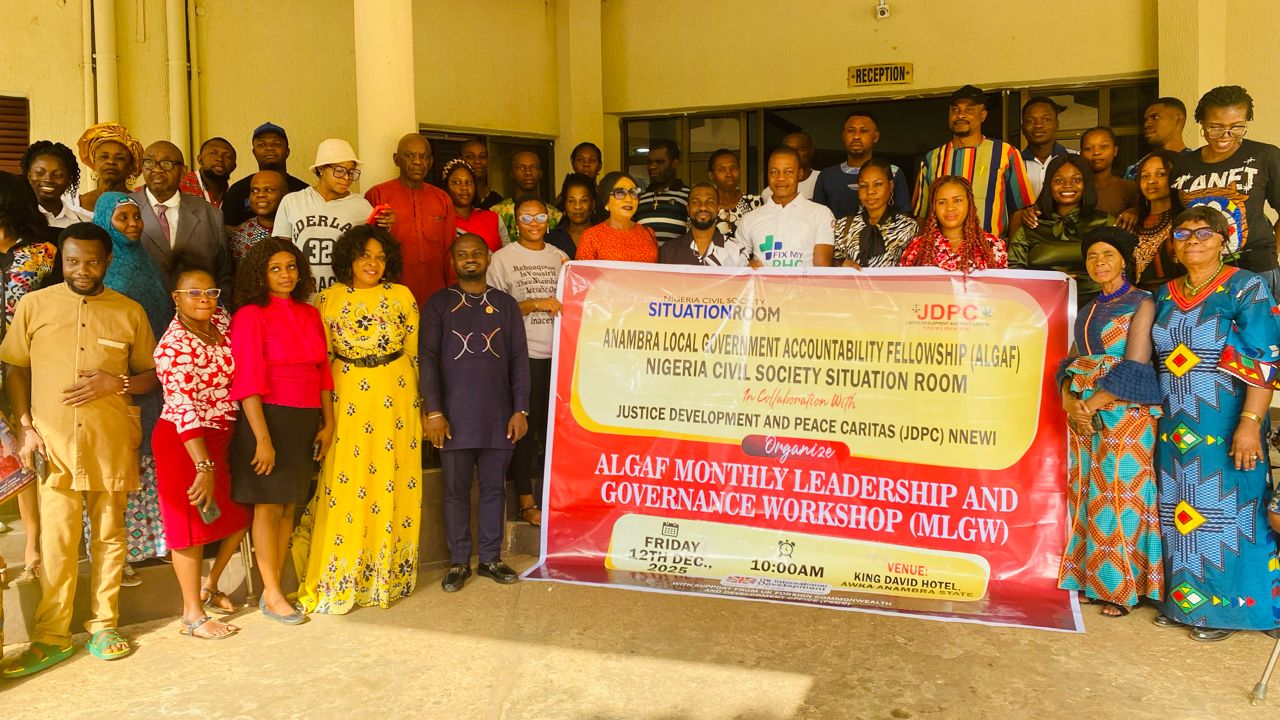
Fellows of the Anambra Local Government Accountability Fellowship (ALGAF) have been urged to help raise citizens who understand their rights and responsibilities, as part of efforts to reclaim local government administration for the people.
The charge was given by the Director of Justice Development and Peace Caritas (JDPC) Nnewi, Rev. Fr. Ben Okolo, during the Monthly Leadership and Governance Workshop (MLGW) organised under the ALGAF project.
The initiative is being implemented by JDPC Nnewi in partnership with the Nigeria Civil Society Situation Room, with funding support from the United Kingdom’s Foreign, Commonwealth and Development Office (UK FCDO).
Building active citizens
Represented by the Programme Manager of JDPC Nnewi, Mr. Onyekachi Ololo, Rev. Fr. Okolo said the fellowship was designed to produce citizens who can actively track local government policies, programmes and budgets, and hold elected officials accountable.
“Today, we are training the fellows on storytelling so they can use social media strategically to communicate their findings and push their demands to the right authorities,” he said.
According to him, the fellows have also been equipped with knowledge on risk assessment, emergency response, research methods, local government autonomy and budgeting.
“These skills enable them to interrogate government priorities more deeply. The programme, which began in August, will run until March next year,” he added.
Fr. Okolo expressed satisfaction that some fellows have already begun engaging their local government chairmen on ways to strengthen governance at the grassroots.
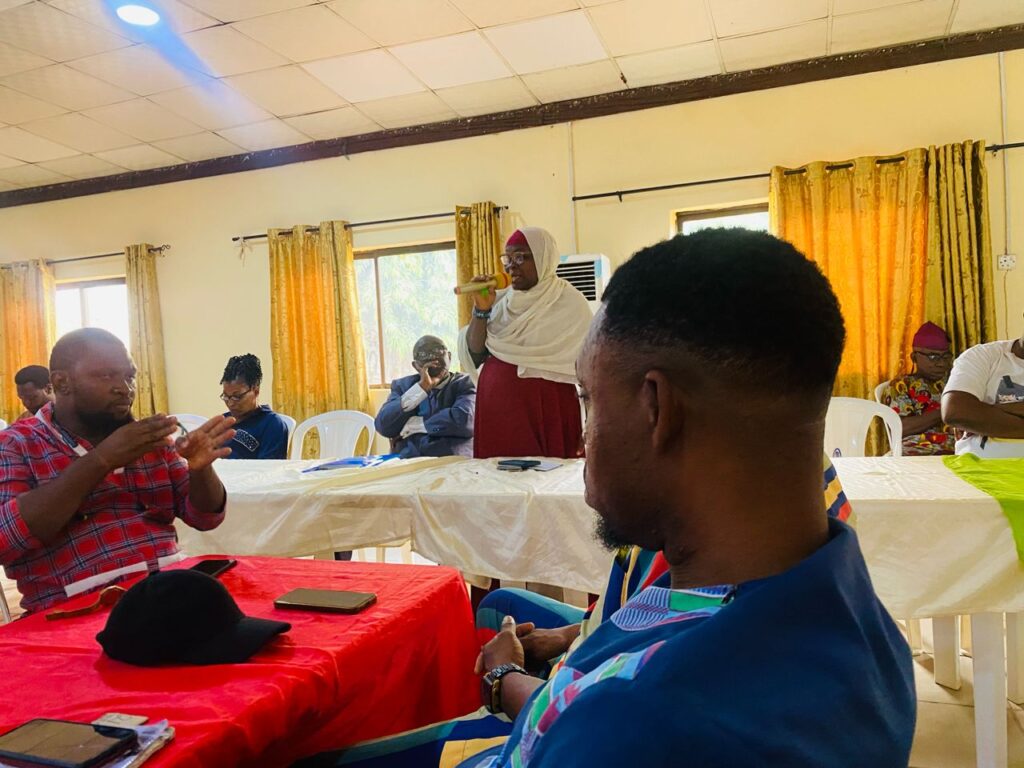
He disclosed that the 45 fellows were selected from the three senatorial zones of Anambra State and drawn from diverse constituencies, including the Joint National Association of Persons with Disabilities (JONAPWD), the Children’s Parliament, community-based organisations, elderly groups and students.
“We want them to act as lead agents by closely observing and questioning government programmes,” he said.
“People are clearly tired of what the local government system has become, especially in critical sectors like security, education and health.”
State control undermines local governments
A resource person, Mr. John Ifejika, traced the evolution of Nigeria’s modern local government system to the 1976 Local Government Reform under the Murtala/Obasanjo administration, which sought to decentralise power, improve service delivery and standardise structures and funding.
However, he noted that despite the Supreme Court judgment affirming full local government autonomy, LGAs continue to face enormous challenges due to state government interference, corruption and financial mismanagement.
“State governments have effectively turned local councils into extensions of their ministries,” he said.
“Governors’ control LGA funds through joint accounts, restrict independence and stifle innovation.”
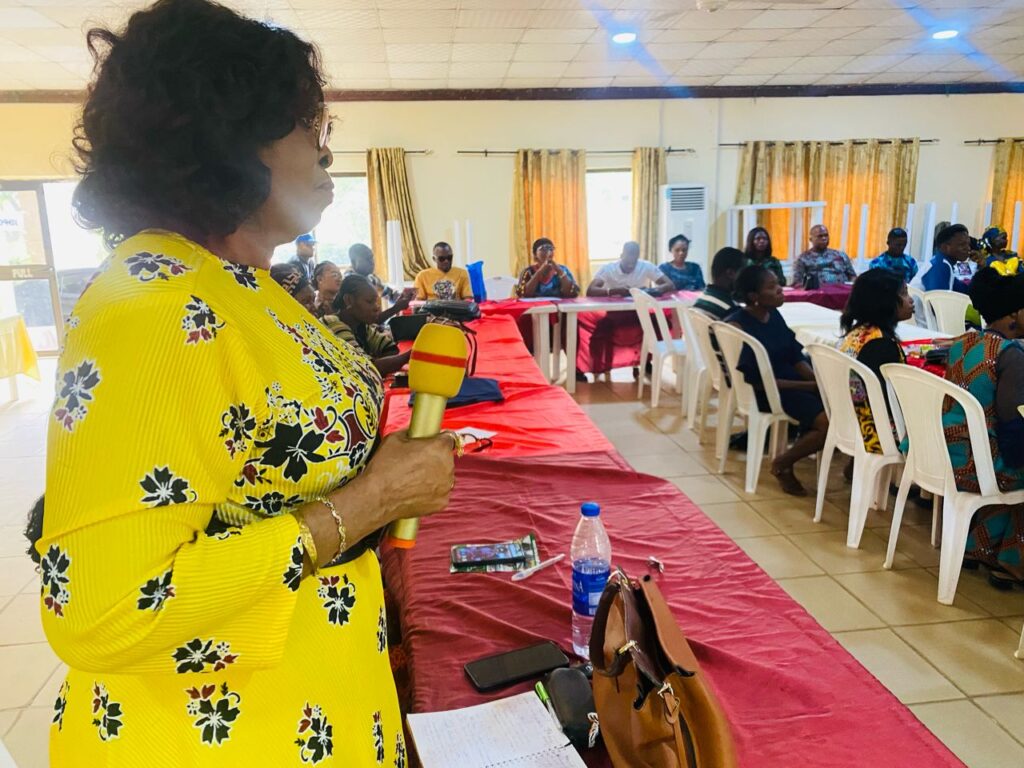
He added that local government internally generated revenue is also controlled by the state, while poor transparency and the entrenched ‘brown envelope’ culture continue to weaken accountability.
Storytelling tool for grassroots change
Another resource person, Dr. Gabriel Alonta of Nnamdi Azikiwe University, Awka, took the fellows through practical sessions on storytelling and social media optimisation as tools for advocacy.
“You must clearly understand the issues and how they affect citizens. This is the era of citizen journalism, and each of you already has the tools to drive change through compelling storytelling.”
A former local government administrator, Mr. Chuks Iwuchukwu, decried the steady collapse of the local government system.
He regretted that many departments have become redundant as state authorities take over their statutory functions.
“Some departments are disappearing completely because the lowest-ranking staff left are already on Level 13,” he said.
“People are more interested in money than in service delivery, and allocations meant for local governments are being hijacked.”
The workshop also featured progress reports from fellows on their ongoing engagements with local government authorities across the state.