

In Nigeria, more than 38 million adults remain financially excluded, a challenge that continues to undermine inclusive growth. Yet, within this gap lies a story of innovation. Fortis Mobile Money Ltd, a Central Bank of Nigeria–licensed Mobile Money Operator, is proving that digital solutions can bridge divides where traditional banks cannot.
Through its agent-led, technology-driven model, Fortis is not just moving money but reshaping financial participation across Nigeria’s underserved and hard-to-reach communities.
Onyeka Ofodile, MD & CEO of Fortis Mobile Money, explains: “We do not see ourselves as just moving money from one point to another. We are building an ecosystem that brings the financially excluded into the formal economy, step by step.”
Empathy-driven innovation in cash transfers
The company’s strength lies in its ability to combine technology with human connection. Fortis runs a national network of trained mobile money agents who serve as the bridge between digital infrastructure and real-life communities. These agents travel to towns, villages, marketplaces, and even internally displaced persons (IDP) camps, ensuring access in places banks rarely reach.
Unlike many providers, Fortis operates an offline-first system, which means beneficiaries don’t need smartphones or internet access to use its services. With biometric onboarding, alternative transaction capabilities, and real-time identity verification, beneficiaries can receive and manage funds securely—even in conflict-affected regions.
This approach has already reached more than one million beneficiaries in the Northeast and North Central regions, with a success rate above 97%.
As Ofodile notes:
“We created protocols that prepare the environment before the Agent moves. From verifying locations, aligning with community leaders, identifying potential points of friction or hotspots, and confirming biometric data, we reduce last-mile risks before they arise.”
Financial habits beyond disbursement
The impact of inclusion does not stop at handing out funds. Fortis focuses on building daily financial habits that empower people to move from dependency to active participation.
Every recipient automatically receives a Fortis Wallet, accessible via debit card or agents. The wallet enables basic financial activities—sending money, paying bills, topping up airtime, and more. What began as social benefit delivery has evolved into a gateway for everyday transactions.
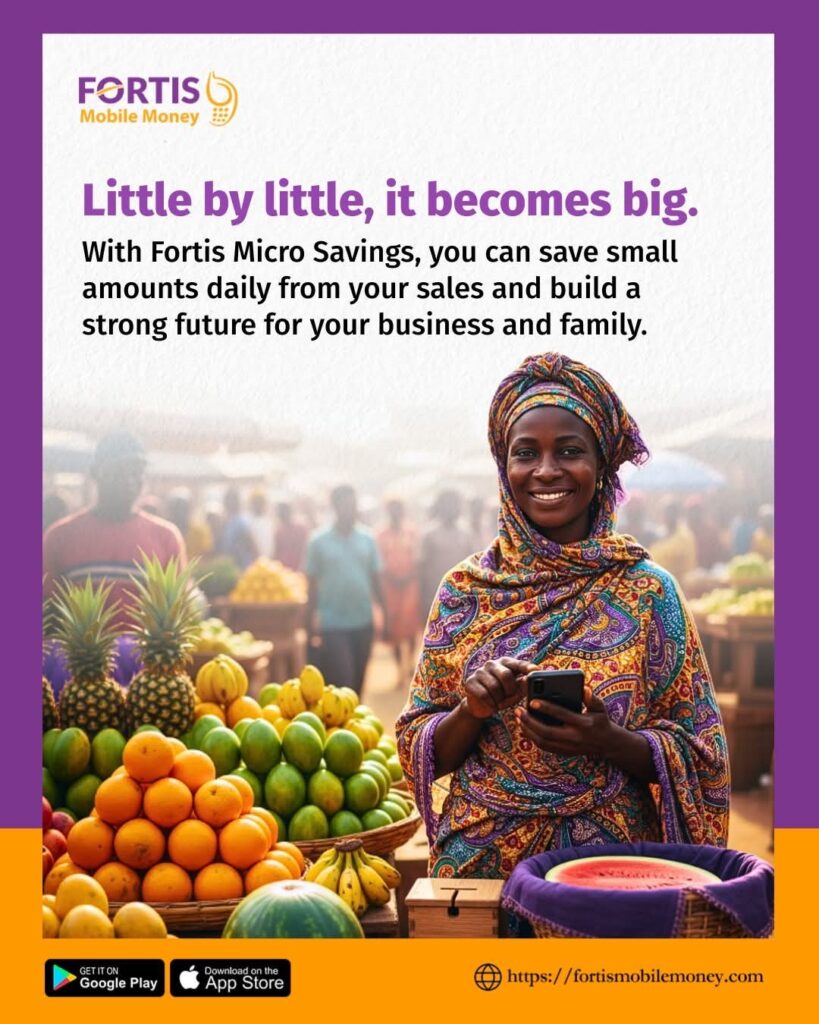
According to internal data, 55% of recipients continue to use their wallets beyond initial transfers, a sign of trust and lasting behavioural change.
This transactional data also helps Fortis design products for the future, including digital trust scores that could enable credit scoring, micro-lending, and insurance access for underserved Nigerians.
Partnerships powering impact
Fortis understands that no single organisation can deliver financial inclusion alone. It works with multiple stakeholders—from the Federal Government’s National Cash Transfer Office (NCTO) to development agencies like the World Bank, Save the Children, and the International Committee of the Red Cross.
These partnerships provide not just pipelines to reach beneficiaries but also governance structures to ensure accountability.
On the liquidity side, collaborations with commercial banks support float management, account linking, and extended reach in regions where Fortis cannot offer certain credit products directly. Some bank agents are even embedded in Fortis field teams, strengthening last-mile delivery.
As Ofodile puts it: “Our view is that partnerships multiply impact. Inclusion is an ecosystem opportunity.”
Financial literacy as real infrastructure
For Fortis, knowledge is as important as access. The company has trained more than 1,000 field staff and community champions to deliver financial literacy sessions in Hausa, Igbo, Yoruba, and Pidgin English.
These sessions teach beneficiaries the basics of using wallets and debit cards, recognising fraud, and understanding how to save. In many states, they have become community events, drawing in women’s groups, youth, and traditional leaders.
Baba Abba Mohammed, Fortis Product Support Lead, explains the transformation:
“Some of our beneficiaries had never seen a debit card before. Today, they are using it at POS terminals in the market. When you explain finance in their language, you give them power.”
Towards full digital participation
Fortis is broadening its financial ecosystem. By 2026, it plans to introduce micro-savings and micro-insurance features directly within the Fortis Wallet, allowing contributions as low as ₦100 weekly.
A pilot cooperative-based credit programme is also in the works, where group savings data will inform creditworthiness and unlock access to nano-loans.
On the technology front, the company is investing in AI-powered fraud detection, automated dispute resolution, and an open API system that will allow other service providers to plug into the Fortis platform.

These steps signal Fortis’ ambition to move beyond being a disbursement partner to becoming a full financial ecosystem for underserved Nigerians.
Positive impacts
The impact of Fortis is best captured in the lives it touches: These include: market women in Nasarawa who now buy fertiliser with Fortis debit cards, internally displaced families in Borno who save ₦500 weekly for their children’s education and agents trekking five kilometres to reach the “last village on the map.”
Onyeka Ofodile sheds further light. “For us, financial inclusion is not about ticking off CBN KPIs. It is about building a Nigeria where no one is invisible to the financial system.”
Fortis Mobile Money has shown that financial inclusion is possible at scale when technology, empathy, and partnerships align. From conflict zones to rural markets, it is creating access where none existed before.
It is not just about moving money—it is about moving lives into the future of finance.